

Hear it from the source.
Recruitment marketing blog.
|
Browse the latest insights from a range of recruitment industry experts. We’ve created an endlessly expanding library of blog articles and videos that provide leading-thinking around the latest recruitment marketing, technology, and market changes. |
Trusted by over 200 forward-thinking recruitment companies
Recruitment marketing blogs

SourceFlow to launch recruitment marketing automation platform
SourceFlow are launching a suite of recruitment marketing automation tools that will bring order to the chaos of fragmented marketing campaigns and misaligned revenue generation systems within recruitment agencies. Join our CEO Matt Comber for the launch demo of these tools on LinkedIn Live on 8th September 2026. The answer to the question 'how to automate recruitment marketing' Our new recruitment marketing automation platform is specifically designed to help agencies attract new clients and candidates to apply for jobs. We’ve created several new revenue-enabling technologies that will accelerate client and candidate acquisition. Using our marketing automation tools, you can build seamless campaigns and accurately score your leads. These tools will ensure you never miss a lead again and you will finally have the data to prove exactly how your marketing campaigns deliver revenue and brand equity for your business. Why will SourceFlow solution be the best email marketing platform for the recruitment industry? Tech fragmentation frustrates recruitment leaders - breaking processes and generating a boat-load of admin tasks. So many systems used by the industry just don’t speak with one another. So many generic marketing automation platforms don't talk to your ATS or your job boards. That is why we built an industry-specific marketing platform with deep integrations. We unify rectech. Here is exactly how our tool helps your business to grow: Single source of truth: Your marketing campaign data passes directly into your ATS, ensuring your business is future-proofed against technology disruptions. Sleek UX design: Build beautiful landing pages and workflows quickly, helping you overcome limited team resources and budget. Proven ROI: Stop treating marketing as a cost centre. We help you draw a direct line between a website visit and a placement. AI marketing automation tools: We’ve build some incredible AI technologies that have your brand built into them and work while you sleep to amplify your performance. Are you ready to learn what 'good marketing' looks like for recruitment businesses? Click here to join us on 8th September. Photo by Lee Campbell on Unsplash


SourceFlow achieves ISO 27001 certification
SourceFlow achieves ISO 27001 certification SourceFlow have achieved ISO 27001 certification, the internationally recognised standard for information security management. For recruitment businesses trusting us with client, candidate and business data, it's independent confirmation that information security is embedded in the way we operate. We passed the certification audit first time, with no non-conformities identified. That gives our clients confidence that the systems, processes, and controls behind the platform meet a globally recognised standard for protecting information. Why ISO 27001 matters for recruitment businesses Recruitment businesses handle some of their most valuable information every day, from candidate records and client data to commercial information and internal communications. Losing control of that information can damage client trust, disrupt operations and create legal and commercial risk. Protecting it is part of running a resilient recruitment business. ISO 27001 gives organisations a recognised framework for identifying information security risks, putting the right controls in place and continually improving how information is protected. It doesn't eliminate every security risk, but it helps reduce the likelihood of incidents and limit their impact when they occur. For SourceFlow clients, it's proof from an independent auditor, not just our own word, that the platform is built and managed to a recognised security standard. In the words of Matt Whiteley, SourceFlow CTO: “This certification proves that SourceFlow is a business that can be trusted to handle your, and your customer's, data securely and professionally. The fact that we passed this audit first time without a single non-conformity really shows the quality and professionalism across the whole business, and how data security is at the heart of what we do” Building secure recruitment technology Protecting valuable client and candidate data is part of how we build, improve and operate the platform every day. Every platform improvement, integration and feature release is supported by the same commitment to protecting the information our clients trust us to manage. Have questions about our information security practices, or need documentation for your supplier due diligence or DPA queries? Get in touch: Call: +44 333 006 7705 Email: info@sourceflow.co.uk Or follow SourceFlow for more recruitment marketing insights and platform updates.


Why your recruitment website isn't showing up where candidates are searching
Why your recruitment website isn't showing up where candidates are searching Your recruitment website probably makes perfect sense to the people who built it. The problem is that candidates don't search the way recruitment businesses organise themselves. Someone looking for a new role isn't thinking about your sectors page or service menu. They're searching for "finance recruitment London", "data analyst jobs Manchester", or "cyber security recruiter Bristol." If those pages don't exist, candidates have far fewer opportunities to discover your business. Why is content architecture so important? Content architecture is the way your recruitment website is organised around the searches candidates and hiring managers make every day. Technical SEO and content architecture work together, but they solve different problems. Technical SEO helps search engines crawl, index and understand your pages. Content architecture decides whether the right pages exist in the first place. Google can't rank a page for "technology recruitment Manchester" if your website only has one broad Technology page. The same applies to "contract data engineer jobs", "finance recruitment London", or any other search your candidates are making. Without those pages, the website doesn't give search engines, or candidates, enough relevant places to land. Google's guidance encourages creating helpful, people-first content that answers a searcher's question. That means building pages around real search demand. Where are your candidates actually searching? Most candidate journeys don't begin on a recruitment website. They begin with a search. Broad searches tend to land on job search sites such as Indeed, LinkedIn, or Google for Jobs. These platforms own the top of the funnel, and no recruitment website is going to outrank them for "marketing jobs" or "jobs near me." The opportunity sits further down. As candidates narrow their options, the searches get more specific, and that's where specialist recruiters start to appear. By the time someone searches "technology recruiter Manchester" or "contract data engineer jobs", they've already moved past the aggregators and are looking for a recruiter who understands their market. A page built around that search gives them a direct route to the expertise they're looking for. Why recruitment websites miss candidate searches Open most recruitment websites and you'll see a familiar navigation. Home About Sectors Jobs Contact That's the whole problem in five links. It's an accurate map of the business and a poor map of candidate demand. Most sites have a broad sectors page and a single jobs feed. What they don't have are the pages that actually capture mid-funnel search: Sector hubs built around a specialism, not a catch-all Technology page Location pages targeting the job-plus-place searches Role and skill hubs for specific titles and disciplines Salary guides that keep earning traffic long after they're published Employer resources for the hiring-manager side of the market Search engines can only match the pages you've created to the searches people are making. A site that looks good in a portfolio can still perform badly in Google, because looking good and being findable are two different jobs. This is also where recruitment website design and search strategy meet: the structure has to be built around demand, not just aesthetics. How to structure a recruitment website for search The easiest way to plan a recruitment website is to start with the searches you want to appear for, then build a page for each one. The catch is scale. A site built this way doesn't have five or six pages. It has dozens, sometimes hundreds, and they all need creating, updating, and keeping accurate. On a legacy platform, every new sector hub or location page means a developer ticket and a wait. That's the point where most content architecture plans quietly stall. A headless CMS built for recruitment removes that bottleneck, so marketing can add and refresh pages as fast as the market moves. For more on improving your site without starting over, see Fix your recruitment website this quarter without a rebuild. How SourceFlow help recruitment marketers scale content Search behaviour changes as markets change. New specialisms launch, offices open, salary guides need refreshing, and every change is another chance to appear in search. SourceFlow give marketing teams direct control over those updates. They can publish new landing pages, refresh existing content, manage on-page SEO, and use AI SEO Generator without relying on developers for day-to-day changes. Sustainability recruitment firm Acre increased Google search visibility by more than 150% after moving to SourceFlow. That's what happens when the platform stops getting in the way of the content. Acre increased Google search visibility by more than 150% Build your recruitment website around search behaviour Candidates don't search around your navigation. They search around jobs, locations, skills, and specialist expertise. Build your recruitment website around those searches and you create more opportunities to appear in Google, and make it easier for candidates to find the right content when they do. If you're reviewing your recruitment website and want to see what that looks like, book a call with the SourceFlow team.


Recruitment marketing results: Why agencies choose SourceFlow
Recruitment marketing results: why agencies choose SourceFlow Recruitment marketing should generate leads, support consultants and optimise digital channel performance. That only happens when your website, marketing and technology work together. If they don't, growth becomes harder than it needs to be. At our latest From The Source X LDN event, recruitment marketers and agency leaders shared why they chose SourceFlow and what it's changed for their teams. Their stories cover everything from recruitment website management to marketing delivery, platform flexibility and ongoing support. Less time fixing problems. More time improving your marketing. Xavier Krasnicki EMEA & Franchise Marketing Manager, Reed "The platform has changed drastically since we first signed up. It's growing constantly." Recruitment websites shouldn't become outdated after launch. They should keep improving as your business grows. That's been Xavier's experience with SourceFlow. Since Reed came on board, the platform has continued to evolve, giving the marketing team more flexibility without the technical frustrations that often slow teams down. What makes the biggest difference, though, is the people behind the platform. Whether Reed has a new idea, wants to solve a challenge or explore an improvement, there's always someone who understands recruitment marketing and helps turn ideas into action. The result is a platform that keeps improving, backed by a team that's always ready to help. Watch the video to see how Reed found a recruitment website platform that grows with their business. Expert support for your recruitment website Janan Gok Head of Marketing, Xcede Group "Working with SourceFlow is very easy. They're problem solvers." New ideas, challenges and priorities come up all the time, so having the right team behind your recruitment website platform is an incredible advantage. It’s also why Xcede Group has worked with SourceFlow for years. Janan describes the team as approachable, responsive and focused on finding solutions. Whenever the marketing team needs advice or runs into a challenge, they know they'll be working with people who understand recruitment marketing and help keep projects moving. Watch the video to see why Xcede Group values SourceFlow's expert support. A recruitment website that delivers ROI Leanna Beckingham Marketing Executive, LSP Renewables "We've only been live for about three months and we've already seen a return on investment." Working closely with the SourceFlow team, LSP Renewables launched a new recruitment website designed to generate better results. Within three months, the business had already seen a return on its investment, alongside stronger client attraction, better-quality candidates and increased website traffic. Building the website was a collaborative process, with the SourceFlow team providing ideas, guidance and support from start to finish. Watch the video to see how LSP Renewables achieved ROI within three months of launching its new recruitment website. More control over your recruitment website Dominic Mitchell Head of Global Operations, RBW Consulting "My ability to access data and make changes on the fly to the site is vastly ahead of where we were." Dominic expected a straightforward move to a new website platform. Once the new site went live, it was the backend that stood out. The team gained easier access to data, could update content without relying on support tickets and had the freedom to make changes whenever they needed to. Combined with built-in lead capture tools and an engaged design team, SourceFlow gave RBW Consulting far more control over its recruitment website. More control. Better backend. Easier updates. Better lead capture. Watch the video to see how RBW Consulting gained more control over its recruitment website with SourceFlow. Better recruitment marketing starts with the right foundation Every agency featured here had different priorities. Some wanted more control over their website. Others wanted a platform that would keep evolving, a team they could rely on or a website that delivered measurable results. The common thread is that they chose a website platform built specifically for recruitment. SourceFlow help recruitment agencies generate consistent, high-quality leads by combining recruitment website design with data-driven marketing technology. If you're ready to improve your recruitment marketing, start with the platform behind it. Book a demo to see how SourceFlow can help your agency generate more leads and get more from its recruitment marketing. Or explore the platform to see how SourceFlow support every stage of your recruitment marketing.

The types of marketing content that rank for recruitment agencies
The types of marketing content that rank for recruitment agencies Publishing more content doesn't create more organic traffic. That's why some recruitment websites publish every week and still struggle to grow through organic search. Google rewards content that answers a searcher's question or helps them complete a task. Filling a content calendar doesn't automatically do either. A good recruitment marketing content strategy starts with search demand. It focuses on the pages candidates and hiring managers are already looking for, then builds content around those searches. Which content formats waste recruitment marketing budgets? Google ranks pages that answer a search better than anything else already available. Many recruitment content calendars are driven by what's happening inside the business instead. A company wins an award, attends an event, launches a new initiative, or publishes an opinion on a market trend, so it becomes this week's blog. There's nothing wrong with those formats. They support employer branding, give consultants content to share on LinkedIn, and help tell the story behind the business. The challenge comes when they're expected to deliver long-term organic traffic as well. Interest in an award announcement or event recap usually fades within days. Once the moment has passed, so has most of the search demand. Evergreen pages behave differently. They continue answering the same questions candidates and hiring managers search for every day, which is why they keep attracting visitors long after they're published. That's why every piece of content needs a clear job. Some pages build your brand. Others build your visibility in search. What content do candidates and hiring managers search for? People search because they're trying to solve a problem. A candidate wants to understand what a role pays before deciding whether to apply. A hiring manager wants to know how competitive the market is before setting a budget. Neither starts by searching for your agency. They search for information first. Candidates typically search for: Salary expectations Jobs within a specialist market Career progression Skills and qualifications Opportunities in a particular location Hiring managers are more likely to search for: Salary benchmarks Specialist recruitment agencies Hiring trends Talent availability Market insight Those searches happen every day, regardless of whether you're publishing new content that week. Pages that answer those questions become long-term assets because they're built around demand that already exists. They attract visitors who are actively looking for information and give your agency an opportunity to become part of that decision-making process. What content types rank for recruitment agencies? The strongest recruitment websites invest in evergreen pages that remain useful over time. Content type Why it works Salary guides Candidates benchmark salaries. Hiring managers benchmark offers. Keep the data current and the page continues answering one of recruitment's most searched questions. Sector landing pages Dedicated pages for AI, cloud, cyber security, engineering, or finance give search engines clear signals about your expertise and help visitors find relevant content faster. Job category hubs Individual vacancies expire. Job hubs continue serving candidates by grouping related roles with salary information, career advice, and market insight. Location pages Candidates and hiring managers frequently search by location. Dedicated pages continue answering those searches while vacancies change underneath them. Built on the right platform, they become long-term search assets. Before you publish Ask one question: What search is this page designed to answer? If you can't answer it clearly, the page probably needs more work. For example: Software engineer salary Salary guide Cyber security jobs Job category hub Technology recruitment agency Sector landing page Engineering recruitment Manchester Location page Hiring software engineers Employer guide Matching content to search intent gives every page a clear purpose. The next challenge is keeping those pages current without relying on developers every time something changes. How SourceFlow helps recruitment marketers create high-intent content High-intent content only delivers long-term value if it's easy to maintain. Salary guides need updating. Sector pages expand into new markets. Job hubs change as vacancies come and go. Recruitment marketers shouldn't need to rely on developers to keep those pages current. SourceFlow give marketing teams direct control over the content that drives organic search. They can update landing pages, manage on-page SEO, and use AI SEO Generator to speed up production from a single platform. That means less time maintaining content and more time improving the pages that continue generating qualified traffic. "We were facing a significant challenge with our old website. Our organic ranking on Google was terrible, and we were seeing very low application rates from Google. We needed a partner who could not only build a great-looking site but also had the technical expertise to drastically improve our online visibility. Since we moved to SourceFlow, views of our jobs page are up 1,664.61% and active users of the page have increased by 1,210.53%." How to audit your recruitment marketing content Before you plan another quarter of content, take a fresh look at what's already on your website. Some pages are designed to capture a moment. Others continue bringing candidates and hiring managers to your business month after month. Knowing the difference changes where you invest your time and budget. The strongest recruitment content strategies aren't built around publishing more. They're built around creating pages people continue searching for long after they're published. If you'd like to see how SourceFlow helps recruitment marketers build and maintain those pages, book a call with our team.

Why poorly integrated recruitment websites are costing you candidates
Why poorly integrated recruitment websites are costing you candidates Poor data flow, job posting gremlins and broken application processes cost recruitment businesses opportunities they rarely see. What is a recruitment website integration? A recruitment website integration connects your website with the ATS, CRM, BD sequencer, marketing platform, and other tools that support candidate attraction, applications, and reporting. You learn more about SourceFlow’s recruitment website integrations here. When those systems stop sharing reliable information, candidates encounter expired vacancies, recruiters work with incomplete data, and marketing teams spend more time validating reports than improving performance. Why recruitment website integrations break Recruitment technology develops and changes at an ever increasing pace. So while an integration may have been developed to solve an immediate problem, it may not work when new features and dependencies between systems are introduced. Without a reliable way to keep information synchronised, small inconsistencies become everyday operational issues. Common warning signs include: Jobs are not being posted from your ATS to your website Application processes stop working Job feeds that lag behind the ATS Consultant profiles that don't display live vacancies Duplicate candidate records Marketing / website data doesn't match ATS data Each issue may appear minor on its own. Together, they erode candidate experience, distort your reporting, and drag down marketing performance. What fragmented systems are costing recruitment businesses Disconnected systems create operational problems long before someone raises a ticket with a support team. We covered how slow websites cost applications in our piece on recruitment website performance . Speed is only part of the picture. Candidates lose confidence Candidates expect vacancies to be accurate and applications to work without unnecessary friction. Expired jobs, broken links, or inconsistent information create uncertainty and increase the likelihood of candidates leaving before they apply. Marketing loses reliable insight Recruitment marketers depend on accurate attribution to understand which channels generate applications and enquiries. When platforms stop sharing data consistently, campaign reporting becomes harder to trust. Different systems report different answers, making it harder to optimise spend or demonstrate marketing's contribution to the business. Leadership loses visibility Business leaders want a clear picture of what's driving growth. That becomes difficult when the recruitment website, ATS, CRM, and reporting platform all present different versions of the same data. Technology investment becomes harder to justify because confidence in the reporting starts to fall. What RecTech architecture should look like You feel the difference in the day-to-day. Nobody's chasing a broken feed or reconciling two reports that should match. Connected architecture Business impact Live vacancies stay synced with the ATS Candidates always see accurate opportunities. Consultant profiles stay connected to live roles Expertise and vacancies stay relevant without manual updates. Reporting draws from one source of data Marketing, sales, and leadership make decisions using the same information. Marketing spends less time validating reports More time goes into improving campaigns. Consultant profiles stay connected to live roles Expertise and vacancies stay relevant without manual updates. When the architecture's right, the website becomes a reliable part of the business rather than another system that needs constant attention. How SourceFlow connects recruitment technology SourceFlow's DXP was built around connected recruitment technology from the outset. Rather than treating the website as a separate marketing asset, we connect it with the systems recruitment businesses already rely on every day, including ATS platforms, CRM systems, analytics tools, and recruitment marketing technology. The result is a recruitment website that stays accurate without anyone constantly checking feeds, updating vacancies, or reconciling reports. See how recruitment businesses have improved marketing performance with connected websites . Better recruitment websites rely on connected technology A recruitment website performs best when the systems behind it share accurate, consistent information. Want to see what connected recruitment technology looks like in practice? Book a call with SourceFlow.

Fix your recruitment website this quarter without a rebuild
Fix your recruitment website this quarter without a rebuild Recruitment marketers don't get long to make an impression. Research from Nielsen Norman Group shows visitors often leave webpages within 10 to 20 seconds unless the content quickly demonstrates value.¹ Weak messaging, clunky candidate journeys, missing trust signals, and poor SEO all cost conversions before a visitor ever reaches an application form or enquiry page. Most of these issues don't need a rebuild. You can fix them this quarter, and in many cases this week. Here are five places to start. 1. Your homepage doesn't show what makes you different A homepage has one job in the first five seconds: tell visitors they're in the right place. Most recruitment websites lead with broad statements about expertise, partnerships, or connecting talent with opportunity. The problem is that the same messaging appears across most of the industry. Visitors arrive looking for relevance. If they can't quickly tell what market you specialise in, who you work with, or why you're different, they leave. Quick win Review your homepage hero section and check whether it clearly communicates: Your market specialism Your audience Your expertise Your value to clients or candidates For example, "Technology recruitment specialists across AI, data and cloud" tells visitors far more than a generic statement about connecting talent and opportunity. If you're using SourceFlow's Page Builder , this type of update can be made directly by marketing without waiting for development support. 2. Candidates have too many opportunities to drop out Most application journeys creep. A form field here, a redirect there, an account-creation step nobody questioned, and before long candidates are doing more work than the job application warrants. Every extra step is another chance for someone to leave before they finish. Quick win Complete one of your own application journeys from start to finish. Test it on both desktop and mobile. Look for: Unnecessary form fields Broken user journeys Slow-loading pages Unclear instructions Mobile usability issues Most recruitment teams find problems they'd never have spotted, because they haven't applied through their own website in months. 3. Your consultants are invisible Candidates and clients want to know who they'll be working with before they pick up the phone. Consultant profiles, market insights, thought leadership, and visible specialisms do that work for you. When that expertise stays hidden, the website can't build those relationships, and consultants lean harder on outbound and individual introductions to make up the gap. Candidates trust people, not logos. So the easier you make that expertise to find, the more of that work the site does before anyone makes contact. Quick win Audit consultant visibility across your website and consider adding: Consultant profiles Team photography Market expertise Recent content contributions LinkedIn profile links 4. You're trying to speak to everyone at once Candidates, clients, contractors, hiring managers, and prospective employees all arrive with different goals. Most recruitment websites try to serve all of them through the same messaging and the same page structure. The page that talks to everyone connects with no one. Visitors can't find what's relevant to them, so they go somewhere that can. Clear audience journeys fix that. Dedicated landing pages, clearer navigation, and stronger calls to action are often enough to lift engagement on their own. Quick win Identify the two or three audience groups that matter most to your business. Then review your key pages from their perspective. Focus on: The information they need The problems they're trying to solve The action they should take next 5. Search engines don't understand your content Publishing content is only half the job. Search engines also need clear signals about what a page covers, who it serves, and why it should rank. Most recruitment websites make that harder than it needs to be. Pages target multiple topics at once, headings lack structure, metadata is incomplete, and content doesn't match search intent. Search engines can't rank what they can't understand, so you lose visibility on the exact searches you most want to win. Quick win Start by reviewing your highest-traffic pages. Each page should focus on a clear topic and match a specific user intent. A page targeting "technology recruitment" should reinforce that topic through its headings, metadata, supporting content, and internal links. You shouldn't need a developer to fix a page title or add an internal link. With the right recruitment CMS, you don't. Start improving your recruitment website with SourceFlow The strongest recruitment websites aren't the ones that get rebuilt every few years. They're the ones that improve steadily with clearer messaging, easier candidate journeys, more visible expertise, and content that people can find. If your website isn't delivering the results you expected, these fundamentals are the place to start. Want to see how quickly these changes can be made? Book a SourceFlow Page Builder walkthrough . Sources ¹ Nielsen Norman Group, How Long Do Users Stay on Web Pages? Users often leave webpages within 10 to 20 seconds unless the content quickly demonstrates value and relevance.

5 things your recruitment CMS should already be doing
5 things your recruitment CMS should already be doing If publishing a landing page still requires a developer, your CMS isn't helping marketing. A recruitment CMS is the platform behind your website. It controls how content gets published, how pages are built, and how your site connects to job feeds, ATS platforms, and SEO tools. The right one removes bottlenecks. The wrong one creates them. The problem is that many recruitment websites still run on platforms built around technical limitations rather than marketing outcomes. Every content update becomes a ticket. Every optimisation requires support. Every new campaign takes longer than it should. If you're reviewing your current recruitment website platform, these are the five things a properly built recruitment CMS should be doing right now: Page builds without dev support Marketing teams shouldn't need to raise a ticket to publish a page. That's not a workflow issue, it's a platform issue. When marketers can't create pages, update content, or adjust layouts without developer support, campaigns slow down, content goes stale, and opportunities get lost in a backlog that was never marketing's to manage. The platform should give marketing full publishing control: Creating new pages without writing code Updating content directly through a visual editor Launching campaigns without waiting for development resource Managing page layouts without raising a support ticket When marketing owns the publishing process, campaigns move faster and content stays current. Speed isn't a bonus. It's the whole point. If your website still puts a developer between a marketer and a published page, the platform is working against you. Multi-brand management from one login For growing recruitment businesses operating across divisions, locations, or specialist verticals, managing multiple brands from one login is a basic operational requirement. When the CMS wasn't built for it, the cost compounds: duplicated effort, separate reporting, inconsistent governance, and a marketing team context-switching between platforms that should have been one. A recruitment website platform built for multi-brand operations lets teams: Manage every brand from a single login Share infrastructure and reporting across divisions Maintain consistent governance without duplicating work Publish faster across brands without multiplying headcount For a three-brand agency with a lean marketing function, that's the difference between one joined-up operation and three parallel ones running at half the pace. If your current platform treats each brand as a separate system, you're absorbing an operational cost that a better-built CMS would eliminate. SEO managed in-platform Basic optimisation tasks directly affect how content ranks. When those controls aren't accessible without raising a technical request, consistent SEO execution becomes almost impossible. Good rankings come from consistent execution. The more friction there is between a marketer and those controls, the less consistently it happens, and organic performance suffers for it. SEO built into the platform gives marketers direct control over: Meta titles and descriptions Structured data and schema markup URL management and redirects Open Graph settings XML sitemaps The goal isn't to turn every marketer into an SEO specialist. It's to remove the barriers that make timely optimisation someone else's problem. Headless architecture and recruitment website performance Slow recruitment websites cost applications, damage organic rankings, and reduce the return on paid media. The platform architecture underneath is usually why. Recruitment sites carry significant load: job feeds, ATS integrations, search functionality, tracking scripts, and content layers all place cumulative pressure on performance. Most were built on architecture that wasn't designed to handle it. Google now uses Core Web Vitals as part of its page experience signals and recommends site owners achieve good scores to support search visibility and user experience. Most recruitment sites aren't meeting that standard. Headless CMS architecture addresses the root cause. By separating content management from the front-end experience candidates see, it delivers: Faster page speeds Stronger Core Web Vitals scores Greater flexibility across integrations Easier scalability as the business grows For more on the commercial cost of slow recruitment websites, read our breakdown of how site performance affects revenue . AI that cuts time-to-publish Most conversations about AI focus on what it generates, when the more useful question is how much time it saves. A recruitment CMS with AI built in should reduce the repetitive tasks that slow content production, not replace the strategic thinking behind it. The goal is shortening the path from brief to published. That means faster output across: Content outlines and first drafts Job descriptions and metadata Page copy and SEO recommendations Repurposed content across formats When production speed improves, teams can publish more consistently, support consultants faster, and maintain quality without scaling headcount. The bottleneck shifts from output volume to editorial judgement. That's where it should be. If your current CMS treats AI as a separate step, it isn't properly integrated. A recruitment CMS should remove friction, not create it The platform behind your recruitment website shapes how quickly campaigns launch, how effectively content performs, and how much real control your marketing team has over growth. If your current platform requires developer support for basic tasks, limits SEO access, slows content production, or forces you to manage multiple brands separately, it's worth asking whether it was built for marketing or just around it. If any of these five things sound like a gap in your current platform, that's worth a conversation. Contact SourceFlow to see how our digital experience platform compares.

Recruitment website results & success stories | SourceFlow
Growth Stories: How agencies are improving recruitment website performance and generating leads with SourceFlow Businesses have become more aggressive with recruitment marketing, but lack visibility on what is actually working. Campaigns run, websites exist, and activity is constant, yet results are inconsistent and not always tied back to revenue. Without clarity, growth is reactive. With it, teams can plan, test, and scale with more confidence. We’ve brought together feedback from recruitment marketers and agency leaders using SourceFlow day-to-day. These are people who have seen the impact on how their website performs, how campaigns run, and how marketing fits into the wider business. Improved marketing visibility and performance with SourceFlow. Brian Johnson Managing Director , Forward Roll Recruitment Forward Roll moved to SourceFlow after outgrowing their previous website. The transition was straightforward, with deadlines met and no issues during onboarding, reflecting a well-managed process for migrating recruitment businesses. Since adopting the platform, the team has gained a clearer view of their marketing performance. The platform’s usability and data visibility allow them to track key metrics, understand technical SEO performance, and monitor month-on-month improvements more consistently. “We hit every deadline and there weren’t any teething problems. They clearly know what they’re doing when it comes to onboarding recruitment businesses. It was seamless from our point of view.” Watch the video to see how Forward Roll delivered a seamless website transition with SourceFlow. A recruitment website platform agencies can actually build on Kris Holland Founder , Kitto Working across multiple recruitment agencies, Kitto - a recruitment marketing agency - sees a wide range of website providers in the market. When a client is using SourceFlow, it changes the starting point. The platform integrates well with the wider recruitment tech ecosystem, which makes it easier to deliver marketing activity without unnecessary friction. “The platform’s easy to use, and they make good-looking websites. That really helps move the needle and gives us something we can build from across our clients.” Watch the video to hear how Kitto uses SourceFlow to support client marketing delivery. An easy-to-use recruitment website platform with support when it’s needed Amani Brown Senior Digital Marketing Executive , NES Fircroft “I’d recommend SourceFlow to other agencies. The efficiency and speed they bring, and the quality of the website they deliver, make a real difference.” New features also improve how candidates use the site. Tools like AI-powered search help users find relevant information more quickly. When something is not immediately clear, the SourceFlow team is easy to reach and quick to respond, so issues do not slow the team down. Watch the video to hear NES Fircroft’s experience using SourceFlow. A trusted partner for recruitment website delivery Jimmy Hardy Head of Business Development , Thrive Recruitment Marketing “We’ve worked on close to 20 website projects with SourceFlow, and they’ve become a trusted partner. Their understanding of recruitment, CRMs, and integrations is second to none.” Thrive has worked with SourceFlow on close to 20 recruitment website projects, supporting clients with branding, copy, and delivery. That experience gives them a clear view of how the platform performs across different agencies. One of the key strengths is their understanding of recruitment, which comes through in both the build process and how the platform supports marketing after launch. The technology and backend are set up to support ongoing marketing activity, making it easier to run campaigns and manage performance across client projects. Beyond the platform, the team, along with the insights and events they provide, adds further value and helps agencies stay close to what is happening in the market. Watch the video to hear Thrive’s experience partnering with SourceFlow. What recruitment marketers need from their website platform Marketing teams need a website and tech stack that lets them move quickly and clearly measure what is driving results. That means: Updating and launching campaigns without delays Having visibility on performance and key metrics Running marketing that contributes to pipeline For recruitment agencies, this is how marketing proves its value. Teams spend less time managing tools and more time improving performance, leading to more consistent lead generation and measurable ROI. See what SourceFlow could do for your team If you are reviewing your recruitment website or how your marketing is performing, the examples above give a clearer view of what good looks like in practice. These are teams using SourceFlow to improve visibility, run campaigns more effectively, and connect marketing activity back to results. If that is something your business is working towards, it is worth seeing how the platform works in more detail. Book a demo to explore what SourceFlow could do for your team. Found this useful? Follow SourceFlow on LinkedIn for more recruitment marketing insights.

Recruitment website design: why slow sites impact revenue
Why your recruitment website is slow (and what it's costing you in revenue) Recruitment website speed is a measure of how quickly your pages load and respond for candidates, clients, and search engines. According to Google, moving from a 1-second to a 3-second page load increases the probability of a visitor bouncing by 32%.¹ For most recruitment businesses, that's the silent reason marketing performance falls short. Every additional second gives candidates and clients another reason to leave before they've viewed a vacancy, completed an application, or engaged with your brand. If your website takes too long to load, candidates leave before they ever see a job advert. Clients bounce before reading your content. Google notices both. That's why recruitment website speed isn't a technical problem. It's a recruitment marketing one. Why recruitment websites are particularly slow Recruitment websites are some of the most technically demanding sites on the internet. Unlike a standard brochure website, recruitment sites often have to process: Live job feeds from ATS and CRM platforms Complex search and filtering functionality Multiple third-party integrations Tracking scripts and analytics tools Candidate registration forms Content management systems that have evolved over years of updates None of these integrations is a problem in isolation. Stack them on a platform that wasn't built for the industry, and the weight adds up fast. Most recruitment businesses built their websites on traditional CMS platforms that weren't designed to handle the integrations modern agencies now rely on. Every plugin, script, widget, and feed adds another layer of complexity, and the result is pages that load slowly, user experience that deteriorates, and performance that fallsoften before marketers even realise it's happening. What a slow recruitment website is actually costing you Lost applications Candidates expect websites to load instantly. If a job search page takes too long to appear, many won't wait. That means fewer completed applications and fewer opportunities for your consultants to place talent. Lower organic rankings Google wants to deliver fast, helpful experiences to users. When a website performs poorly, it becomes harder to compete for valuable search terms such as "recruitment websites", "recruitment website design", and sector-specific job searches. A slower site means less visibility, fewer clicks, and reduced organic lead generation. Wasted advertising spend Paid media costs continue to rise. Whether you're running Google Ads, LinkedIn campaigns, or paid social activity, every click has a cost attached to it. Driving traffic to a slow website is like paying to fill a bucket with a hole in the bottom. You still pay for the click. You just lose more visitors before they convert. Reduced trust and credibility Website speed shapes first impressions. Candidates often associate a slow website with an outdated business. Clients do the same. If your website feels clunky, the first impression you make is one of being behind, before a conversation has even started. Understanding Core Web Vitals for recruitment websites If you've spent any time looking at SEO reports recently, you've probably seen references to Core Web Vitals. Google uses these performance metrics to measure page experience. The three key metrics are: Largest Contentful Paint (LCP) Measures how quickly the main content of a page becomes visible. Google recommends under 2.5 seconds. Interaction to Next Paint (INP) Measures how responsive a page feels when a user clicks, taps, or interacts with it. Slow responses create frustration. Cumulative Layout Shift (CLS) Measures visual stability. Ever tried clicking a button only for the page to shift at the last second? That's a layout shift problem. Together, these metrics help Google determine whether users are having a good experience on your website. The challenge for recruitment businesses is that job boards, ATS integrations, and legacy website architecture often make passing Core Web Vitals difficult. This is why many recruitment sites struggle with performance even when they're regularly updated. Why some recruitment websites can't be optimised into being fast When website speed becomes a problem, most teams start by compressing images, removing scripts, or swapping plugins. They're sensible first steps, but they're rarely enough. Many recruitment websites are held back by the architecture underneath. If the foundation wasn't designed for speed, optimisation can only take you so far. That's where headless CMS architecture changes the conversation. Why headless CMS architecture improves recruitment website speed A headless CMS separates content management from what users actually see on the front end. Instead of forcing everything through a traditional website framework, content is delivered through APIs and modern front-end technology. For recruitment marketers, that means job pages that load before a candidate bounces, Core Web Vitals scores that hold up under Google's scrutiny, and applications that don't fall off before the form loads. The architecture also gives you greater flexibility across integrations and the scalability to grow without performance degrading. How SourceFlow solves the problem Most website providers build on generic platforms and adapt them for recruitment. We do the opposite. SourceFlow’s digital experience platform was built specifically for recruitment businesses. Our headless CMS architecture is designed to handle the realities of recruitment marketing, including ATS integrations , job data, content marketing, and candidate experiences. We focus on: Fast-loading recruitment websites Strong Core Web Vitals performance Expert recruitment website design to optimise user experience Deep recruitment technology integrations Better candidate and client experiences Improved recruitment website performance at scale The result is a website that doesn't just look good. It works harder. "Direct traffic has grown by 202.6% compared to our previous site and total page views have risen by 173%, showing how much more value candidates and clients get from the site." Risn McNamara Director - Hero Your website should be helping marketing, not holding it back If organic growth feels harder than it should, your website might be part of the problem. A slow recruitment website costs applications, damages rankings, and wastes marketing budget. Speed isn't something you have to trade away for functionality. With the right architecture, recruitment websites can be fast, scalable, and built to convert. Book a demo to see how SourceFlow's digital experience platform performs for recruitment businesses like yours. Not ready to demo yet? Start with the playbook: How to build a recruitment website . Sources ¹ Google & SOASTA, The Need for Mobile Speed (2017). Google found that as page load time increases from 1 second to 3 seconds, the probability of a mobile visitor bouncing increases by 32%.

Rectech platform vs in-house build: what recruitment agencies should choose
Should you build your own recruitment tech with AI? “If we can prompt it, we can build it.” That idea is gaining traction across recruitment. Landing pages, tools, automations. Built with AI, without developers, without long timelines. This is what’s known as vibe coding , or the use of AI tools to build software using natural language prompts. It’s being adopted because it lines up with common problems inside recruitment businesses: Disconnected systems Manual processes Limited visibility on what’s driving revenue So when AI offers a way to build exactly what you need, it feels like a way to take control. The question is how far that holds once the business grows. Why vibe coding recruitment tech is gaining attention The appeal upfront is that you can build something quickly. A landing page, a tool, a workaround for a process that’s slowing the team down. You don’t need a developer. A marketer or ops lead can create something usable with the right prompts. Cost is also part of it. There’s no contract. No platform fee. You only pay for what you use. For testing ideas or solving short-term problems, this sounds like the ideal. Where it becomes more complex is when that work moves into the core of the business. Where in-house recruitment systems become harder to manage Building a page or a tool is just one step. Running it alongside your CRM, website, and reporting is another. As soon as systems need to connect, the work shifts from building to maintaining. Updates require rework, integrations need ongoing attention, and changes introduce risk. Costs also change. Small fixes, repeated prompts, and ongoing adjustments make spend less predictable over time. Security and compliance also sit with you. Recruitment businesses handle sensitive data, and according to Veracode’s 2025 ‘GenAI Code Security Report’: 45% of AI-generated code fails security tests. Integrations are a key pressure point. APIs change, data structures shift, and when that happens, it affects how jobs, candidates, and data move through your systems. Internally, these systems often rely on a small number of people who understand how they’ve been built. As the business grows, it becomes harder to maintain, update, and troubleshoot without that same knowledge. Platform providers are constantly updating, improving, and fixing problems. That’s what allows businesses to keep pace as things change. Even large recruitment businesses with internal tech teams still invest in platforms for that reason. What a rectech platform is designed to solve A rectech platform is a purpose-built system designed to support recruitment businesses at scale. It connects the core parts of your tech stack: Website and candidate experience CRM integrations Marketing activity Reporting and data Instead of managing separate tools, the system is built to work as one. This becomes a great advantage because growth increases complexity. Platforms are designed to manage that complexity and removing friction between them, providing: Predictable cost structures Managed integrations and API updates Built-in security and compliance Ongoing support So, should we build or buy recruitment software? For most recruitment leaders, the decision comes down to impact. Does it help the business generate more revenue, make more placements, and operate more efficiently? Building internally can support specific use cases. But maintaining those systems takes time. And that time usually comes from the same people responsible for delivery, operations, or growth. That’s the trade-off. A platform becomes the better option when your tech needs to: Support day-to-day operations Connect multiple systems Handle candidate and client data Scale with the business If your team is spending time fixing, updating, or working around systems, it’s a sign the setup isn’t keeping pace with growth. At that point, the decision shifts from flexibility to reliability. Ask - where does your team create the most value? The strongest businesses don’t treat this as a binary choice; they use AI to move quickly where it makes sense, testing ideas or solving smaller problems. But the core of the business runs on systems that are designed to handle scale, manage integrations, and support consistency over time. Because speed helps you move but consistency is what allows you to grow. Final thought Your tech stack directly impacts revenue, efficiency, and candidate experience. AI has changed how quickly recruitment businesses can build, it hasn’t changed what it takes to scale. Consistency. Visibility. Control. If you want to see how a connected recruitment platform supports growth, book a demo with SourceFlow or explore how the platform brings your website, data, and integrations into one system. Explore how SourceFlow supports recruitment marketers
As a recruitment marketer, bonus schemes have been responsible for my success
This article is part of SourceFlow’s “Should recruitment marketers be incentivised?” series, where recruitment leaders and marketers share different perspectives on incentives, commission structures and commercial performance in recruitment marketing. Across my seven-year career as a recruitment marketer, I always had a bonus scheme. From Marketing Administrator to Global Director, there was always one in place. I worked for two specialist tech recruitment agencies during that time. One was a smaller business of around 20 people where I was the lone marketer. The other had between 100 and 200 staff, and eventually I built the marketing team from one person to seven. In both businesses, bonus schemes played a huge role in shaping my motivation, my progression, my success, and my management of other marketers. What bonus schemes did for me early in my career When I was in junior roles, bonus schemes were an incredible motivator for me. Partly because of my personality and background: I’d been skint for years I’m competitive I like working independently I genuinely enjoy maths and data At the time, I had a manager who didn’t really want to spend time coaching or constantly chasing me for progress. The bonus scheme meant he didn’t have to. It gave me complete focus on the targets and tactics I needed to deliver. As my role grew, so did the incentives The first scheme I worked under was points-based and I could earn up to 500 per quarter. That might not sound like much, but when I was earning 22K, it was roughly 30% of my monthly salary. I worked hard to hit the numbers every quarter because I genuinely wanted and needed the money. At the start, the scheme focused more on tactical deliverables. Over time, as my role progressed, the rewards became more commercially linked. I started receiving profit share, tied to quarterly profits, and bonuses linked to SQL generation. By the time I was a Marketing Executive, I could earn up to 1,600 per quarter through bonuses. Again, maybe that does not sound huge to everyone, but at that stage it was around 65% of my monthly salary. I was grateful for it and highly motivated to achieve it. I also received incentives beyond cash. The business paid for my CIM Level 6 Diploma in Strategic Marketing, which gave me the opportunity to build the skills I needed to progress further in my career. From the employer’s perspective, the schemes were working too. The incentives helped create consistency around our content and SEO strategy. We managed to rank number one for the search term “IT recruitment agency”, generated a strong number of SQLs and contributed significantly to revenue growth. What changed when I started leading a marketing team When I became a Marketing Manager and started building a team of my own, I wanted to implement a similar scheme because I believed it would motivate people in the same way it had motivated me. I also introduced schemes that were linked to personal development plans and promotion opportunities. They absolutely helped focus activity around strategic objectives like SEO, traffic, leads, event attendees and key project delivery. They also aligned the whole team around what the business was trying to achieve. During the 20212022 financial year, the marketing team was flying and, as a result, so was the business. Turnover increased by 83% to 45 million - the largest turnover to date. But this was also the point where I learnt that recruitment marketers are motivated very differently from one another. I had some team members who would do absolutely anything to achieve their goals, but others simply wanted to do a good job day-to-day without feeling pressure to constantly hit targets in order to progress. They wanted fair salary increases, promotions, stability and recognition for consistently doing good work and being loyal but they don’t want everything to be targeted. I think people like that also deserve to share in the success of the business when things are going well. Profit share, for example, can work really well in those situations. So, should recruitment marketers be incentivised? From my experience, bonus schemes and incentives can be incredibly effective for driving marketing strategy and positive outcomes in recruitment businesses. But I’ve also learnt that money and career progression are not the core motivator for every marketer. For some people, soft skills, creativity, delivering work they are proud of and working within a good culture are just as important. I think respect, freedom and the right amount of pressure need to be bundled in with financial rewards if recruitment marketers are to excel. About the contributor Will Astbury is Global VP of Growth at SourceFlow. Before joining SourceFlow, he spent seven years working in recruitment marketing, starting as a Marketing Administrator and progressing to Global Marketing Director within specialist tech recruitment businesses. Other perspectives in this series: Wayne Brophy: Should recruitment marketing be incentivised? My view after 20+ years in recruitment Amity Watts: Why recruitment marketers should be commercially incentivised Robert Woodford: Recruitment marketers SHOULDN’T be incentivised The views expressed in this article are those of the individual contributor and do not necessarily reflect the views of SourceFlow Want more insight on recruitment marketing incentives? Download the Recruitment Marketing Playbook from SourceFlow for more perspectives from recruitment leaders and marketers on incentives, performance and commercial growth in recruitment.

Recruitment marketers SHOULDN’T be incentivised
This article is part of SourceFlow’s “Should recruitment marketers be incentivised?” series, where recruitment leaders and marketers share different perspectives on incentives, commission structures and commercial performance in recruitment marketing. You are not a recruiter. So why are you asking for the trip, the commission and the number without any of the risk? Recruitment marketers want bonuses. And the recruitment business owners hiring them are starting to think that is simply how it works. That is understandable when many agency leaders built their own careers on commission and learned to equate money with motivation. On the billing desk, that logic makes sense. Commission exists because recruiters operate under constant commercial pressure. The upside is tied directly to performance and the consequences of missing target are real. Marketing is a different role entirely, and that model does not automatically travel. Wanting the upside is not the same as deserving it I find the assumption quietly offensive. The idea that a marketer needs a financial top-up to do their best work implies their default setting is somewhere below that. That without the incentive, you are getting a lesser version. That professionalism itself has a price. And to be clear, marketers are driving this narrative as much as anyone. They sit close enough to the billing desk to see the commissions, the incentive trips and the visible rewards of a good quarter. Naturally, they want the same. That is human nature. But wanting something and deserving it on the same terms are two very different things. Recruitment marketing does not carry the same risk as recruitment Let’s be honest about context. Marketing in recruitment does not carry the same existential risk that a billing consultant operates under every single day. A consultant who wants the commission, the incentive trip and to protect their seat at the table is operating under genuine pressure. Miss the target for long enough and the conversation changes quickly. That risk is priced into the model and it is a reasonable trade. Marketing does not work that way. The role comes with stability the billing desk simply does not have. No monthly number deciding whether you still have a job by Friday. That security has value whether it gets discussed openly or not. Incentive structures can damage long-term thinking I have also seen what happens when businesses bolt bonus structures onto marketing roles. The marketer starts chasing the short-term metric that triggers the payout and quietly stops investing in the things that actually build the business over time, such as, brand, content, long-term pipeline, and market positioning. The things that do not necessarily show up in this quarter’s numbers but matter enormously twelve months from now. Recruitment marketing is a different role and it requires a different mindset. Borrowing incentive structures from the billing floor can actively damage that. So, should recruitment marketers be incentivised? My view is no. At least not in the same way recruiters are. If you want the bonus, the incentive trip and the commission structure, then it is fair to ask whether you are also prepared to carry the number and accept the consequences that come with missing it. Almost universally, the answer is no. And that tells you everything. Profit share is the exception Profit share is different; that is a genuine alignment of interests. If a business performs well, it is fair and right to share that success with the people who helped build it. But commission, trips and bonus structures without the corresponding jeopardy is something else entirely. That is wanting the upside of recruiter life without any of the risk attached to it. If that is what you want, become a recruiter. Results are the job, not the exception From where we sit as a recruitment marketing consultancy, none of this is abstract. We are brought in at a rate cheaper than a full-time hire and the arrangement is straightforward: Deliver results or lose the contract. There is no bonus for doing what we were engaged to do. Results are the standard, not the exception, and there is a certain professional pride in treating them that way. The marketers who consistently build pipelines, protect brand and generate commercial impact should be doing it because that is what the role demands. Not because a quarterly incentive scheme temporarily raised the stakes. Do that well, do it consistently, and then you have every right to demand to be paid properly for it. If the incentive is the only thing driving the work, that is a different problem entirely. About the contributor Robert Woodford is Founding Director of The Marketing Junction , a recruitment marketing consultancy supporting agencies with strategy, lead generation and commercial growth. He has spent more than a decade advising recruitment businesses on marketing strategy and performance. Other perspectives in this series: Wayne Brophy: Should recruitment marketing be incentivised? My view after 20+ years in recruitment Amity Watts: Why recruitment marketers should be commercially incentivised Will Astbury: As recruitment marketer, bonus schemes have been responsible for my success The views expressed in this article are those of the individual contributor and do not necessarily reflect the views of SourceFlow Want more insight on recruitment marketing incentives? Download the Recruitment Marketing Playbook from SourceFlow for more perspectives from recruitment leaders and marketers on commercial performance, incentives and growth in recruitment.


Should recruitment marketers be commercially incentivised? Absolutely.
This article is part of SourceFlow’s “Should recruitment marketers be incentivised?” series, where recruitment leaders and marketers share different perspectives on incentives, commission structures and commercial performance in recruitment marketing. Recruitment is a ruthlessly commercial sector. Money is the language, revenue is the metric, targets are the heartbeat. And yet, for years, the people responsible for building the brand, filling the pipeline and supporting business development have been operating without a stake in the game. I think this needs to change. Two very different motivations: who joins recruitment and why Consultants are, at their core, commercially wired. Nobody stumbles into recruitment because they fancy a career in altruism. They get in because they’re good with people, they understand people and business, and they are financially motivated. That combination makes them very well suited to the job. Sales and money go hand in hand, and there’s nothing wrong with that. Marketers are different. They come in through creativity, curiosity, problem-solving, words, design and data. Historically, marketing has been underpaid across most sectors, with a quiet expectation that you do it for the love of the craft. There’s a lingering “arty” stigma attached to creative roles that has suppressed salaries for decades. Put those two worlds together in the same business and you can see exactly where the siloed departments have come from. Marketing used to be a bolt-on. It isn’t anymore. For a long time, recruitment businesses treated marketing as a nice-to-have. Make the brand look presentable. Update the social channels. Take the team photos. Write a few blogs. It was lovely until it lasted, but things have changed. The challenges recruitment businesses have faced over the last several years: tightening markets, harder business development, more noise and more competition, have fundamentally changed what marketing needs to do. Sales does the one-to-one. Marketing does the one-to-many. Both should be pointing in the same direction. Marketing is still seen as a cost centre Here’s the mindset shift too many recruitment businesses still haven’t made: marketing is not a cost centre, it is a revenue driver. Treating it as the former is an outdated way of running a business, and it shows. When marketing is positioned as overhead rather than investment, it gets under-resourced, under-briefed and undervalued. Goals become vague. Strategy gets disconnected from the commercial plan. And the marketer, however talented, is set up to underperform because nobody has clearly defined what winning looks like for them. The marketing function, regardless of its size or make-up, should have specific goals and genuine alignment with the business strategy. Not a version of the strategy that gets shared six months late. The actual strategy, from the start. So, should recruitment marketers be commercially incentivised? Absolutely. Marketing is no longer a support function. It is a revenue function. So why aren’t we treating them that way? Recruitment businesses already incentivise the people responsible for converting opportunities into revenue. It makes no sense to exclude the people responsible for building the brand, generating demand, supporting business development and creating those opportunities in the first place. A properly executed salary guide generates conversations, introductions and placements. That drives revenue. An event supported by the marketing team, with the right attendee list and customer experience, gives consultants room to do what they do best. That drives revenue. A well-built SEO strategy brings more relevant traffic to the website, more CV uploads and more placement opportunities. That drives revenue. A database management and automation strategy can reactivate dormant clients and resurface relationships that would otherwise have been lost. That drives revenue. Done well, and with the right support and investment, your marketer could be as commercially valuable as your top-billing consultant. Key principles to remember 1. Marketing is no longer a bolt-on Marketing can no longer sit at the side of the business looking decorative. It needs to perform, contribute to revenue and work alongside sales towards the same commercial outcomes. 2. Recruitment marketing should be commercially incentivised If you want the best from people, you incentivise them. That’s not controversial. The strongest incentive models connect marketing reward to measurable business outcomes: placements, lead generation, revenue influence, and commercial objectives. 3. Fixed-sum models often work best The gold standard is tying marketing reward directly to placement value, but marketers should not absorb the volatility of inconsistent consultant performance. That’s why fixed-sum models can work well: 250 per website placement 3% of placement value Quarterly commercial objectives tied to clear KPIs Simple enough to administer. Meaningful enough to motivate. 4. It’s not all about cash The businesses that really get this are the ones bringing marketers into the wider commercial culture: Quarterly trips Lunch clubs Team incentives Shared commercial recognition That changes the dynamic and gets the marketing department thinking differently. 5. Incentivisation should create alignment, not friction The marketer wants the consultant to convert. The consultant wants the marketer to deliver the lead. Done well, commercial incentivisation creates alignment around the same strategy and the same commercial goals. That’s how high-performing recruitment businesses operate. 6. Clear objectives matter Incentives only work when expectations are clear. SMART objectives, measurable goals and commercial alignment should form the foundation of any reward structure. And if the business hits or exceeds its targets? Everyone should share in that. About the contributor Amity Watts is Client Services Director at Kitto , a recruitment marketing agency built on the belief that recruitment is a marketing job. With more than 20 years in marketing, including seven years building marketing functions inside recruitment businesses, she advises, mentors and advocates for marketing’s place at the commercial table. Other perspectives in this series: Wayne Brophy: Should recruitment marketing be incentivised? My view after 20+ years in recruitment Robert Woodford: Recruitment marketers SHOULDN’T be incentivised Will Astbury: As recruitment marketer, bonus schemes have been responsible for my success The views expressed in this article are those of the individual contributor and do not necessarily reflect the views of SourceFlow Want more insight on recruitment marketing incentives? Download the Recruitment Marketing Playbook from SourceFlow for more perspectives from recruitment leaders and marketers on what drives commercial growth in recruitment.

Should recruitment marketing be incentivised? My view after 20+ years in recruitment
This article is part of SourceFlow’s “Should recruitment marketers be incentivised?” series, where recruitment leaders and marketers share different perspectives on incentives, commission structures and commercial performance in recruitment marketing. I absolutely believe recruitment marketing should be incentivised, but only when it’s tied to genuine commercial value. With more than 20 years’ experience in recruitment, I’ve seen first-hand how effective marketing can become a major revenue generator for a recruitment business. For me, recruitment marketing is not simply a support function or a brand-building exercise. It keeps the business front of mind, creates demand, attracts candidates, warms up clients and generates high-quality inbound leads. What I don’t agree with is rewarding vanity metrics. Likes, followers, impressions and engagement may have some value, but they should not form the foundation of a reward scheme. Otherwise, you risk encouraging noise instead of meaningful business activity. Instead, marketing incentives should be tied to quality lead generation, conversion and revenue influence. At Cast, some of the most successful incentive structures we introduced focused on marketing-generated inbound leads. These leads were tracked carefully and consistently converted into retained business at a higher rate than many consultant-generated leads. As a result, the marketing team was rewarded when their work created genuine commercial opportunities. The importance of attribution For marketing incentives to work, there needs to be a clear and trusted system for tracking where leads come from. In my business, marketing leads had to come through specific routes such as: Website forms A dedicated marketing inbox Tracked phone lines Everything was logged in the CRM, and the source of each opportunity was visible across the wider business. This avoided disputes over ownership and made marketing’s contribution far easier to measure. The risk of rewarding the wrong output One of the challenges with incentivising marketing is that teams can become too focused on the wrong outputs. I’ve seen businesses reward lead volume without enough focus on lead quality or commercial value. The strongest incentive schemes connect marketing activity to conversion, retained work and revenue. I also think recruitment businesses can change direction too quickly. Market positioning, brand building and demand creation are not quick fixes. They require consistency, patience and proper execution. Recruitment businesses also need to think beyond short-term billings I also believe recruitment businesses need to think beyond short-term billings. While short-term incentives can create energy and momentum, they should not come at the expense of long-term market positioning. Recruitment marketing often creates value before a deal exists by building trust, visibility and credibility in the market, especially in larger or scaling businesses where brand, content and market presence can materially improve future sales performance. So, should recruitment marketing be incentivised? I believe recruitment marketing should be incentivised when it can prove a meaningful contribution to commercial outcomes. It should be directly connected to quality lead generation, conversion and revenue influence. The strongest incentive schemes do not reward visibility for visibility’s sake. They reward marketing for creating the demand, trust and market attention that ultimately leads to revenue. Key principles to remember: 1. Treat recruitment marketing as a revenue generator Marketing should not sit on the sidelines as a support function. It can become one of the biggest contributors to growth. 2. Do not reward vanity metrics Likes, followers and impressions should not be incentivised unless they connect to genuine business outcomes. 3. Incentivise quality, not volume The focus should be on high-quality inbound leads, retained opportunities and revenue influence not simply the number of leads generated. 4. Build a clear attribution process Tracked forms, dedicated inboxes, call tracking and CRM discipline are essential if marketing incentives are going to be trusted. 5. Balance short-term revenue with long-term market positioning Recruitment businesses often reward immediate billings, but marketing also plays a vital role in building future demand, trust and credibility. About the contributor Wayne Brophy is the founder and former owner of Cast UK, Cast USA and The Talent Team. With more than 20 years’ experience in recruitment, he has built and scaled specialist recruitment businesses across multiple markets. Other perspectives in this series: Amity Watts: Why recruitment marketers should be commercially incentivised Robert Woodford: Recruitment marketers SHOULDN’T be incentivised Will Astbury: As recruitment marketer, bonus schemes have been responsible for my success The views expressed in this article are those of the individual contributor and do not necessarily reflect the views of SourceFlow Want more insight on recruitment marketing incentives? Download the Recruitment Marketing Playbook from SourceFlow for more insights from recruitment leaders, founders and marketers on what drives commercial growth in recruitment.


Inside SourceFlow’s recruitment marketing event (and why you should be at the next one)
Inside SourceFlow’s recruitment marketing event (and why you should be at the next one) Most recruitment marketing looks good until you try to run it inside an agency. Different teams, different priorities, and usually half the data missingthat’s where most strategies start to fall apart. Here’s a look back at our recent event, and a few highlights worth taking back to your team From The Source x Manchester: Lunch & Learn Our latest Manchester session brought together marketers, agency leaders, and ops teams in the Northern Quarter for an afternoon of speaker sessions and a leadership panel. The discussion was about how marketing is assessed inside real businesses: cost, contribution, and commercial impact. Between them, the speakers covered agency leadership, in-house marketing, and commercial strategy. The sessions stayed close to the questions teams are dealing with day to day. Here’s a topline view of what was covered: Ben Browning - Revenue Architect & Founder, Be Resonant Ben broke down how sales and marketing alignment plays out inside agencies, and what changes when both functions work towards the same outcomes. He challenged the idea of running them separately, pushing instead for a single operating model (Account Based Sales) built around shared pipeline and revenue goals. Jenny Wood - Global Head of Marketing, Salt Jenny brought the focus back to brand clarity. As more content becomes automated and reliant on AI LLMs, teams that aren’t clear on who they help and how, quickly blend in. She advocated for identifying the uniqueness and expertise within agencies’ company brands, and of the personal brands of their consultants. Kris Holland - Founder, Kitto Kris tied marketing back to commercial outcomes. Meetings, vacancies, and placements, not just activity. The point wasn’t perfect tracking, but consistent use of data to show what’s working and have better conversations with leadership. Panel discussion Wayne Brophy, Brian Johnson, Jeanette Barrowcliffe, and Victoria Short, shared how marketing is judged inside agencies, specifically, where strategies hold up and where they fall short. Here are just a few of the hottest takeaways from the day: Marketing only adds value when it connects to how the business makes money. Most gaps happen after the campaign. Follow-up, ownership, and data consistency Marketing and consultants need to work to the same goals, with shared targets and pipeline Leaders look for simple, visible progress over complex plans For a deeper dive, you can read the full recap here . Join us at From The Source X LDN in May Join us in London for the next event in the series, From The Source X LDN. On the day, we’ll cover: How marketing is being used to generate pipeline, not just activity What’s working across websites, content, and campaigns How teams are aligning marketing and consultants more effectively Where strategies fall short once they hit real-world pressure There’s also time built in to talk things through with others doing similar roles. Whether that’s comparing approaches, challenges, or what you’re trying to improve this year. We’re also working more closely with The Lonely Marketers , who are now officially supporting the series. If this is something you’re working through in your own team, the next session builds on exactly the same conversations. Learn more about the event here: From The Source X LDN recruitment marketing event May 2026
SourceFlow rebrand as recruitment’s digital experience platform
SourceFlow have rebranded and repositioned, marking the next stage in the company’s growth. Originally launched as a recruitment marketing platform, it is now used by more than 200 recruitment businesses globally. Over the past few years, the product has developed and the client base has expanded. It now plays a bigger role in how those businesses operate. Matt Comber, CEO, reflected on that journey: “We started with a vision but once we made that reality, we found our market fit and grew to work with some of the biggest companies in the world. It felt like the right time to change how that looks and feels.” Why the rebrand happened The idea to revisit the brand came towards the end of 2025, as the leadership team started looking at what the next phase of growth would look like. The existing brand was well-liked internally, and there was some hesitation about changing something that had worked well. After weeks of research and exploration, the team aligned on the new direction. Alongside the visual change, there was also a shift in how the business describes the platform. Will Astbury, VP of Growth, said: “I think we needed to freshen up the brand and our positioning I feel this label more accurately represents the depth of integrated website experiences that we create.” SourceFlow are now positioned as Recruitment’s Digital Experience Platform. It has evolved into an intuitive platform built around high-performing websites, with advanced AI tools that support lead generation, connect data, and improve the experience for candidates and clients. Darren Curtis, CRO, said: “The only thing that will really change for our customers is the evolution of our platform. The new functions, the new features, the value that they can receive from us is always growing innovation is key.” More than a recruitment website builder When recruitment firms opt for SourceFlow, they don’t just receive a new website. They invest in an evolving platform helps their businesses to grow, with new features and improvements being released regularly. The focus is on making it easier to use, more intuitive, and more useful day-to-day for recruitment companies. Matt Whiteley, CTO, added: “My vision for SourceFlow is to try and become the best provider in the industry. The one people go to without second thought.” The SourceFlow team are now focused on taking the platform to the next level. Product development remains a priority, with new features being released more frequently and the platform continuing to evolve over time. Further context on the rebrand and the thinking behind it is covered in the launch video below. What this means for recruitment businesses For recruitment businesses, the website becomes a working part of the business. Lead generation is built into the platform Data is connected across systems The website plays a direct role in driving revenue SourceFlow continues to invest in the platform, with faster releases and regular updates improving performance over time. The team shared more on the rebrand and what it means in the video below. Explore the new SourceFlow Take a look at the website to see the new brand in full. If you want to see how this could work for your business, get in touch with the team. Get in touch
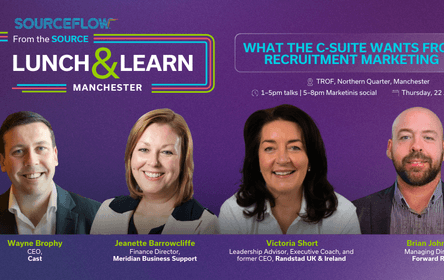
What Leaders Want From Recruitment Marketers | From The Source x Manchester
What Recruitment Leaders Expect From Marketing In 2026 SourceFlow’s From The Source x Manchester Lunch & Learn event brought together recruitment marketers and growth-focused leaders in the city’s Northern Quarter for an afternoon of speaker sessions and a leadership panel examining how recruitment marketing is assessed in terms of cost, contribution, and commercial impact. If you’ve followed SourceFlow’s work on marketing maturity, including From metrics to multiples: how recruitment marketing is growing up , this session explored similar themes through live discussion with practitioners and leaders. Key Takeaways from From The Source x Manchester Recruitment marketing is being judged on commercial contribution, including cost, return, and impact on revenue, not just activity metrics. Marketing is most effective when sales and marketing are aligned around shared outcomes, particularly where activity links directly to revenue. Access to CRM and performance data is essential for recruitment marketers. It enables them to identify gaps, support consultants, and contribute more directly to business outcomes. Clear expectations, defined payback periods, and honest review points help marketing earn trust with finance and leadership teams. Alignment improves when marketing understands how consultants and leadership teams operate day to day, not just when delivering output. Aligning sales and marketing around one operating system Ben Browning, Revenue Architect and Founder at recruitment sales coaching firm Be Resonant , works with recruitment organisations to align sales, marketing, and leadership around clear operating systems that drive predictable growth. Ben’s session addressed a familiar problem in recruitment businesses where sales and marketing work hard, but not always in step. He pushed back on the idea that growth comes from more BD activity alone. Instead, he set out the case for a single revenue operating system, one where sales and marketing are aligned around shared priorities, campaigns, and outcomes. He advocated for marketing being the drivers of account based sales methodology. Rather than running parallel efforts, Ben argued that teams perform better when they work from the same structure and language. That alignment creates consistency, makes performance easier to assess, and reduces wasted effort. Marketing has more impact when it is embedded in how revenue is generated, rather than a separate layer added on afterwards. Why storytelling still matters in recruitment marketing Jenny Wood is Global Head of Marketing at global marketing and tech recruitment agency Salt . Jenny’s session focused on storytelling and its role in helping recruitment brands stay clear and recognisable as identikit AI-generated content becomes more widespread. The strongest recruitment brands are clear on who they are, who they work with, and what problem they help solve, and they communicate that consistently. Jenny talked through how simple narrative principles help brands stay recognisable and credible, especially in a market where content is increasingly automated. When messaging is grounded in relevance and emotional truth, it supports both attraction and conversion. Used properly, storytelling strengthens commercial outcomes by making brands easier to understand and easier to choose. Measuring marketing in pounds, not impressions Kris Holland is Founder at recruitment marketing agency Kitto and spent many years as a marketing and rev-ops director within recruitment agencies. Kris’s session focused on attribution, measurement, and how marketing builds credibility with the business. He explained how recruitment marketers can link activity to outcomes such as meetings, vacancies, and placements, even when CRM and ATS data is imperfect. More than achieving perfect attribution, the value is in using data consistently enough to support decisions and conversations with leadership. Kris also stressed the importance of shared language between marketing, finance, and leadership teams. Marketing becomes more influential when results are explained in commercial terms rather than engagement metrics alone. Measurement does not need to be flawless, but it does need to reflect how the business makes money. What the c-suite really wants from recruitment marketing in 2026 The following takeaways are drawn from the leadership panel discussion on how recruitment marketing is assessed at C-suite level. Marketing needs to show cost, return, and payback Jeanette Barrowcliffe is Finance Director at Meridian Business Support , an environment, healthcare, industrial, and office professional recruitment firm. She brings more than 25 years of financial leadership experience. Jeanette focused on the importance of understanding total cost and reviewing activity against what it delivers. That might be short-term outcomes such as candidates or vacancies, or longer-term brand impact, depending on the activity. She also stressed that different initiatives need different payback periods, but those expectations should be clear from the start. Marketing activity should be reviewed honestly and stopped if it is not delivering what was agreed. Plan activity with defined measures and communicate results in commercial terms. Marketing works best when it supports revenue, not just visibility Wayne Brophy is CEO at Cast , an operational and supply-chain recruitment company he founded more than 20 years ago. Wayne explained how marketing operates inside his business and why it is treated as a revenue-generating function. At Cast, marketing is measured primarily on inbound enquiries that convert into vacancies. Other metrics are secondary. This focus helps align marketing and sales around shared outcomes and reduces debate about priorities. He also described how marketing-led vacancies are recognised through fee splits. This has changed how consultants view marketing and encouraged closer collaboration between teams. When marketing is clearly linked to revenue, it gains credibility across the business. Access to CRM data changes the role marketing can play Brian Johnson is Managing Director at Forward Role , a specialist technology, marketing, and digital recruitment agency he co-founded 12 years ago. Brian explained how marketing’s influence increases when it has access to CRM data and is involved in commercial discussions. At Forward Role, marketing works closely with client activity, follow-up, and communication gaps. This allows the team to identify missed opportunities, re-engage dormant relationships, and support consultants with more targeted insight. By using CRM data to highlight what is not happening, as well as what is, marketing becomes part of performance improvement rather than just promotion. Proximity to data enables marketing to contribute more directly to business outcomes. Personalisation depends on data quality and shared ownership Victoria Short is a Leadership Advisor, Executive Coach and the Former CEO Randstad UK & Ireland, where she spent more than 15 years of her 30-year career. Victoria focused on the relationship between data quality and effective marketing. She explained that automation without clean data often results in irrelevant communication and missed signals. Marketing cannot solve this alone and needs to work with operations and consultants to improve how data is captured and maintained. She also discussed marketing’s role across the full customer journey, including retention and re-engagement, not just acquisition. Marketing adds value when it helps the business understand buying behaviour and respond in ways that remain relevant over time. Quick Wins from The Panel Alignment depends on understanding how the business operates. Marketing is more effective when it understands commercial pressures, consultant workflows, and where performance breaks down. Focusing on output alone makes it harder to build trust. Visible progress matters. Small, practical improvements help demonstrate value and make it easier to bring consultants and leadership with you. Marketing is judged on outcomes. Leaders are less interested in volume of activity and more focused on results such as inbound vacancies, client retention, and contribution to revenue. Commercial relevance affects influence. Teams that can link marketing activity to these outcomes are more likely to shape decisions. Those that cannot risk being sidelined. What’s next? From The Source x Manchester sparked the kind of conversations we don’t get enough of. Honest discussion about where recruitment marketing adds value, where it falls short, and how expectations from leadership are changing. We’re looking forward to continuing those conversations throughout the year, bringing together the brightest minds in the industry, willing to share what they’re learning along the way. If you’d like to stay connected with future events and conversations, you can join the Recruitment Marketinis community or look out for the next Lunch & Learn announcement. You can check out the slides from the event by clicking here .
Why Salary Reports Are Still Recruitment Marketing’s Secret Weapon
Salary reports have been around for decades but in recruitment marketing , the smartest agencies still use them to win trust, traffic, and new clients. The truth is, salary data isn’t old news. It’s one of the most in-demand and consistently searched topics in recruitment, with more than 19,000 monthly UK searches for salary-related content (Source: Kaizen Digital analysis, 2025). Whether you’re running paid campaigns, nurturing a CRM audience, or arming consultants with better BD tools, salary reports continue to outperform trend-driven content because they answer one of the most timeless questions in hiring: What’s the market paying right now? Benefits of Salary Reports Salary data builds authority and drives action Salary content is universal. It resonates with clients, candidates, and consultants alike because it speaks to something tangible: value. When presented with insight and structure, a salary guide becomes a conversation starter, a credibility builder, and a lead generator rolled into one. Will Astbury, Global Head of Marketing at SourceFlow , puts it plainly: “Recruitment and staffing firms NEED to put salary reports at the heart of their content strategy. When run well, salary report campaigns can be a source of client leads for MONTHS.” The agencies that get it right treat salary data as part of their brand ecosystem. They distribute strategically through blogs, landing pages, and consultant outreach so the insight fuels every layer of their marketing funnel. Real-world proof: Revoco’s lead engine Take Revoco, a tech recruitment agency that consistently generates leads through its salary guides. Their reports are woven into both client strategy and marketing campaigns and the results are measurable. Harry Butcher, Marketing Manager at Revoco, explains: “Salary guides are still valuableit’s the data that everyone wants. People want to know what they’re getting paid, people want to know what to pay their team - it’s that simple. You may think your clients receive hundreds of them, but that’s not the case. They’re only receiving a couple a year and they still find them really useful. The key is to make yours stand out. We receive a few huge leads from our salary guides each year.” That’s the power of relevance: a well-executed salary guide fuels conversations, conversions, and long-term client trust. Why the concept hasn’t aged, instead has evolved According to Catherine Henderson, Founder of Boudicca Consulting (formerly NorthStar People), the reason salary insights still dominate is simple: they deliver value on both sides of the hiring equation. “Try as we might, the concept of a salary survey hasn’t changed in decades of recruitment marketing! Why? Salaries are the key component in client and candidate decision-making in our world. Your recruitment business is sitting on a goldmine of demanded content. No matter how you gather the data, or how you present it, salary reports continue to be one of the most powerful, added-value content pieces that we as recruitment marketers can produce.” The difference today is in execution. Modern salary reports are cleaner, data-driven, and designed for engagement. They combine placement data, AI-assisted role mapping, and visualised insights to keep readers scrolling. Agencies using platforms like SourceFlow take it further; embedding these guides into websites with landing pages, pop-ups, and automation workflows that track, segment, and follow up with every download. It turns a static PDF into a measurable marketing engine. How Salary Reports Create Conversations Salary data works because it builds credibility over time. It gives consultants a genuine reason to reach out. Not to sell, but to advise. That kind of interaction isn’t just good marketing; it’s great business development. For many recruitment teams, a salary guide is the bridge between marketing and sales. It positions your brand as a partner, not a pitch, and helps consultants open doors that cold emails can’t. As Kris Holland, Founder of Kitto Recruitment Marketing, puts it: “The distribution is as important as the creation of the asset itself. Make sure you’ve got time, effort and energy left to distribute it far and wide once it’s ready. That might mean outsourcing the creation, so you can put everything into getting it in front of the right people.” Done right, a salary guide becomes a living campaign one that fuels your brand for months, not days. Ready to build your own? If you’re still treating your salary guide as a once-a-year marketing exercise, this playbook will show you how to turn it into a long-term growth tool. Salary data isn’t going out of style any time soon. It’s the one topic your clients will always care about and the one tool your consultants can use to spark meaningful conversations. To learn how to create, package, and promote yours the smart way, download the free Recruitment Salary Report Playbook . It comes complete with templates, timelines, and real-world examples from experts across the industry. Download the playbook here

5 Smarter Ways to Use Your Salary Report (That Aren’t Just Gating It)
Most recruitment agencies publish salary guides but few truly make the most of them. Too often, they’re treated as a one-off campaign, gated behind a form, then quietly forgotten after launch. The truth is, your salary report can do far more than collect a few downloads. It can power your consultants’ outreach, your marketing content, and your business-development rhythm for months. The right approach depends on your tech stack and follow-up process. Here are five strategies recruitment marketers use: 1. Gated but accessible If your goal is lead generation, a gated report is still the most effective way to track and nurture interest. The trick is keeping the process friction-free. Collect only what you need: name, email, company, job title and one key question: “Are you downloading this for hiring or career advice?” That single line lets you segment your audience immediately. Candidates get one type of follow-up, clients another. From there, platforms like SourceFlow can automatically feed those contacts into the right workflows with no manual sorting required. See how SourceFlow works Pro tip: Pair your download form with a short thank-you sequence. 1st - delivers the asset 2nd - shows how to use the insights 3rd - invites a follow-up conversation. 2. Go hybrid A hybrid model gives you the best of both worlds. Publish key takeaways freely (i.e., regional trends, benefits insights, or predictions) but keep the detailed salary tables behind a download. This approach builds credibility publicly while still capturing leads from readers who want the full picture. It’s also ideal for LinkedIn posts and carousel snippets , where you can tease a few stats before pointing readers to the full report. As Catherine Henderson, Founder of Boudicca Consulting (formerly NorthStar People) reiterates how clarity beats volume . The more focused and useful your preview content, the more qualified your leads will be. 3. Try a time-gate strategy Not every asset has to go live on day one. Some of the most successful campaigns release reports first to consultants for business-development use. Give your team exclusive access for a few weeks before it’s published online. It gives them a credible reason to re-engage lapsed clients “We’re sharing early insights from our latest salary survey; would you like a copy before release?” This “time-gate” model turns your consultants into the first wave of your marketing campaign. It also lets you gather feedback before promoting the report wider. Here’s what that looks like according to Xcede Group's Head of Marketing, Janan Gok: “The user-friendly navigation of the backend makes it easy for our team to edit our content to reflect the continuous improvements we put in place. We are also pleased with the impressive response times of the support team whenever we raise a ticket.” 4. Make SEO your first priority Salary content drives consistent, long-tail traffic. According to Kaizen Digital’s analysis, there are more than 19,000 monthly UK searches for salary-related terms. That’s why some agencies take an SEO-first approach, publishing key sections of the report as optimised blog articles. It builds domain authority and keeps your brand visible for months after launch. Think of your report as a library of content: one dataset, multiple entry points. Turn salary insights into blog headlines, FAQs, or even AI-friendly snippets that answer salary-related questions directly on search engines. Optimise your content library For a deeper look at how recruitment marketers are rethinking SEO and building content that actually ranks, read our blog: SEO Landing Pages Aren’t as Effective as You Think. 5. Not Gated The smartest agencies treat salary guides as relationship tools. Encourage consultants to use the data in roundtables, client briefings, and prospect calls . Build carousel ads featuring bold salary stats or trend graphics. Share client testimonials about how the insights helped them benchmark or budget. The real value of a salary guide is its ability to open consultative conversations. It gives your consultants a tangible reason to call, email, or meet without resorting to cold selling. James Gage, North Star People Learning & Delivery Consultant shares: “BD training is a key part of my work. The beauty of a salary report is that you can have a rare opportunity to consult with your clients about the salaries and their team, the challenges they’re facing. It’s a fantastic business development opportunity.” Turning your salary guide into a campaign ecosystem When you combine these five approaches: gated, hybrid, time-gated, SEO-driven, and consultant-led, you turn one report into a complete marketing engine. It generates leads, builds trust, fuels conversations, and continuously feeds your CRM with qualified data. To see the full rollout plan, including timelines, templates, and automation workflows, download the free Recruitment Salary Report Playbook created by SourceFlow and industry experts. Download the playbook here
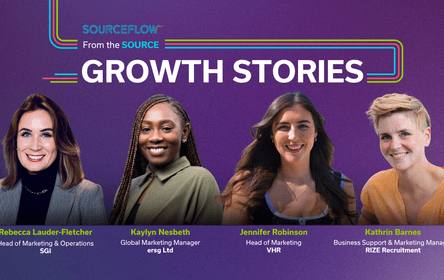
Growth Stories | SourceFlow’s Clients Share Recruitment Marketing Results & Website Wins
Recruitment moves fast, and so does the pressure on marketing teams to keep up. Whether you're leading recruitment marketing for your agency or just starting out, you’re expected to deliver stronger campaigns, better digital performance, and tools that help consultants work smarter, not harder. To give a clearer picture of what that looks like in practice, we’ve brought together feedback from the people who use SourceFlow every day. These stories come directly from recruitment marketers and agency leaders who’ve seen the impact on their website conversion rates, workflows, and day-to-day delivery. How VHR Lifted Their Recruitment Website Design & Confidence in Their Brand Jennifer Robinson Head of Marketing, VHR Global “I felt like we were progressing as a company, but with the (old) website, which is the face of the brand, it was always kind of letting us down a bit. And now I feel like the website is so good. It represents what we're trying to do.” Before SourceFlow, VHR’s website wasn’t keeping pace with the business. It looked outdated, was difficult to update, and didn’t reflect the strength of their brand or the quality of their service. With SourceFlow, the difference was immediate. Jennifer’s team can now update pages quickly, launch ideas without developer delays, and rely on a site that integrates cleanly with their CRM. The website finally matches who they are as a business and they hear it from clients and candidates too. Watch the video to see how VHR strengthened their brand and website experience with SourceFlow. Turning Strategy into Action for a Growing Recruitment Brand Kathrin Barnes Business Support & Marketing Manager, Rize Recruitment “They have helped us tremendously to identify where we are at the moment and where we want to be in the future. I truly believe that they can help us get there.” For Kathrin, the value was twofold: a clean, modern website and a clear sense of direction. SourceFlow helped define where the brand sits today and where it needs to move next, supporting long-term growth rather than just a technical build. The team experience stood out too: knowledgeable, friendly, and genuinely collaborative throughout the process. See how SourceFlow helped Kathrin’s team clarify their direction and build for the future. Running End-to-End Recruitment Campaigns with Zero Friction Kaylyn Nesbeth Marketing Manager, ERSG “Using Source Flow has improved my marketing as it's enabled me to run campaigns end to end seamlessly, get the results that I want and we've gained so many more users on our website as well.” Kaylyn saw an immediate uplift in website users and campaign engagement after shifting to SourceFlow. But the real win was speed. With the page builder, she can edit, test, and adapt content whenever she needs; no designers, no developers, no delay. It’s a platform built for marketers who want to move fast without compromising the brand. Watch to see how ERSG runs faster, more flexible campaigns with SourceFlow. A Platform Built Around the Recruitment Marketer, Not the Tech Rebecca Lauder-Fletcher Head of Marketing, SGI “I think that it puts the recruitment marketer at the center of everything that it does and the real focus is that the marketer owns that platformI think it's just an absolutely smashing platform and tool.” Rebecca has been with SourceFlow since its early days, watching the platform evolve in features, design, and capability. What matters most to her is ownership: marketing teams can run the website themselves, adapt quickly, and stay close to the numbers. From customer service to functionality, she describes SourceFlow as a platform that grows with you rather than holding you back. Here’s how SGI gives ownership back to their marketing team through SourceFlow. What Recruitment Marketers Want from Their Tech Stack A few Lunch and Learn highlights we caught on camera: Watch the video to see how SourceFlow supports those goals. See What SourceFlow Could Do for Your Team If you’re exploring options for recruitment website design, or looking for a recruitment marketing platform that’s built around the way you work, it helps to hear from people already using it. These are only a handful of the teams who’ve chosen SourceFlow to support their marketing, websites, and wider go-to-market strategy. Found this useful? Share it and follow us on LinkedIn for more recruitment marketing insights. Explore the platform to see what SourceFlow could do for your team. Book a demo today. Get a Demo
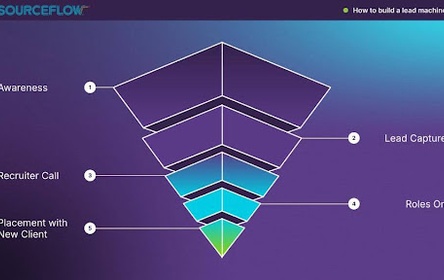
So You’re the First Recruitment Marketer in an Agency
Everyone wants something from you yesterday . The consultants want candidates. The MD wants leads. The ops team wants brochures. And you? You’re trying to turn busywork into measurable results . Being the first marketer in a recruitment agency can feel chaotic; no systems, no strategy, and no one quite sure what you do. Truth is, every successful recruitment marketing function started like this. Messy, reactive, and full of learning curves. At this year’s RecConnect Leadership Summit , SourceFlow’s Global Head of Marketing, Will Astbury , shared a framework on how to switch on your marketing and use it as your lead machine . Here are some practical takeaways every first-time recruitment marketer can use to build credibility and deliver results. 1. Focus on Quick Wins When you’re juggling twelve things a day, it’s easy to spread yourself thin across social posts, newsletters, and job ads. Start with campaigns that feed the pipeline , not just fill the calendar. Salary Reports If your agency tracks placement data or salary trends, you already have the makings of a report. Done properly, one salary guide can run for six months and generate hundreds of downloads; each one a warm lead when segmented and followed up. Download our Salary Report Lead Magnet Playbook here . Events Partner with consultants to host small, useful sessions: breakfast roundtables, LinkedIn Lives, or webinars. You don’t need huge budgets; 3050 attendees is enough to prove impact and spark future business. Content-to-CRM Make sure every blog, form, or download routes straight into your ATS or CRM. Test it weekly. If it isn’t tracked, it didn’t happen. Pick one KPI for the next four weeks: the number of tracked contacts added to your CRM from campaigns. Explore more frameworks and ideas on the SourceFlow Resources Hub . 2. Build Consultant Trust Your biggest challenge isn’t creativity. It’s credibility . Consultants are protective of their desks and sceptical of “marketing leads.” Earn their trust by making them the heroes of your work. Sit in on client calls and turn their insights into posts or event topics. Feature consultants in your content; their expertise gives instant authority. Share every small win: inbound enquiry, event sign-up, salary-guide download. Send short weekly updates linking your marketing activity to their pipeline. Trust grows through proof, not explanation. Once they see your work turning into client conversations, they’ll champion it. Will Astbury speaking at RecConnect about recruitment marketing for consultants. 3. Play the Long Game in Recruitment Marketing Quick wins matter, but lasting impact comes from consistency. SEO and brand building take time months, not days. If weekly publishing feels too much at first, aim for two strong posts a month and build from there. Over time, you’ll see compound growth in web traffic and inbound leads. As Will put it: “Marketing success in recruitment is measured in momentum, not miracles.” 4. Stay Consistent Structure beats stress, so create weekly rhythms: Monday review CRM data and performance. Midweek publish or promote key content. Friday share what worked (and what didn’t). Learn your tech stack well enough to self-serve, but ask for help early. Resilience isn’t doing everything alone; it’s knowing where to find support. And when the chaos hits, remember: every junior and senior recruitment marketer started exactly where you are. Prove Your Value Build credibility in recruitment marketing with consultants, play the long game with SEO, and turn chaos into measurable results. At SourceFlow , we help marketers connect content, campaigns, and CRM so every action feeds the pipeline. Explore how SourceFlow supports recruitment marketers

How to Build a Recruitment Marketing Lead Machine
Do you still rely heavily on cold calling and BD? You’re probably wondering why you’re still not seeing the lead flow you should. Recent analysis shows that cold calls now convert less than 2% of prospects into meaningful opportunities, while inbound leads cost up to 62% less to acquire than outbound ones. This doesn’t mean having to abandon the phones; it’s a matter of building a joined-up recruitment marketing system where technology and consultants drive the same pipeline. Will Astbury, Global Head of Marketing at SourceFlow, broke it down into three pillars during his session at the RecConnect Leadership Summit: Team, Tech, and Campaigns. Will Astbury speaking at RecConnect on recruitment marketing strategy 1. Build a Recruitment Marketing Team That Behaves Like Revenue A great marketer won’t transform a pipeline alone. You need a team that thinks like sales, acts like revenue, and is backed for the long term. Recruitment marketing performance depends on culture, not just skill. Hire for resilience, not just reach . Look for candidates who’ve thrived under pressure, not just produced content. Align incentives with outcomes. Tie marketing bonuses to tangible ROI: meetings booked, qualified leads, or revenue influence. Create a voice at the table. Include marketing in SLT conversations. When marketers help shape strategy, they own the result. Protect their runway. Give space to deliver long-term campaigns like SEO or salary guides that compound over time. Hire marketers who can deliver under pressure 2. Integrate the Right Tech to Unblock Your Pipeline Your website isn’t a brochure. It’s your most valuable business development asset. “If your website and ATS aren’t integrated, you’re operating blind.” When inbound leads can’t flow directly into your CRM, consultants are left chasing spreadsheets, not signals. Studies from Forrester confirm it: businesses with tightly aligned website, CRM, and marketing systems see 67% more leads, 36% higher retention, and faster lead response times than those without integration. Phase 1: Foundation Tech Stack Website with embedded conversion tracking CRM/ATS integration for instant lead routing Email automation and reporting Phase 2: Acceleration Tools Webinar platforms (like StreamYard) for lead capture BD automation flows (like SourceWhale) Data enrichment tools to track hiring-manager job moves When these systems sync, marketing-generated leads are visible, trackable, and immediately actionable. Recruitment marketing tip: Integration turns visibility into velocity. 3. Run Fewer, Bigger Campaigns for Longer You don’t need 15 ideas. You need three done brilliantly. Salary Reports When structured properly, a single report can generate hundreds of downloads and open doors for consultants for up to six months. Use light forms, segment by intent (hiring vs career), and trigger automated follow-ups. Events Programme Run at least four a year. Grassroots, affordable, and audience-led. Focus on speakers who add value over style, and treat no-shows as future leads; they’re still part of your funnel. Search Engine Optimisation (SEO) The slow-burn channel that builds authority. Publish useful, specific, and relevant content around your niche. Over time, Google and AI-driven engines reward depth and intent, not volume. For a deeper look at this, read Recruitment Marketing Insight in 2025: SEO Landing Pages Aren’t as Effective as You Think . 4. Measure Momentum, Not Moments Building a lead machine takes consistency. According to SourceFlow’s benchmarks, agencies that execute these pillars see an average +30% increase in client leads within six months and up to 100150% growth over two years once campaigns compound. Attract Nurture Convert Expand Your Next Three Moves If your consultants are still doing all the heavy lifting, it’s time to change how your pipeline works. Recruitment isn’t short on effort; it’s short on systems: Give marketing a number. Assign revenue-linked targets and commission marketers like a sales function. Unblock your tech. Prioritise ATS/CRM integration and automation before chasing new tools. Commit to consistency. Salary reports, events, and SEOand repeat them for 24 months. Cold calling will always have a place, but the firms winning in 2025 are those whose marketing, tech, and consultants are finally playing on the same team. Ready to Build Your Own Lead Machine? Your website, CRM, and campaigns should be doing more than attracting attention, they should be generating conversations, leads, and placements around the clock. At SourceFlow, we help recruitment businesses build the digital infrastructure to do just that. From strategy and website design to marketing automation and analytics, we’ll show you how to connect every part of your funnel and prove ROI along the way. Get in touch with SourceFlow to learn how to use recruitment marketing as your own lead machine.

From Metrics to Multiples: How Recruitment Marketing is Growing Up
Key takeaways from our London Lunch & Learn On the 1st of October 2025, SourceFlow’s Lunch & Learn London brought together recruitment marketers, operations leaders and agency founders to answer one question: How do we prove the commercial value of marketing in recruitment? Across four sharp, practical sessions, one message came through loud and clear: recruitment marketing is evolving from activity-driven to outcome-driven. Here’s a recap from the day’s expert speakers: Key Takeaways Marketers should measure success based on revenue and placements, not impressions or follower counts. Recruiters and marketers need to work together, using CRM and performance data to improve efficiency and results. Structured marketing plans supported by competitor analysis and clear value propositions help create stability and alignment. Marketing plays an important role in increasing a recruitment business’s value and preparing it for investment or sale. Strong brands, client advocacy, and consistent communication all contribute to higher business valuations. 1. From Likes to Placements Proving the ROI of Recruitment Marketing Catherine Henderson, Director, Boudicca Consulting Catherine opened the afternoon with a rallying cry for marketers to be battle ready; equipped with data that connects their work directly to revenue. Too often, she said, marketing teams measure the wrong things. LinkedIn followers, clicks, and impressions might be helpful indicators, but they don’t hold up in a board meeting. “If your marketing can’t be traced to meetings, jobs or placements, it won’t win the budget conversation.” She encouraged marketers to turn KPIs into commercial metrics: mapping campaigns to client meetings, tracking cost-per-placement, and building consistent feedback loops with recruiters and finance. 2. Data is your Friend but do your recruiters know it? Saeed ‘Si’ Bor, Founder, EmbeddedOps Next up, Si reframed how data underpins performance. Recruitment, he said, runs on ratios and data is the bridge between effort and results. He split agency data into two critical types: Performance data (what’s being done) and CRM data (what’s being learned). Used together, they reveal not just how consultants perform, but why. He urged agencies to modernise their coding models, capturing the qualitative detail learned in calls, not just LinkedIn-style filters. Done well, that data powers smarter targeting, stronger conversion ratios, and more meaningful marketing campaigns. Marketers must collaborate with operations, understand recruiter metrics, and use CRM as an engine for performance, not a filing cabinet. 3. Understand > Define > Action: Building a Market-Driven Marketing Strategy Jade Brar-Haase, Founder, Branded by Aquila Jade shifted the discussion from data to direction, explaining how structured planning builds resilience and alignment across teams. Her three-step approach combined competitor analysis, customer insight, and measurable activity to form a marketing plan everyone can commit to. “Quick wins are fine,” she said, “but they won’t get you through a downturn.” She also shared a SAFE scoring framework (Suitability, Acceptable, Feasible) to help leaders prioritise activities and keep teams focused on what moves the needle. 4. What Buyers Pay For: How Marketing Drives Valuation in Recruitment Kashif Naqshbandi, Founder, Stratifex OS Closing the afternoon, Kashif brought a private equity lens to recruitment marketing showing how brand, positioning, and data all affect valuation. After leading two successful PE exits, he revealed how buyers look beyond profit and into narrative: growth gets you noticed, but story gets you paid. He outlined practical levers for marketers to strengthen enterprise value: keep any single client under 10% of revenue, build multi-threaded relationships across the C-suite, and nurture measurable advocacy through NPS or case involvement. Marketing isn’t just a cost centre, it’s a value creator. The story you tell through your data, content, and relationships directly shapes your business’s perceived worth. What’s Next? Across the afternoon, teams compared playbooks for connecting websites, CRM and operations data so that marketing activity is consistently tied to meetings, jobs, and revenue. Recruitment marketing is evolving from activity-driven to outcome-driven, and those who prove value with data and frameworks will shape the industry’s future. You can check out the slides from the event by clicking here .

Recruitment Marketing Insight: In 2025 SEO Landing Pages Aren’t As Effective As You Think
For years, SEO landing pages were considered a quick win in recruitment marketing. Dozens - sometimes hundreds - of pages were spun up in seconds by combining keyword and location lists. Think: ‘Tech Jobs in London’, ‘Teaching Jobs in Manchester’, ‘Finance Jobs in Bristol’ - all generated automatically, all with roughly the same content. And for a while, it worked. But recruitment website design - and Google’s algorithm - has moved on. And at SourceFlow, so have we. Why Did SEO Landing Pages Fall Out of Favour? Once upon a time, recruitment website platforms popularised automated SEO pages because they were solving a real problem. At this time, many recruitment websites were minimal: a homepage, a jobs feed, and a few thin ‘news’ posts. SEO landing pages were a way to bulk out site content with relevant keywords. More pages meant more chances to get found. But search engines are far more sophisticated now. Google’s recent updates take a dim view of duplicate content, irrelevant pages, and spammy site structures. And that’s exactly what these auto-generated pages had become. Let’s say your site includes 20 locations and 10 job sectors. That’s 200 pages created instantly. But most of them contain the same reused content - copy about ‘tech jobs’ pasted across every city, or the same paragraph about ‘Manchester’ applied to every industry. These pages don’t just underperform. They hurt your recruitment website’s performance by diluting your crawl budget and damaging your domain authority. Worse still, these automatic combinations often produce nonsense. ‘Farming jobs in the North Sea?’ ‘Oil and Gas Drilling roles in the Cotswolds?’ These pages don’t help candidates - and search engines know it. The Modern Approach To Recruitment Web Design: Quality Over Quantity At SourceFlow, we’ve taken a different approach. Instead of auto-generating hundreds of pages, our platform empowers recruitment marketers to create strategic, high-performing content through our flexible page builder. Want to target ‘Finance Jobs in London’? Go for it. But now you can customise the content, embed a filtered job search, and showcase roles that actually match the query. If you want 100 SEO landing pages, no problem - as long as each one is meaningful, specific, and useful to your audience. In today’s recruitment marketing landscape, that’s the standard. Our approach supports smarter recruitment website design by keeping your site lean, focused, and optimised for both users and search engines. What Should You Do Next? If your recruitment website is still relying on auto-generated SEO pages, it may be time for a content audit and a new search engine optimisation strategy. Prioritise fewer, better pages. Focus on relevance, intent, and on-page quality - not sheer quantity. And if your current tech stack doesn’t allow for that level of control, maybe it’s time to talk to us. Book a demo Author: Matt Whiteley, Chief Technology Officer, SourceFlow With over a decade of experience leading global engineering teams and building scalable SaaS platforms, Matt is passionate about creating technology that balances usability, performance, and business value. Before SourceFlow, he spent nearly seven years at Volcanic, including four as CTO. Matt is known for bridging the gap between technical complexity and commercial clarity - building digital products that make recruitment marketing work harder and smarter.
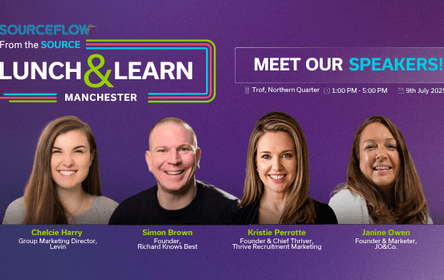
Marketing Should Hold The Keys To Recruitment Sales Strategies - Key Takeaways from Our Manchester Lunch & Learn
On the 9th of July, SourceFlow hosted an energetic and insightful Lunch & Learn event in Manchester, bringing together recruitment marketers, agency leaders, and operations pros from across the UK. The event focused on the evolution of recruitment marketing and the bold strategies required to lead growth in today’s challenging market. Here’s a recap of the key takeaways from the day’s expert speakers: 1. Kristie Perrotte Think Like a CMO, Act Like a Founder Kristie is the Founder and Chief Thriver at Thrive Recruitment Marketing , a consultancy that empowers marketing leaders in the recruitment space with strategic coaching and execution support. Kristie opened the event with a session designed to inspire marketers to step up and speak the language of business. She stressed the importance of aligning with commercial goalsand of measuring marketing's true value in terms of revenue, not reach. She said: “They don’t want to know how beautiful the engine isthey want to know if it’s going to get them to their goal, faster.” Top tip: Create and revisit a marketing plan monthly, using it to challenge distractions and keep leadership aligned on priorities. 2. Simon Brown Marketing Runs the Table. Sales Plays on It. Simon is the Founder of Richard Knows Best , a consultancy helping recruitment agencies modernise their sales and marketing approach through data, creativity, and common sense. He challenged the room to ditch outdated BD tactics and shift to a marketing-led growth model. He argued that recruiters must stop seeing marketing as a “colouring-in department” and start investing in it like they would in sales. He said: “If recruitment is a marketing job, then marketing is now a tech job. If you don’t understand the tools, you can’t drive the growth.” Top tip: Let marketers lead your go-to-market strategyincluding CRM usage, tool selection, and cadence-driven outreach. 3. Chelcie Harry & Janine Owen 10 Questions Recruitment Marketers Want Answers To Chelcie is Group Marketing Director at Levin , a global tech recruitment group, Janine is the Founder of JO&Co , a consultancy helping recruitment marketers drive revenue and scale their impact. Together, they answered the questions every recruitment marketer wants help withfrom proving ROI to building influence at board level. Their message was clear: revenue attribution, data storytelling, and knowing your numbers are non-negotiables in modern recruitment marketing . Chelcie said: “The second you move from brand metrics to revenue, you change the conversation.” Janine added: “Don’t just report numberstell a story. Show where you’re going and what it means for the business.” Top tip: If your CRM is messy or reporting is limited, start smalluse a spreadsheet, track leads manually, and focus on demonstrating commercial value. Our Manchester Lunch & Learn made one thing clear: Recruitment marketing is no longer a support functionit’s the engine of growth for modern agencies. Whether you're scaling content, proving ROI, or driving purpose-led outreach, the marketers who embrace commercial thinking, creativity, and confidence will shape the future of recruitment. You can check out the slides from the event by clicking right here . Author: Will Astbury, Global Head of Marketing, SourceFlow I have worked in recruitment marketing for nearly a decade and now lead strategic growth and communications at SourceFlow. SourceFlow do WAY more than industry-leading recruitment website design . We build recruitment websites and marketing tools that amplify ROI and provide transparency with state-of-the-art data insights.

How To Evaluate Recruitment AI (And Get Your Recruitment Website Ready For It)
If your recruitment agency is rethinking its recruitment website design or refreshing its recruitment marketing strategy, there’s no avoiding one hot topic: AI. But not all AI is created equal. In a recent episode of From The Source , SourceFlow’s Christian Coley sat down with Zach Sines, TA Technology Manager at North Highland, to unpack how staffing firms should think about recruitment technologyespecially when it’s branded “AI-powered.” Their conversation revealed something many in the industry are only starting to realise: evaluating recruitment AI isn’t just about featuresit’s about outcomes, scale, and real partnerships. Start With the Outcome, Not the Features Zach’s most practical advice for recruiters? “Ask what problem it’s solving. If you can’t answer that clearly, you’re not ready to invest.” When improving your recruitment website design , don’t just bolt on AI features to appear modern. Instead, identify whether that chatbot, personalisation engine, or content generator actually moves the needledoes it attract better candidates? Improve conversion? Make your recruitment marketing more effective? AI Doesn’t Replace RecruitersIt Supports Them Zach was clear: AI isn’t about removing people from the process. “You can’t AI-generate trust.” Recruitment is still a relationship business. AI can help with job ad writing, automated screening questions, and sourcing assistancebut it can’t replace human conversations or empathy. When redesigning your recruitment website, focus on how AI can enhance the candidate journey without removing the recruiter’s voice. Know What AI Actually Means Many platforms claim to use AIbut they’re often just automated workflows. Understanding core concepts like natural language processing, machine learning, or large language models will help your team ask better questions and choose better tools. Zach’s advice? Be sceptical of any tool that promises too much and shows too little. If it’s not improving your recruitment marketing efforts or candidate outcomes, it’s probably not worth the spend. Make Sure Your Recruitment Website Design Can Scale It’s easy to choose a tool that works todaybut what about next year? Zach emphasised the importance of scalability. When evaluating any recruitment AI solution or redesigning your recruitment website, consider: Can this platform evolve with your brand? Will it support new services, sectors, or teams? Is the provider open to co-creating features that support your growth? North Highland, for example, worked with SourceFlow to create a bespoke referral solution that tied directly into their websitebecause the platform was built for partnership, not just plug-and-play. Partnership Over Product Zach said it best: “We’re not just looking for features. We’re looking for partners who help us solve real problems.” If your recruitment tech vendor isn’t willing to adapt, respond to feedback, or align with your long-term recruitment marketing goals, they’re probably not the right fit. Final Thought: AI Isn’t a StrategyIt’s a Tool As UK firms adopt more digital tools, it’s tempting to think of AI as the strategy itself. But the most effective firms will use AI to support the strategynot define it. Use AI to power your job ads, enhance recruitment website design, and give your recruitment marketing more reachbut always ensure there’s a clear human outcome. --- If you would like to watch the full discussion between Christian and Zach, click the play button below. SourceFlow do WAY more than industry-leading recruitment website design . We build recruitment websites and marketing tools that amplify ROI and provide transparency with state-of-the-art data insights.
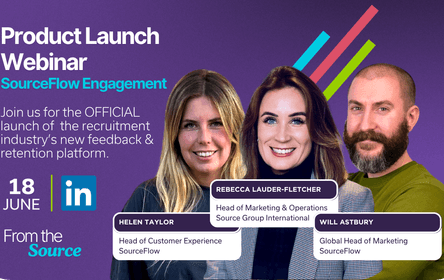
Why Real-Time Feedback Is The New Growth Engine For Recruitment
Earlier this month, SourceFlow officially launched its latest product, SourceFlow Engagement , during a live webinar hosted by our Global Head of Marketing, Will Astbury. The session brought together recruitment operations and marketing leaders to explore how automation, AI, and strategic insight can reshape retention and performance. Alongside Will, the webinar featured a platform demonstration from Helen Taylor, Head of Customer Experience at SourceFlow, and a customer case study from Rebecca Lauder-Fletcher, Head of Marketing & Ops at Source Group International (SGI). Their discussion offered valuable insight into how SourceFlow Engagement functions as effective customer retention management software for recruitment businesses. Closing The Feedback Loop Recruitment is full of moving parts: consultants, clients, contractors, and candidates all create touchpoints every day. Historically, gathering feedback across these groups has been inconsistent at best. Many agencies still rely on basic surveys, manual forms, or anecdotal insights passed up through consultants. SourceFlow Engagement changes this by automating the process at scale. Whether you’re sending out a customer satisfaction survey to clients, or an employee engagement survey internally, the platform helps you capture feedback at the right time, with minimal effort. As Helen explained, "We built SourceFlow Engagement to close the feedback loop across the recruitment journey. It means no more guesswork and no more delayed reportingjust consistent, real-time insight." Reporting That Works For Recruitment Firms One of the standout moments from the webinar came from Rebecca, who shared how SGI is using the platform to inform board-level decisions. "It’s a game changer," Rebecca said of the AI-generated summaries. "It was very manual beforegoing through each individual response, looking at patterns, then trying to create a cohesive summary. Now, we receive AI summaries every month just before our board updates, and it’s really easy to digest from both an operations and a sales perspective." Will reinforced this point: "We’re helping agencies move from scattered, reactive feedback to a strategic, ongoing view of experience that supports growth and retention." From Insight To Action Beyond just making feedback collection easier, SourceFlow Engagement gives recruitment leaders the tools to take action: Spot at-risk clients early and intervene before relationships are lost Track consultant engagement over time, by team, location, or tenure Surface real feedback from candidates that’s more than just a number As Rebecca noted, "We’re no longer flying blind. Now we can see exactly what’s happening and act on itquickly and with confidence." Purpose-Built For Recruitment Unlike general-purpose tools, SourceFlow Engagement is designed specifically for recruitment processes. It integrates directly with ATSs and the SourceFlow dashboard, allowing agencies to embed surveys into existing journeys and trigger them at key milestones. You can build your own employee engagement survey questions, personalise messaging for different brands, and benchmark results over time or against industry standards. Watch The Webinar Replay If you missed the launch event, you can still catch the full session on demand. You’ll see a full demo of the platform and hear directly from SGI on the results they’re seeing after rollout. And if you’re ready to see how SourceFlow Engagement could support your business, book a demo with our team today. 🔗 Get a demo Author: Will Astbury, Global Head of Marketing, SourceFlow I have worked in recruitment marketing for nearly a decade and now lead strategic growth and communications at SourceFlow. As someone who’s led marketing in the recruitment space, I know how difficult it is to get real-time feedback at scale. That’s exactly what we set out to fix with SourceFlow Engagement. SourceFlow do WAY more than industry-leading recruitment website design . We build recruitment websites and marketing tools that amplify ROI and provide transparency with state-of-the-art data insights.
Google’s March 2025 Update Explained – What It Means for Your Recruitment Website Design And Structure
Right Then, Google’s Had Another Tweak And Your Recruitment Website Design Needs a Rethink If your recruitment website design has been ticking along with no major updates, Google’s March 2025 core algorithm shake-up is your big, flashing warning light. This update is a pretty loud message to every recruitment marketer out there: if your site’s not helpful, fast, and jam-packed with authentic content, it’s going nowhere in the rankings . At SourceFlow, we live and breathe recruitment marketing . We build websites that actually convert not just look pretty. Here’s what the latest Google update means and what to do before your competitors pinch all your leads. What’s Changed? It’s Not Just About Keywords Anymore Google’s not messing around. Their March 2025 update is a shift away from old-school SEO hacks forget backlinks, forget keyword stuffing, forget dodgy AI content. Here’s the gist: Backlinks don’t rule the roost anymore Content quality matters more than who’s linking to you. Generic content is punished If you’ve used AI to churn out bland blogs, expect your rankings to tank. Originality is everything Google wants to see real expertise, unique perspectives, and people-first content. Engagement signals are key Time on site, bounce rate, mobile experience all of it plays a role now. So if your website's full of filler text or boring content that no one reads? You're in trouble. Step 1: Give Your Recruitment Website a Glow-Up Let’s be honest most recruitment websites are more style than substance. Flashy designs, no lead gen, zero SEO planning. Sound familiar? Fix it with these: Speed it up Resize those chunky images and ditch the slow page builders. Google loves sites that load in under 2.5 seconds. Structure your job posts Schema markup isn’t sexy, but it’s vital. Structured job posts = better visibility in Google for Jobs = more traffic. Make it accessible Alt text, colour contrast, proper headings. Not only is it the right thing to do, but it also helps with rankings. Step 2: Be More Useful Than a LinkedIn Cold Message Let’s talk content. This update is Google shouting: give people what they’re searching for . That means writing for humans, not algorithms. Create helpful blogs, salary insights, interview prep stuff your candidates and clients actually want. Don’t just auto-generate it with AI and call it a day. Add your voice, add your experience. Get your team involved. Got a consultant with niche expertise? Get them blogging. Bonus points if they’re funny. Remember: Google’s rewarding sites that act like influencers those who consistently publish high-quality, authentic content. Step 3: Turn Your Website Into a Lead Machine No more "our site’s just a shop window." Your recruitment website should be the hub of your entire recruitment marketing strategy. Launch salary report campaigns and gate the downloads. Set up lead-gen forms linked to your CRM or ATS. Drive people to your blog via LinkedIn, email, ads then track the lot . If you don’t measure it, it didn’t happen. Final Thoughts (Without the Fluff) Your recruitment website design needs to work with Google’s new rules, not against them. Prioritise performance, authenticity, and user-first content. Do that, and you won’t just survive the March 2025 update you’ll dominate the rankings, leave your competitors in the dust, and turn your site into a true marketing powerhouse. SourceFlow do WAY more than industry-leading recruitment website design . We build recruitment websites and marketing tools that amplify ROI and provide transparency with state-of-the-art data insights.
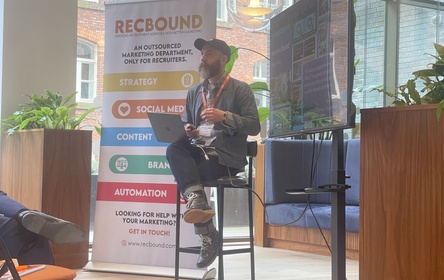
How To Build Recruitment Websites That Convert In 2025
These insights were originally shared by Will Astbury, Global Head of Marketing at SourceFlow, during a live presentation at an event hosted by recruitment marketing agency RecBound in March 2025. Will shared practical tips and strategies for building recruitment websites that actually drive leads and revenue. -- So, you’ve spent thousands on your website and you’re wondering... where are the leads? Don’t worry, you’re not alone. A huge number of recruitment agencies feel the same. In fact, 70% of recruitment websites fail basic SEO performance benchmarks, and most agencies don’t get anything close to what they should in terms of ROI. Here’s the good news: your website can work harder for you. You just need the right strategy. Based on experience with over 150 recruitment brands (and real-life results like a 683% engagement increase for Maxwell Bond), here are 3 actions you can take to turn your site into a proper lead-generating machine. 1. Sort Out Your Recruitment Website’s Performance Let’s be honestmost recruitment websites are slow. And that’s a problem. If your site takes longer than 3 seconds to load, 53% of mobile users bounce. Google knows this, and their March 2025 update reinforced it: page speed and user experience are major ranking factors. Easy wins: Resize all images. Think KB not MB. Switch image formats to WebP or AVIF. Cut cluttereach page should have one clear purpose. Also, structure your job posts properly. Add schema markup so job ads appear on Google for Jobs. That alone can boost visibility by 30%. Accessibility tip: Make your site usable for everyone. Add proper alt text. Use high contrast colours. Structure your pages clearly. Nearly 70% of disabled users will leave a site immediately if it’s inaccessible. 👉 Want a checklist? Download our Website Accessibility Checklist 2. Regularly Post Useful, Searchable Content Google’s March 2025 update also shook things up for content: Backlinks? Less important now. Spammy AI content? Penalised. Real, useful, consistent content? Rewarded. Use Google’s E-A-T principle: Expertise, Authority, and Trustworthiness. You don’t need to be a writerbut you do need to add value. Even if AI helps structure your content, your job is to bring your insight and voice to it. One idea: incentivise your team to contribute content. At SourceFlow, we’ve seen this drive real SEO gains. 3. Don’t Just Build ItUse It! Your website isn’t a shop window. It’s a campaign platform. One of the best lead-generating tools? Salary reports. Why? They provide real value Great excuse for sales calls Can fuel lead gen for 6+ months Run it like a campaign: 48 weeks data collection (let consultants lead this) Feature industry influencers to boost credibility Launch with paid ads, email, and automation Share highlights at events, in pitches, on social Track and route every lead to your CRM automatically. No manual spreadsheets. No lost contacts. Just value. Final Thought: 3 Quick Wins You Can Do Today Run a Google PageSpeed Insights testfix 1 red flag. Use ReciteMe accessibility testing. Add SEO-friendly alt text to every image. 👉 Want more tips? Download our free playbook or drop us a line. SourceFlow do WAY more than industry-leading recruitment website design . We build recruitment websites and marketing tools that amplify ROI and provide transparency with state-of-the-art data insights.
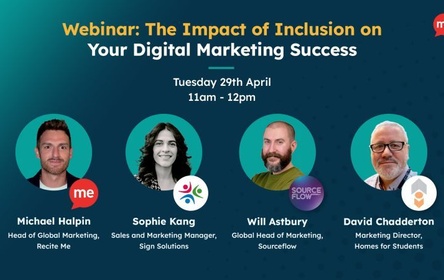
Here's How Recruitment Marketers Can Master Inclusive Marketing in 2025
More and more recruitment marketing success is hinging on inclusion. Accessibility, representation, and user experience are no longer 'nice-to-haves' they are essential for building trust, driving engagement, and future-proofing recruitment websites. At SourceFlow, we believe inclusive marketing isn’t just a moral responsibility it’s a commercial opportunity. These insights were recently shared by Will Astbury , SourceFlow’s Global Head of Marketing, during Recite Me ’s panel webinar “The Impact of Accessibility on Marketing Success” . Here's how recruitment marketers can lead the way in inclusive recruitment marketing. 1. Understand What Inclusive Recruitment Marketing Really Means Inclusive recruitment marketing goes beyond legal compliance. It's about creating digital experiences that make all users feel seen, heard, and valued including disabled and neurodiverse audiences. As experts in recruitment website design, we know it's not just about ticking accessibility boxes. It's about helping candidates find the right jobs faster and enabling recruitment agencies to connect with a broader pool of talent. When you embed inclusion into your recruitment marketing strategy, you benefit from: Better speed to hire Higher-quality candidate applications Improved marketing campaign results Better SEO performance (accessible recruitment websites rank better with Google) Inclusion isn't an extra it’s the engine of better business outcomes. 2. Build the Business Case for Inclusive Recruitment Websites If you’re making the case for investing in inclusive recruitment website design or marketing, here’s what the data tells us: 69% of disabled users will leave a website immediately if they face accessibility barriers. Disabled job seekers apply for 60% more jobs than non-disabled candidates a vital audience for recruiters. Companies with fully WCAG-compliant websites see up to 30% higher revenue on average. Plus, with the European Accessibility Act (EAA) coming into force in June 2025 (and full compliance required by 2030), optimising your recruitment website for accessibility isn’t optional it’s essential. At SourceFlow, we’ve seen the benefits firsthand. Our recent accessibility campaign influenced over 7,000 contacts and contributed to over 72,000 in deal revenue. Inclusive recruitment marketing delivers real commercial impact. 3. Practical Steps to Inclusive Recruitment Marketing Mastering inclusive recruitment marketing is easier when you break it down. Here’s how to get started: Accessibility-first templates: Build alt text fields, colour contrast checks, and accessible language prompts directly into your marketing content templates. Prioritise quick wins: Start with improvements like descriptive image alt text, clear heading structures, and strong contrast ratios on your recruitment website. Use AI (carefully): AI tools can help create accessible content quickly but always have a human review for quality and sensitivity. Educate your team: Understanding what the EAA requires and what inclusive marketing truly means is critical before rolling out changes. The truth is: getting great at inclusive recruitment marketing takes time and practice. Start now, stay consistent, and build momentum. 4. Avoid These Common Mistakes in Recruitment Website Design Many recruitment businesses stumble by: Treating accessibility like a last-minute add-on Confusing basic compliance with true inclusion Missing easy wins like alt text and mobile navigation Delaying action until EAA deadlines loom Inclusive recruitment website design isn’t just about avoiding fines. It's about winning more candidates, more clients, and more trust. Those who lead on inclusion will stand out as the market shifts. 5. The Future of Recruitment Marketing is Inclusive Looking ahead, inclusive recruitment marketing will become the new normal. Candidates and clients will expect recruitment websites to be accessible by default, not exception. Companies that embrace inclusion now building it into their recruitment website design and marketing processes will be the ones leading the industry by 2030. Inclusion is no longer optional. It's the new baseline for trust, loyalty, and business growth. --- You can also watch SourceFlow's webinar with Recite Me about the EAA. SourceFlow do WAY more than industry-leading recruitment website design for recruitment firms across the UK, US and Europe. We build recruitment websites and marketing tools that amplify ROI and provide transparency with state-of-the-art data insights.
Are You Wasting Budget on Job Boards? It’s Time to Rethink How You're Advertising Jobs In 2025
Featuring insights from Frank Nijmeijer, Chief Growth Officer at Wonderkind, and Matt Comber, CEO of SourceFlow In a recent episode of From The Source: Expert Insights, two leaders in the recruitment tech spaceFrank Nijmeijer from Wonderkind and Matt Comber from SourceFlowsat down to discuss a growing concern within the staffing industry: the continued over-reliance on job boards to advertise jobs. It’s a timely and relevant conversation for recruitment businesses trying to get more out of their marketing spendand it starts by questioning long-standing habits. Why Job Boards Might Be Costing More Than They’re Worth Recruitment firms have historically leaned on job boards to advertise a job. It’s familiar, it’s scalable, and it appears to deliver quick results. But Frank and Matt argue that this model has become unsustainable in today’s landscape. “There’s a lot of bleeding money going on,” Matt says. “Recruiters are throwing large sums at job boards without truly measuring what value they’re getting in return.” The issue isn’t just the costit’s that the reach and results aren’t what they used to be. When every competitor is advertising jobs in the same places, you’re not gaining competitive advantageyou’re just part of the noise. Meet the Experts: Wonderkind & SourceFlow To understand where they’re coming from, it’s worth knowing what Wonderkind and SourceFlow do: Wonderkind is a social job advertising platform that helps companies attract top talent by targeting candidates where they actually spend timesocial media, Google, and other online channels. By using AI and programmatic technology, Wonderkind empowers recruiters to advertise jobs more effectively and reach both active and passive candidates with precision. SourceFlow build high-performing recruitment websites and marketing tools for staffing firms. They help agencies streamline their marketing effortsfrom branded career pages to automated content distributionwithout needing a full in-house team. Both companies are aligned in their mission: helping recruiters adopt a smarter, more data-driven approach to advertising jobs and attracting talent. The Problem with "Post and Pray" Frank nails the core issue: traditional job boards support a “post and pray” mentality. You write a job ad, post it, and hope the right candidates see it. There’s little targeting, almost no retargeting, and limited ways to engage talent who don’t apply right away. “Would you market a product that way?” Frank asks. “Of course not. Yet so many recruiters are still advertising jobs like it’s 2015.” Instead, Frank advocates for treating each job ad as a campaign. That means using recruitment marketing techniques like: Dynamic ad targeting on social media Branded career content Email nurturing and remarketing Conversion-focused landing pages And it’s not just theoryFrank’s team at Wonderkind sees real-world results when firms shift budget from job boards to smarter campaign-based advertising. Owned Media: A Smarter Way to Advertise a Job Matt builds on this by talking about the shift toward owned mediacontent and platforms you control, like your website, email list, and employer brand channels. “It’s about investing in assets you own, rather than renting space on someone else’s platform,” he explains. SourceFlow help recruitment firms move in this direction by giving them tools to: Create branded job pages that convert Automate the distribution of content across channels Track real engagement and application rates When you own the experience, you can optimise it over time. You’re not just advertising jobsyou’re creating a continuous pipeline of engaged talent. The Future of Recruitment Marketing is Strategic One of the most powerful moments in the conversation comes when Matt says, “Recruiters need to start thinking like marketers.” And it’s truerecruitment marketing is no longer optional. It’s a necessity. In this new model, job ads aren’t just a box-ticking exercise. They’re a strategic lever for growth. With the right tools, firms can: Identify which channels deliver the highest quality applications Reduce reliance on costly job boards Reach passive candidates with tailored messaging Improve candidate experience and employer brand This isn’t just about cost-cuttingit’s about improving performance. Is It Time to Audit Your Job Advertising Strategy? If you’re still spending most of your budget on job boards, it might be time to step back and ask: What’s really working? Recruitment has evolved, and the way you advertise a job should evolve with it. Whether it’s embracing automation, targeting passive talent, or building your own marketing assets, there are smarter ways to do more with less. 🎥 Watch the Full Interview Frank Nijmeijer and Matt Comber bring a wealth of insightand practical advicein this episode of From The Source: Expert Insights. Whether you’re a recruiter, agency owner, or marketer in the industry, this conversation will challenge your thinking and inspire your next move. 👉 Watch the full episode now on YouTube and discover how the most forward-thinking firms are transforming how they advertise jobs: SourceFlow do WAY more than industry-leading recruitment website design . We build recruitment websites and marketing tools that amplify ROI and provide transparency with state-of-the-art data insights.
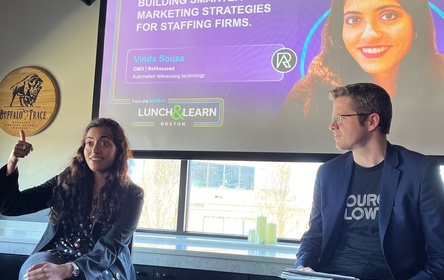
Lunch & Learn Boston: Lessons to Future-Proof Your Recruitment Marketing & Technology Strategies - April 9, 2025
At our recent Lunch & Learn in Boston, four industry leaders shared how staffing firms can take a smarter, more strategic approach to growth. From AI to marketing, technology to websites, one theme kept coming up: get focused, get aligned, and get strategic. Here are the biggest lessons from the dayand what they mean for recruitment marketers and ops teams on the front line: I'm glad you liked it! Here's the revised version with a compelling key quote from each speaker to bring their insights to life: F AI ling forward: getting daily results with Ai through trial and error Speaker: Brendan Robinson (Founder, Broad & Madison - Transformational staffing technology solutions) Brendan broke down the hype around AI and replaced it with actionable advice. His approach is simple: don’t try to master AI overnight. Start small, test ideas, and refine themjust like you would train a new team member. His team uses tools like ChatGPT and signal-based outreach to generate personalised messaging that scales their efforts without inflating headcount. Brendan made it clear that AI isn't here to replace recruitersbut it can free them up to focus on the high-value parts of their work. “AI is like an internit’s not perfect, but it gets better the more you work with it.” Key takeaways: Treat AI as a junior teammate, not a magic bullet. Start with one clear use case and scale slowly. Use AI to spot market signals and drive smarter outreach. Prioritise tools that deliver repeatable, measurable wins. Building Smarter Marketing Strategies for Staffing Firms Speaker: Vinda Souza (CMO, RefAssured - Automated referencing technology ) In a candid fireside Q&A, Vinda challenged staffing marketers to stop obsessing over surface-level tactics and start focusing on strategy, brand, and retention. She warned that firms focused only on capturing attentionwith no plan to retain or engageare operating with a “leaky bucket” and wasting valuable budget. Her rallying cry was for empathetic, value-driven marketing that builds trust and loyalty. She encouraged marketers to put the customer at the centre, ditch vanity metrics, and focus on the full funnel. “All marketing is customer marketingwhen you lead with empathy, the results follow.” Key takeaways: Stop chasing clicksbuild trust over time. Retention matters as much as acquisition. Ditch tactics that don’t deliver ROI. Marketing should solve problems, not just make noise. Tech-Driven Growth: How Staffing Firms Can Future-Proof Their Business Speaker: Patrick Davis (VP of Technology, The DAVIS Companies - Manufacturing, engineering, & IT staffing agency ) Patrick offered a refreshing take on recruitment tech: go slow to go far. He shared how The DAVIS Companies avoided tech overload by focusing on measured, need-based innovation. His advice was cleardon’t buy tools just because they’re trendy. Instead, identify real problems through feedback from recruiters, then solve them with the right tools. He also cautioned against information overload, encouraging firms to narrow their focus to a few meaningful metrics and ditch the noise. “Innovation doesn’t have to be fastit just has to be right.” Key takeaways: Tech should solve problems, not create new ones. Build trust by including your team in tech decisions. Simpler metrics drive better decisions. Real transformation starts with listening. How To Convert More Clients & Candidates Through Your Marketing & Recruitment Websites Speaker: Christian Coley (VP Sales, SourceFlow - Recruitment websites, careers sites, & marketing tools ) Christian wrapped up the day with a straight-talking reminder: your website should be your hardest-working recruiter. Too many recruitment websites look good but fail to convert traffic into actual leads. He urged firms to treat their website like a strategic sales asset, not just a design project. He also highlighted how important it is to align marketing, sales, and ops around shared goalsand ensure those goals are reflected in CRM and analytics setups. “If your website isn’t generating leads, it’s just a digital business card.” Key takeaways: Websites should attract, convert, and support growth. Great design is nothing without clear goals and CTAs. CRM and marketing tools must work in sync. Think of your site as a pipeline builder, not a placeholder. SourceFlow do WAY more than industry-leading recruitment website design . We build recruitment websites and marketing tools that amplify ROI and provide transparency with state-of-the-art data insights.

Key Insights from SourceFlow’s Brunch & Learn Recruitment Marketing Event - 2nd April 2025
We hosted another Brunch & Learn event this time in the heart of London at Back To Mine, once again bringing together recruitment agency leaders, marketers and operators for a morning of smart insights, dynamic conversation, and a solid spread of coffee and croissants. Our four impactful speakers dug into some of the biggest questions facing recruitment teams in 2025. Here are the highlights: Crack Your Job Board Addiction Speaker: Frank Nijmeijer, Chief Growth Officer at Wonderkind Frank kicked things off by diving straight into one of recruitment’s most persistent habits: over-reliance on job boards.He made a compelling case for change and challenged attendees to break the cycle by experimenting with smarter, more sustainable alternatives. Key Takeaways: The Cost of Job Boards is Rising, but Returns are Dropping : Wonderkind’s data shows that while job board CPC and CPA values have worsened over the past year, social advertising continues to deliver stronger results at a lower cost. Most Candidates Aren’t Actively Looking so You Need to Go Where They Are : If your ads aren’t where your audience scrolls daily (like TikTok, Instagram, or LinkedIn), you’re invisible. Diversification Isn’t Just Smarter, It’s Urgent : 90% of recruitment ad budgets still go to job boards, yet 73% of candidates use social media in their job search. Frank’s Practical Tips: Run through your own application process on mobile. On multiple browsers. If it’s slow, clunky or confusing, candidates will drop off. Start small, reallocate just 1020% of your current ad spend to test a new channel or streamline a clunky process. Job boards keep it locked down. Diversifying your approach means better tracking and smarter targeting. 95% of Wonderkind applicants come via mobile. Your process needs to reflect that. Track conversions that tie to hiring outcomes, like interview progression or placements. “Diversifying will help you decrease the over-reliance that you've got on job boards right now. It will also help you to stand out as an agency. It will help you land new clients and capture the interest of both active and passive job seekers. So, small shifts, smart moves, big impact.” How to Build Your Marketing Universe (in 15 Minutes) Speaker: Kris Holland, Founder at Kitto Kris came in with a strategy-packed, space-themed session on building a recruitment marketing engine that’s structured and consistent. Framing his approach as a “Marketing Universe,” Kris walked through a model that helps marketers build clear strategies and communicate them to non-marketers in a way that makes sense. Key Takeaways: Start With the End in Mind: Before diving into platforms, campaigns or content, get clear on who you’re targeting and what they care about. Build a System, Not Just Campaigns : Marketing works best when it’s treated as a universe, where everything: brand, content, assets, audience, works together, not in isolation. Tailor Everything to Your Audience : Know who your prospects are, what they care about, and what challenges they face. If your marketing isn’t built around them, it’s just noise. Kris’s Practical Tips: Map out your core audiences (candidates, clients, colleagues, future colleagues) and design touchpoints that speak directly to them. Define a clear value proposition that stands out. “We find top talent” isn’t enough. Audit your tone of voice, brand consistency, and visual assets. If your LinkedIn sounds nothing like your website, that’s a problem. Stop trying to be everything to everyone. Be specific about who you help, how and why it matters. “Start with the end in mind. Know who your prospects are, what they care about, and what challenges they’re facing. Make sure your whole marketing strategy is structured around solving their challenges and helping them to meet their goals." Optimising Consultant Effectiveness Through Data & AI Speaker: Ben Cawood, VP Sales - EMEA at SourceWhale Ben brought the energy (and the data) to his Brunch & Learn session, breaking down how recruitment leaders can boost performance by measuring the right things and using AI in ways that genuinely support their teams. Key Takeaways: Know What to Measure (and Why It Matters) : Focus less on vanity metrics like open rates and more on quality signals that drive revenue, like meetings booked, consistent workflows, and the candidate or client response. The Three Levers of Performance: Consultants should focus on the controllables: Quantity, Quality and Consistency. Quality > Quantity, But You Still Need Both : Using AI to read and classify outreach responses (positive, negative, or neutral) gives teams real insight into what’s working and what’s not. Build Processes People Will Use : Standardised outreach journeys make it easier to train new starters, reduce brand risk, and ensure consultants aren’t burning through valuable leads. Create Data-Led Conversations : Show consultants why performance dips by looking at their activity, consistency, and outcomes over time. This makes conversations more constructive and helps motivate long-term improvements. Ben’s Practical Tips: Map your team’s outreach journey. Track “meetings booked” as your leading indicator. It’s one of the strongest signs of BD effectiveness. Use AI to surface what’s actually being said and don’t just rely on reply rates or gut feel. Make it easier for your team to follow best-practice outreach, and for candidates to respond or engage. “Being able to measure the quality of what people are doing enables you to see how well they're targeting. If you can get to that level of control...and have a consistent journey that everybody is following...then you can measure it, you can figure out what's working and what's not working, and you can level up the business." The Future of Recruitment Marketing & SourceFlow’s Vision 2025 Speaker: Matt Comber, CEO at SourceFlow Matt closed out Brunch & Learn with a sharp and honest look at how job board dominance is fading and why brand-led, owned strategies are the future. Key Takeaways: The Job Board Tipping Point: Traffic is declining, candidates are disengaging and some platforms are shifting focus away from core hiring functions. Google’s Changing Priorities : Search engines are increasingly prioritising employer-led content. This makes SEO tougher for agencies, especially when competing against in-house hiring content. The Power of Brand Ownership: Recruitment businesses that build strong digital brands and become synonymous with their market niche will win. Matt’s Practical Tips: Prioritise SEO for your agency brand because search visibility for niche services delivers more qualified leads than generic job searches. Invest in your owned media: your website, your job ads and your content. Owning your channels means owning your audience. Break away from middleware like multi-posting tools and build direct relationships with advertising platforms for better targeting and performance. “Job boards sell candidates and applicants to you, across the board, to everyone else. As an agency, owning your channels and your own candidates via your own job boards is huge.”
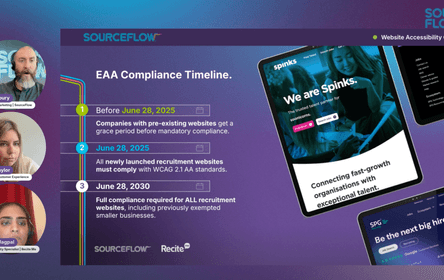
How the European Accessibility Act Will Shape Recruitment Website Design
On our recent From the Source: Expert Insight webinar, SourceFlow joined forces with Recite Me to shed light on the European Accessibility Act (EAA) and its implications for recruitment businesses. As leaders in recruitment website design , we understand the importance of creating inclusive and accessible digital platforms. This legislation, coming into effect in June 2025, sets out mandatory accessibility standards for digital platforms, aiming to create more inclusive online experiences. Why the EAA Matters for Recruitment Firms The EAA is a vital step toward breaking down digital barriers for over 135 million people in Europe living with disabilities. With disabled job seekers applying for 60% more jobs than non-disabled candidates, it’s clear that accessibility can no longer be an afterthought. Avneet Jagpal, an Accessibility Specialist from Recite Me, explained: "Accessibility basically means, in a nutshell, you need to make sure any service or any digital app that you're delivering is accessible for all." The act mandates compliance with the WCAG 2.1 AA standard and requires businesses to publish an accessibility statement, ensuring websites are perceivable, understandable, navigable, and interactive for all users. The Business Case for Accessible Recruitment Website Design For recruitment firms, the EAA offers not just legal obligations but clear business benefits. Non-compliance carries legal penalties and the risk of damaging brand reputation. More importantly, accessible websites widen the talent pool by making job opportunities available to a broader audience. Studies show that 69% of disabled users leave a website immediately if they encounter accessibility barriersmeaning inaccessible sites could be costing firms valuable candidates and clients. As Will Astbury, Global Head of Marketing at SourceFlow, noted: "If your site's not accessible, you're shutting off a huge tranche of candidates and a huge tranche of clients that can't access your materials, convert on your forms, speak to your recruiters. It’s absolutely huge." Key Compliance Steps for Recruitment Website Design To meet the EAA requirements, recruitment businesses should focus on two primary areas: Achieving WCAG 2.1 AA compliance: This involves addressing common web accessibility issues like: Ensuring sufficient color contrast for text and icons. Adding descriptive alt text for images. Providing clear and accurate form labels. Structuring pages with correct heading tags (H1 to H6) for easy navigation. Publishing an accessibility statement: This document outlines your site’s accessibility standards and ongoing efforts to maintain compliance. Practical Fixes and Tools for Recruitment Websites Recite Me shared some immediate fixes businesses can implement: Check and improve alt text on images. Use automated color contrast checkers to adjust visual elements. Ensure consistent and clear heading structures across pages. Timeline and Next Steps New services launched after June 28, 2025, must be fully compliant from day one. Existing websites have a grace period until 2030, but recruitment firms are encouraged to start the compliance process early to avoid falling behind. Helen Taylor, SourceFlow’s Head of Customer Experience, emphasized the importance of early preparation: "You might be sat here on this webinar thinking that doesn’t apply to you right now, but as we know with recruitment companies, you can grow exponentially overnight. So I’d really recommend getting ahead of the curve as soon as possible." SourceFlow is committed to supporting recruitment businesses on their journey to accessibility. We’re already working with clients to ensure their recruitment website design meets EAA standards, offering resources like our accessibility checklist developed with Recite Me. For those looking to get ahead of the curve, now is the time to act. Improving website accessibility not only ensures compliance but also enhances user experience, boosts brand reputation, and opens the door to a more diverse talent pool. Download our Recruitment Website Accessibility Checklist. It will help you audit your site’s accessibility. You can also watch the full webinar on YouTube. SourceFlow do WAY more than industry-leading recruitment website design . We build recruitment websites and marketing tools that amplify ROI and provide transparency with state-of-the-art data insights.

The Future of Recruitment Marketing & Candidate Vetting – Expert Insights from Vinda Souza
Recruitment is evolving faster than ever, and trust, authenticity, and efficiency have become central to hiring success. In the latest episode of From the Source: Expert Insight, SourceFlow’s Christian Coley sat down with Vinda Souza, CMO at RefAssured , to explore the changing landscape of recruitment marketing , automation, and candidate vetting. Here are the key takeaways from their discussion: 1. Trust is the Biggest Challenge in Hiring Today Recruitment marketing isn’t just about attracting candidatesit’s about building trust between agencies, employers, and talent. Many businesses struggle with candidate credibility, reference accuracy, and employer reputation. Why this matters: 🔹 Employers are more cautious than ever, and trust is a key differentiator in competitive hiring markets. 🔹 Recruitment agencies need to showcase credibility to win over both clients and candidates. 🔹 Candidates increasingly seek transparency about company culture and hiring processes. 2. AI & Automation Are Transforming Recruitment Marketing Technology is reshaping how recruiters assess, engage, and vet talent. AI-powered tools like automated reference checking are making hiring faster, more reliable, and less biased. Key benefits of automation in recruitment marketing: ✅ Speeds up the hiring process and improves efficiency. ✅ Reduces human bias in candidate assessment. ✅ Helps recruiters focus on relationship-building instead of admin work. "Recruiters should be spending more time advising and engaging with talent, not chasing references manually." Vinda Souza 3. Traditional Reference Checks Are Outdated & Broken Many agencies still rely on slow, inconsistent, and unreliable reference-checking processes. Vinda highlighted how RefAssured is changing the game with automated reference verification, ensuring faster, more trustworthy hiring decisions. Why traditional reference checks don’t work anymore: 🔹 They are time-consuming and slow down hiring. 🔹 Hiring managers often receive inconsistent feedback. 🔹 Candidates can easily manipulate the process. 💡 The Fix? Automated reference checks that verify credibility at scalewithout sacrificing accuracy. 4. Recruitment Agencies Must Differentiate Their Brand With candidate-driven markets, standing out requires more than just job postings. Employer branding, reputation management, and seamless candidate experiences are now essential. How to strengthen your recruitment brand: ✅ Use data-driven insights to personalise candidate outreach. ✅ Build a strong online reputation through testimonials and transparent hiring processes. ✅ Automate back-end hiring tasks to focus on engagement, not admin. 5. The Future of Recruitment: Faster, Smarter, & More Human While AI and automation are transforming recruitment marketing, human connection is still key. The best agencies will blend tech-driven efficiency with personalised engagement. 📌 What’s next for recruitment marketing ? 🚀 AI-powered hiring decisions that improve candidate quality. 🚀 More automation in reference-checking and compliance. 🚀 Stronger focus on trust & credibility in employer branding. Check out the full discussion between Vinda and Christian on YouTube. SourceFlow do WAY more than industry-leading recruitment website design . We build recruitment websites and marketing tools that amplify ROI and provide transparency with state-of-the-art data insights.

The Best Recruitment Website Designs Of 2024
In the world of recruitment marketing, having a well-designed website is critical to attracting top talent and engaging clients (old AND new). The best recruitment website designs of 2024 went beyond aesthetics; they enhanced user experience, optimized conversions, and ensured seamless functionality. At SourceFlow we love to geek out over recruitment website designs, so we decided to share some insight the design concepts for some of our favourite websites that we created and launched in 2024. The 10 Best Recruitment Website Designs Of 2024 Maxwell Bond ( maxwellbond.co.uk ) Maxwell Bond specializes in technology, digital, and governance recruitment. Their website’s design is sleek, professional, and user-centric, reflecting their expertise in hiring for high-tech roles. A modern UI with bold typography and dynamic visuals ensures candidates and clients can navigate with ease. What makes it stand out? Intuitive job search function for a seamless experience. Strong employer branding with impactful messaging. Fast-loading pages that enhance user retention and SEO ranking. Eryn Smith, Content Marketing Manager at Maxwell Bond, said: “In the couple of months that our new website has been live, our average engagement time is up 683.2% on the preceding period... The upgraded designs and functionality of the new website has massively improved performance of all of these key platforms. We’re excited to have a website that now truly reflects the style of Maxwell Bond, and represents the brand in the way it should be.” Haoyee Ng, Web Designer at SourceFlow, said: "The sleek, modern look and ease of use really shows their expertise in tech. Love how easy it is to navigate through the site as well." Ariessa Wong, Web Designer at SourceFlow, added: "The clear amd vbrant use of colours that brings user attention to the points that matter. Silky smooth animations for a great user experience navigating the webpage." LHI Group ( wearelhi.com ) LHI Group operates across multiple specialist recruitment sectors, including life sciences, technology, and renewable energy. Their website embodies their global presence with an intuitive layout, bold branding, and interactive features. Key strengths: Global-friendly interface for international talent. Engaging content that balances professionalism with fresh aesthetics. Lead capture elements such as gated content and newsletter sign-ups. LHi’s Director - Head of Marketing Kim Pasteau said: “Our need was for five different brand websites to be redesigned and rebuilt simultaneously and, as we had given notice to our previous web hosting platform, our deadline was extremely tight. The SourceFlow team worked really hard to meet our needs in what was a really challenging project. “The final result is a group of beautiful looking sites with great functionality that will see us through to our next growth chapter.” Luke McDonald, Web Designer at SourceFlow, said: "This site combines bold typography with striking imagery for a visually engaging and immersive design." Gerrell & Hard ( gerrellandhard.co.uk ) Gerrell & Hard is a specialist recruiter in engineering and technical markets. Their website is designed with a clean and structured layout to cater to professionals who value clarity and precision. What works well? Mobile-optimized interface ensuring accessibility on all devices. Clear and engaging employer branding. Strong technical SEO for better visibility in search rankings. Gerrell & Hard’s LinkedIn page states: “We are thrilled to announce the launch of our brand-new website! With a complete redesign and new platform underneath, it offers a significantly faster and more streamlined experience, and better reflects the current and future vision of Gerrell & Hard.” Haoyee said: "Gerrell & Hard’s hero truly stands out and catches attention. Love the use of gradients and colours as well, very modern and tastefully done." Luke added: "The whitespace/breathing room makes this design feel very fresh and premium. The subtle and effective use of colour enhances the user experience by making the site easy to scan and know where to look." Eames Consulting ( eamesconsulting.com ) Eames Consulting focuses on financial services recruitment, and their website reflects a corporate yet innovative identity. Why it stands out: Thought leadership content integrated seamlessly. A professional yet modern layout that instills trust. SEO-optimized job listings to improve discoverability. Luke said: "The Eames Consulting site uses straightforward design language that aids the user experience, and aligns with the goal of instilling trust." Spencer Ogden ( spencer-ogden.com ) Specializing in energy, infrastructure, and built environment recruitment, Spencer Ogden’s website is bold and dynamic. Winning features: Strong visual storytelling through bold imagery. Interactive job search function with filters to refine results. Integrated social proof (testimonials, success stories) to boost conversions. Haoyee said: "Great work on the subtle animations and beautiful illustrations through the site. It's a joy for users to scroll through and explore the different pages." Ariessa addded: "Spencer Ogden's custom design elements help the page, including images, animations and design elements blend together into a well-defined (and designed) whole." Morgan Hunt ( morganhunt.com ) Morgan Hunt focuses on public sector and not-for-profit recruitment. Their website is warm and approachable, prioritizing accessibility. What makes it effective? Inclusive and accessible design. Strong client and candidate engagement through clear navigation. SEO-driven content strategy for enhanced online visibility. Luke said: "Tailored brand touches throughout the Morgan Hunt website create depth and visual interest." Nicoll Curtin ( nicollcurtin.com ) Nicoll Curtin specializes in technology and change recruitment. Their minimalist yet visually striking website provides an engaging user experience. Key elements: Simple, clean UI for easy job searching. High-speed performance and mobile-first design. Persuasive employer branding to attract top candidates. Ariessa said: "Nicoll Curtin's website has a really striking hero section that captures the user's attention immediately, with solid colour and pattern usage throughout the site that solidifies the brand through the website for the user." Camino Search ( caminosearch.co.uk ) Camino Search connects finance and technology professionals with high-growth businesses. Why it works well: Vibrant branding that stands out. Clear CTAs that guide users toward job applications and inquiries. Mobile-optimized experience to maximize accessibility. Haoyee said: "Vibrant and young, goes in line with what they do! I love the subtle animations through the Camino Search site." DeepRec.ai ( deeprec.ai ) DeepRec.ai specializes in AI and deep tech recruitment. Their website uses a futuristic aesthetic that appeals to tech-savvy professionals. Standout features: Dark mode elements for a modern, cutting-edge feel. AI-driven job search functionality for precision matchmaking. Engaging content that positions them as industry leaders. Ariessa said: "DeepRec's recruitment website design is packed from top to bottom with shapes and elements that denote forward facing tech, packed full of useful information. The usage of bright and bold elements really drives the point of trailblazing the future- home." Harvey Nash UK ( harveynash.co.uk ) Harvey Nash UK is a leading technology recruitment firm, and their website reflects their strong industry presence. Key strengths: Sleek, modern UI that aligns with the tech industry. Integrated blog and insights section for recruitment thought leadership. SEO-optimized job board for better discoverability. Luke said: "Harvey Nash UK's design is intended to convey the sense of 'we are the leaders in this field' and has many tailored brand touches." Summary What Makes A Great Recruitment Website Design? Before we dive into the best designs of 2024, let’s break down the key elements that define a high-performing recruitment website: User-Centric Navigation: A well-structured layout that makes job searches and applications seamless. Strong Brand Identity: Cohesive color schemes, fonts, and imagery that align with the company’s values. Conversion Optimization: Clear call-to-actions (CTAs) that guide candidates and clients toward making inquiries or applying for jobs. SEO & Performance: Fast load speeds, mobile responsiveness, and optimized content to enhance visibility in search rankings. Lead Generation Features: Integrated forms, chatbots, and automation tools that convert website visitors into candidates and clients. Why Your Recruitment Website Should Be a Lead-Generating Tool A great recruitment website isn’t just about aestheticsit should also be a powerful lead generation tool. Here’s how: Optimized Job Listings: Ensure job posts are indexed by search engines and easily found. Clear CTAs: Encourage candidates and clients to take action with prominent 'Apply Now' and 'Get in Touch' buttons. Automated Chatbots & Contact Forms: Capture leads and qualify candidates instantly. Email Marketing & CRM Integration: Allow seamless communication with potential hires and clients. Conclusion The best recruitment website designs of 2024 seamlessly integrate branding, functionality, and user experience to engage both candidates and clients. From bold, dynamic designs to sleek, professional interfaces, SourceFlow has delivered innovative recruitment websites that set new standards in recruitment marketing. Beyond just an online presence, a well-designed recruitment website should be a high-performing sales and lead-generation tool. If you're looking to transform your recruitment website into a candidate and client magnet, SourceFlow can help. SourceFlow do WAY more than industry-leading recruitment website design . We build recruitment websites and marketing tools that amplify ROI and provide transparency with state-of-the-art data insights.

Key Insights from SourceFlow’s Brunch & Learn Recruitment Marketing Event - 22nd Jan 2025
We hosted an inspiring Brunch & Learn event in Manchester, bringing together recruitment leaders and marketers for a morning of actionable insights, exciting discussions, and valuable networking opportunities. With four impactful sessions, our speakers shared forward-thinking strategies to help recruitment businesses elevate their recruitment marketing efforts in 2025. Here are the highlights: 1. 25 Recruitment Marketing AI Megatrends for 2025 Speaker: Jo Perrotta, Managing Director at Marmalade Marketing Jo kicked off the event with an engaging overview of AI-driven trends transforming recruitment marketing. Key Takeaways: AI as a Strategic Partner: AI can enhance efficiency, predict market shifts, and personalise candidate experiences. However, businesses must avoid "AI joyriding" by setting clear objectives and governance policies. Personalisation at Scale: AI-powered tools are enabling more personalised outreach, improving candidate engagement and client satisfaction. The AI Hype Cycle: Jo introduced a 7-step AI maturity model to help businesses integrate AI responsibly, focusing on areas like predictive analytics, content creation, and employer branding. Jo’s Practical Tips: Leverage tools like LinkedIn Recruiter and TalentNeuron for AI-driven insights to optimise talent sourcing and recruitment marketing campaigns. Explore personalised email marketing campaigns with AI tools like HubSpot and Force24 to improve engagement rates. Continuously upskill teams with AI-focused training programmes to stay competitive. 2. Automations That Every Recruiter Needs to Win More Business Speaker: Rich Gibbard, Director at Recbound Rich focused on how automations can optimise recruitment marketing processes, save time, and increase business growth. Key Takeaways: Time-Saving Automations: Automate repetitive tasks like candidate follow-ups, lead scoring, and client engagement to free up time for high-value activities. CRM Integration: Ensure your CRM is the central hub for marketing and recruitment, enabling better segmentation and tracking. Balanced Automation: While automating processes improves efficiency, personalisation remains critical to building strong client and candidate relationships. Rich’s Practical Tips: Implement automations for re-engaging lapsed clients and creating targeted prospecting campaigns. Leverage CRM tools like HubSpot to manage data and segment audiences effectively. Monitor automation KPIs to ensure measurable success in your recruitment marketing efforts. 3. Are Your Recruitment Websites Ready for the European Accessibility Act 2025? Speaker: Sami Hobson, Partnerships Manager at Recite Me Sami’s presentation explored the European Accessibility Act (EAA) and its implications for recruitment businesses. Key Takeaways: Accessibility and Recruitment Marketing: Ensuring your website complies with accessibility standards improves the candidate experience, boosts SEO, and expands market reach. The EAA Deadline: Businesses targeting the EU must comply with WCAG 2.2 AA standards by June 2025 to avoid legal penalties. Accessibility Benefits: Accessible websites help recruitment businesses attract diverse talent and build trust with candidates and clients. Sami’s Practical Tips for Accessible Recruitment Websites : Audit your website for accessibility issues, focusing on alt text, colour contrast, and page structure. Use tools like Recite Me to ensure compliance and provide an inclusive digital experience. Include an accessibility statement on your website to align with the values of modern recruitment marketing. 4. The Future of Recruitment Marketing & SourceFlow’s Vision 2025 Speaker: Matt Comber, CEO at SourceFlow Matt concluded the event with a forward-looking session on recruitment marketing and SourceFlow’s product roadmap. Key Takeaways: Owned Media Revolution: Recruitment businesses should invest in owned media platforms to reduce reliance on job boards and external platforms. AI-Driven Recruitment: Matt’s share an overview of SourceFlow’s new features and products that will be released in 2025. Personalisation and Predictive Analytics: Dynamic, AI-driven strategies will shape the future of recruitment marketing, delivering personalised experiences across the candidate journey. Practical Tips for the Future of Recruitment Marketing: Transition your marketing efforts to owned media platforms for better control over content and ROI. Use AI-driven tools to create predictive analytics and personalisation that enhance the candidate experience. Stay informed about industry trends and technologies to remain competitive in recruitment marketing. SourceFlow do WAY more than industry-leading recruitment website design . We build recruitment websites and marketing tools that amplify ROI and provide transparency with state-of-the-art data insights.

Transform Your Recruitment Website Into A Business Development Powerhouse For 2025
In 2025, your recruitment website design is far more than just an online brochure it’s a critical business development tool that drives growth. Whether you’re focused on attracting top talent or expanding your client base, your recruitment website must be optimised for both performance and conversions. Insights from Darren Curtis, CRO at SourceFlow, and James Osborne, Founder of The Recruitment Network (TRN), provide a roadmap to transform your website into a powerful growth engine for your recruitment business. 1. Make Your Recruitment Website Design a Growth Engine Your recruitment website design needs to function as a dynamic business development platform. In today’s competitive landscape, websites serve as the core of your recruitment marketing strategy. As James highlights, a recruitment website should never exist in isolation. It should be integrated with a comprehensive recruitment marketing strategy to drive traffic, enhance brand awareness, and generate conversions. When designed strategically, your website can be a key asset for growing your recruitment business. 2. Drive Conversions with High-Quality Content Content is one of the most effective tools for driving conversions on recruitment websites. Darren stresses the importance of offering high-quality content that resonates with both candidates and clients. To stand out, create valuable assets like white papers, trend reports, and salary surveys content that addresses the pain points of your audience. This content should not only provide insights but also encourage visitors to engage by providing their contact details, thereby building your leads. Effective recruitment marketing hinges on offering content that is valuable enough to warrant a visitor’s commitment. When done correctly, your content will turn passive visitors into active candidates and clients. 3. Integrate Recruitment Marketing with Your Website To truly maximise the potential of your recruitment website, it needs to be part of an integrated recruitment marketing strategy. According to Darren, a recruitment website alone won’t drive results if it isn’t actively marketed. From social media campaigns to targeted email marketing, every marketing effort should be focused on driving traffic to your site. By creating a robust marketing ecosystem that connects back to your website, you can turn it into the central hub of your business development activities. 4. Optimising for Mobile and User Experience (UX) A recruitment website must provide an exceptional user experience (UX), especially on mobile devices. As mobile usage continues to increase, ensuring that your website is mobile-responsive is non-negotiable. James emphasises that websites should load quickly and be optimised for mobile, allowing candidates and clients to interact with your site on the go. In terms of UX, the conversion process should be smooth and seamless. Visitors should be able to find information easily and submit applications or queries with minimal friction. When the recruitment website design focuses on simplicity and usability, engagement and conversions improve significantly. 5. Boost Visibility with Effective SEO and Longtail Strategies SEO is essential for driving organic traffic to your recruitment website. Darren highlights that focusing on longtail SEO using niche and question-based keywords can significantly improve search visibility. Instead of just targeting broad terms like “recruitment agency”, focus on more specific queries like “best recruitment agency for tech startups in London” to attract highly qualified leads. Optimising your recruitment website for search engines ensures you appear when potential clients or candidates are actively searching for your services, providing a steady stream of targeted traffic. 6. Leverage AI for Smarter Recruitment Integrating AI into your recruitment website can improve the recruitment process and enhance the user experience. AI-powered tools can match candidates with relevant job opportunities based on their skills and preferences. By leveraging AI, your recruitment website can deliver personalised job recommendations, ensuring that candidates only see roles they are qualified for, reducing bounce rates and increasing engagement. In addition, AI can be used to optimise the content on your website, ensuring it answers the most common questions and queries from potential candidates and clients improving both SEO and user satisfaction. 7. Track Performance with Analytics Data analytics are crucial to improving your recruitment website’s effectiveness. As Darren notes, you need to implement robust tracking to measure the effectiveness of your recruitment marketing campaigns. This includes tracking which channels (e.g., social media, email, organic search) are driving the most traffic and conversions. With the right data, you can refine your strategy to focus on the most effective tactics and improve ROI. Regularly reviewing your website’s analytics will help you understand what’s working and where improvements are needed. This ongoing optimisation ensures that your website continues to meet the needs of your candidates and clients. 8. Ensure Security and Scalability Website security is a top priority, especially when handling sensitive data like CVs and personal details. Darren highlights the importance of keeping your recruitment website secure, particularly when using platforms like WordPress. Regular security updates, SSL certificates, and secure data storage are necessary to protect your users' information and build trust. Additionally, your website must be scalable. As your recruitment business grows, your website should be able to handle increasing traffic and new features, ensuring that it remains a powerful tool for business development. Conclusion Your recruitment website design should be a core component of your business development strategy in 2025. By integrating high-quality content, optimising for mobile and UX, leveraging AI, and focusing on effective SEO, you can transform your recruitment website into a conversion powerhouse. Regular tracking, continuous improvements, and integration with your recruitment marketing efforts will help ensure that your website drives the growth and success of your recruitment business. Invest in making your website not just a destination, but an essential part of your recruitment marketing ecosystem, and watch it drive results in the years to come. Want to learn more? Watch the full conversation between Darren Curtis and James Osborne for deeper insights into building a recruitment website that delivers results in 2025. SourceFlow do WAY more than industry-leading recruitment website design . We build recruitment websites and marketing tools that amplify ROI and provide transparency with state-of-the-art data insights.

Get Addicted To Data For Recruitment Success
In the latest Expert Insight edition, SourceFlow CEO Matt Comber and Lisa Jones, Founder of Barclay Jones , delve into how data can revolutionise recruitment processes. Here are the key takeaways from their conversation. Why Data Matters For Recruitment And Staffing Firms Data is the cornerstone of modern recruitment, enabling: Improved efficiency. Stronger candidate and client relationships. Informed decision-making. Lisa introduced the concept of Return on Effort (ROE) as a better metric than ROI, emphasising the value of intentional data management. She said: "We are both data addicts... because we know the power it has to change recruitment outcomes." Getting Started With Data Understand Your Market: Analyse your niche and leverage industry data to identify opportunities. Use What You Have: Tap into existing systems like Bullhorn before seeking external data sources. Lisa explained: "Start with Bullhorn, but ultimately really ask yourself, how much data do you really need?" She shared an example of a client with nine recruiters managing fifty thousand candidates, pointing out: "That’s too many to nurture effectively. Focus on what you can work with, then let automation handle the rest." Managing Data Effectively Declutter Your Database: Avoid hoarding unorganised data. Focus on quality over quantity. Prioritise Data Health: Regularly clean and update your records for accurate insights. Nurture Relationships: Use meaningful data points, like interests or milestones, to personalise interactions. Matt shared an example of how data could be used by AI to improve recruitment marketing: "The amount of data people put on CVs is insane. Someone might say they're a front-end developer, but their CV mentions React and Next.js. We should be pulling those skills out automatically and using that data for marketing. Why aren’t we emailing updates about React to those candidates or creating LinkedIn collateral to attract new talent?" Building Engagement With Data Automate Smartly: Streamline repetitive tasks, freeing time for relationship-building. Lisa explained: "Automation wakes up the data you need, when you need it, and lets you focus on what matters." Stay Connected: Regular check-ins with candidates and clients build trust and loyalty. Personalise Outreach: Small gestures, like birthday greetings, make a big impact. Recruitment Websites: A Data Goldmine Your recruitment website is a powerful tool for engaging candidates and clients alike. Optimise your website to: Showcase relevant job opportunities. Provide valuable content tailored to candidates’ needs. Capture useful data through application forms and content downloads. By integrating tools that track user behaviour, you can gather insights into what your audience values most. Use this data to refine your recruitment marketing strategy and attract top talent. Recruitment websites designed with user experience in mind drive engagement and help you stay ahead in a competitive market. Key Takeaways Clean, organised data is more valuable than quantity. Build relationships through personalised engagement. Use technology to enhancenot replacehuman interactions. Develop scalable, long-term data strategies. Leverage recruitment websites to gather actionable insights and drive engagement. By adopting these strategies, recruitment professionals can unlock new levels of efficiency and engagement. Ready to learn more? Watch the full episode of Lisa and Matt's conversation for actionable insights on leveraging data for recruitment success. SourceFlow do WAY more than industry-leading recruitment website design . We build recruitment websites and marketing tools that amplify ROI and provide transparency with state-of-the-art data insights.

How Recruitment Web Design and AI Are Transforming Talent Attraction
The recruitment landscape is rapidly evolving, with technology driving significant shifts in how staffing firms attract and engage candidates. In a recent episode of the jobTopia podcast, Christian Coley, VP of Sales - US at SourceFlow, joined host Tony Moore, Timpl ’s Head of Marketing, to discuss emerging trends in recruitment website design , career portals, and the integration of AI into HR technology. Staffing Tech Landscape: A Shift Toward Innovation The staffing industry is embracing technology to enhance branding, streamline recruitment processes, and improve client engagement. From leveraging advanced platforms to creating seamless user experiences, firms are rethinking how they approach recruitment. Christian highlighted the critical role that recruitment web design plays in creating an effective online presence. A well-designed recruitment website not only boosts visibility but also ensures that candidates can easily find and apply for jobs, improving overall engagement. Boosting Demand with AI and SEO Optimization SourceFlow, a demand-generation platform, focuses on helping staffing firms increase brand awareness and generate leads. Christian emphasized two key strategies for boosting demand: AI in Recruitment: Approximately 24% of companies now use AI to streamline recruitment. AI-powered tools help automate candidate sourcing, improve job matching, and personalize candidate communication. This technology integration is reshaping recruitment websites and career portals, making them more efficient and user-friendly. SEO Optimization: A recruitment website optimized for search engines ensures maximum visibility. Christian stressed the importance of a user-friendly design, accessible content, and SEO best practices to attract top talent. By ranking higher in search results, companies can draw more candidates and clients to their career portals. Gated Content: A Powerful Lead Generation Strategy One standout trend discussed was the growing use of gated content. Resources like salary guides, industry insights, and whitepapers are valuable tools for attracting and capturing leads. Christian noted that gated content not only positions a recruitment website as a thought leader but also generates actionable insights by collecting lead information. Overcoming Challenges in Staffing Tech While advancements in recruitment website design and technology have been transformative, challenges persist: Data Quality: Many staffing firms struggle with outdated or incomplete data in their Applicant Tracking Systems (ATS). Ensuring accurate and up-to-date information is crucial for effective recruitment. Integration Issues: Companies often face difficulties integrating job postings from their ATS to career portals. A seamless integration ensures that job opportunities are promptly visible to candidates, reducing inefficiencies and missed opportunities. Marketing's New Role: Revenue Generator The podcast also highlighted a shift in how staffing firms view marketing. Once seen as a cost center, marketing is now recognized as a revenue generator. Christian outlined the importance of a multi-channel approachleveraging social media, email, and other platforms to engage candidates and clients effectively. This shift underscores the growing recognition that strategic marketing is vital for staying competitive. The Future of Recruitment Websites and Career Portals As the staffing industry continues to evolve, recruitment web design will play an increasingly critical role in attracting and retaining top talent. Companies that invest in SEO optimization, AI-powered tools, and seamless career portals will be well-positioned to lead the market. Christian’s insights underscore the importance of embracing innovation in staffing tech and marketing. By prioritizing user experience, leveraging gated content, and addressing data quality challenges, staffing firms can transform their recruitment websites into powerful tools for demand generation. Conclusion The integration of AI, advanced web design, and strategic marketing is reshaping the recruitment industry. As Christian Coley emphasized on the jobTopia podcast, firms that adopt these innovations will not only enhance their career portals but also drive greater demand and engagement. Whether you're rethinking your recruitment web design or exploring AI tools, the time to innovate is now. To dive deeper into these insights, watch the full episode of the jobTopia podcast on YouTube or visit Timpl's blog https://blog.timpl.com/attracting-talent-with-ai-and-hr-technology.

Empowering Recruitment Marketers with Page Builder: Revolutionising Recruitment Website Design
In 2025, having a responsive and agile website is essential. At SourceFlow, we understand that your recruitment website design needs to evolve just as quickly as your business does. That’s why we’re excited to introduce our latest feature: Page Builder . This powerful new tool is designed to give recruitment marketers and leaders the freedom to create and manage their own website pages with speed and ease. Here’s everything you need to know about how Page Builder can transform the way you work. What is Page Builder? Page Builder is a self-service tool that allows you to create and customise web pages using your main SourceFlow website’s custom-designed components. Whether you need a new podcast page, a sector specialism page integrated with your CRM, or a events page, Page Builder empowers you to bring your vision to lifeno coding required. As our CEO Matt Comber explained during his demo: “We love to support our customers but sometimes people just want to build their own pagesand now they can.” With Page Builder, you can save time and take direct control of your recruitment website design , all while maintaining the professional look and functionality your brand is known for. Key Features and Benefits 1. Seamless Page Creation Creating a new page is as simple as clicking the “+” button. URLs are automatically generated, and pages can be saved as drafts before publishing. You can also easily navigate your site structure with an expandable menu for effortless building. 2. Built-In Image Repository Say goodbye to juggling multiple tools for image management. Page Builder includes an integrated image repository where you can upload, search, and edit images. Features like aspect ratio adjustments, compression, and conversion to WebP format ensure your visuals look great and load fast. 3. Advanced SEO Functionality Optimising your pages for search engines is effortless with Page Builder. Add metadata and other SEO content directly in the editor. This ensures your pages are not only visually appealing but also discoverable by the right audience. 4. Customisable Components Page Builder leverages website-specific components like mini hero sections, video blocks, job feeds, and content side images. These can be added, reordered, duplicated, or styled to match your branding. You can even add dividers for perfect spacing and select images directly from the library. 5. Insights and Analytics Track your website’s performance with integrated insights on page traffic, job search form conversions, and more. Data is seamlessly connected with Google Analytics, giving you a clear view of what’s working and where to optimise. Why Page Builder Matters For recruitment marketers, speed and flexibility are everything. Whether you’re launching a new campaign, updating job postings, or creating landing pages for a niche market, Page Builder empowers you to act quickly without relying on external support. And for recruitment leaders, it ensures your team can stay agile while keeping your recruitment website design consistent and professional. Rollout Begins in January 2025 We’re rolling out Page Builder in January, and the best news? It’s completely free for SourceFlow customers. Early adopters are already leveraging this tool to create dynamic pages that drive results. Ready to See It in Action? Watch our CEO Matt Comber’s demo to explore the possibilities of Page Builder, or get in touch with our team to schedule a personalised walkthrough. Page Builder is here to make your life easier, your recruitment website design stronger, and your business more adaptable. Don’t wait to experience the benefits. Let’s build something amazing together. SourceFlow do WAY more than industry-leading recruitment website design . We build recruitment websites and marketing tools that amplify ROI and provide transparency with state-of-the-art data insights.
Boost Recruitment ROI: Your Guide to High-Performance Websites
The Recruitment Revenue Machine Playbook: Your Blueprint for Success In today’s fast-paced recruitment landscape, staying ahead of the competition requires more than just ambitionit demands strategy, precision, and the right tools. At SourceFlow, we understand the intricate challenges recruitment firms face, from client acquisition to delivering measurable ROI. That’s why we’ve created The Recruitment Revenue Machine Playbook , your ultimate guide to transforming your recruitment website into a lead-generating powerhouse. Why Your Recruitment Website Matters More Than Ever Your recruitment website isn’t just a digital storefront; it’s the engine driving your client and candidate acquisition strategy. In an age where first impressions often happen online, having a website that not only looks great but performs exceptionally is essential. A high-performing recruitment website can: Attract high-quality candidates and clients effortlessly. Streamline application and lead generation processes. Showcase your expertise and credibility in the market. However, achieving this level of performance requires more than aesthetics. It demands strategic optimisation, which is precisely what the Recruitment Revenue Machine delivers. What's Inside the Playbook? Proven Frameworks for Lead Generation Discover strategies that recruitment firms are using to turn their websites into revenue-driving assets. This playbook distills years of industry expertise into actionable steps you can implement immediately. Metrics That Matter Learn which metrics truly reflect your website's performance and how to track them effectively. Whether it's improving conversion rates or boosting candidate engagement, this playbook equips you with the insights needed to measure and achieve success. ROI-Driven Design Insights Explore how design choices directly impact user experience and business outcomes. Learn to structure your website to optimise user journeys and drive measurable results. Essential Tools and Technologies Get an overview of the tools every recruitment professional needs to succeed. From CRM integrations to AI-powered solutions, discover the technologies designed to simplify processes and enhance your impact. Who Is This Playbook For? This playbook is tailored for recruitment professionals, whether you're building a presence as a boutique agency or optimising operations for an established firm. Marketing Directors, CMOs, and business leaders tasked with driving growth and proving ROI will find invaluable insights. The Results You Can Expect By implementing the strategies in this playbook, you'll gain: Enhanced lead quality: Attract clients who value your expertise. Increased conversion rates: Turn website visitors into loyal clients and candidates. Optimised workflows: Save time and resources with smarter technology integrations. This isn't just a playbook - it's a roadmap to sustainable growth in recruitment Ready to Transform Your Recruitment Strategy? This competition is't slowing down, and neither should you. With the Recruitment Revenue Machine playbook, you'll have the strategies, tools, and insights to elevate your website, expand your reach, and boost revenue.

Enhancing Candidate Experience with RecTech
Revolutionising Talent Attraction: Driving Smarter Recruitment Journey with AI Recruitment technology is transforming how organisations engage with candidates, creating a more streamlined and tailored hiring journey. Platforms like Woo, led by Liran Kotzer , integrate with recruitment systems such as Bullhorn to provide real-time insights into candidate and client movements within the market. By enriching data with advanced analytics focused on candidate experiences and industry trends, Woo equips recruitment teams with tools to enhance service quality and build stronger relationships. This innovative approach also proves highly effective in reactivating dormant candidates and contacts, ensuring opportunities are maximised efficiently. How can agencies use recruitment technology to enhance candidate experience? Liran Kotzer, CEO of Woo, explained that “experience” should be seen as synonymous with “relationship.” A strong candidate experience is built on nurturing existing relationships and forming new connections. Drawing inspiration from LinkedIn’s success, agencies that stay updated on candidate movementssuch as career changes, promotions, or shifts in industriesare more likely to gain trust and foster loyalty. This personalised recruitment approach is increasingly critical, especially as enterprise firms struggle to balance resources with staying informed. By leveraging AI-driven recruitment technology, agencies can gain holistic insights into candidates’ histories and suitability for roles. These tools enable recruiters to know when, how, and why to engage with candidates, transforming interactions into meaningful, tailored experiences. Balancing automation and the human touch Balancing automation and the human touch in recruitment requires a symbiotic relationship where technology and human input complement each other. As Liran Kotzer explained, while AI-driven automation is powerful, it relies on human guidance to deliver optimal results. For instance, consultants can leverage AI to create business development opportunities by prompting it to identify organisations that have experienced talent losses within the past year. This data can then be used to offer tailored solutions for headcount replacements. However, even as AI becomes more sophisticated, its effectiveness increases when paired with consistent human input, enabling better sourcing, business development, and insights into talent market movements. Importantly, candidates and clients still value the human connection, especially in areas like negotiations and job expectations, where personal interaction builds trust. By harmonising AI capabilities with human expertise, recruitment agencies can enhance efficiency while preserving the personal touch that remains central to the candidate experience. Predictive analysis integration with human touch Predictive analysis is transforming recruitment by offering data-driven insights that improve decision-making and candidate engagement. When asked about its impact on candidate experience, Liran Kotzer emphasised its alignment with earlier points on the symbiotic relationship between AI and human interaction. For instance, by using tools like ChatGPT, recruiters can input prompts such as, “What are my chances of closing a deal?” AI then analyses historical data and previous human interactions to generate actionable insights and justifications. This approach not only helps recruiters make informed decisions but also enhances the candidate experience by enabling faster, more personalised interactions. Predictive analysis, when combined with human expertise, creates a proactive and responsive recruitment process that benefits both candidates and agencies alike. Recruitment technology is transforming how agencies enhance candidate experience by combining innovation with human expertise. Tools like Woo, integrated with platforms like Bullhorn, offer real-time insights into candidate movements, fostering stronger relationships. Balancing AI automation with the human touch is key, as AI relies on human input to deliver personalised solutions. Predictive analysis further improves decision-making by leveraging historical data for more effective candidate engagement. By combining technology and human connections, agencies can create a seamless and impactful candidate experience. SourceFlow do WAY more than industry-leading recruitment website design . We build recruitment websites and marketing tools that amplify ROI and provide transparency with state-of-the-art data insights.
Recruitment Marketing Strategies: Startup Agencies vs Enterprise Firms
In today’s competitive recruitment landscape, gaining insights from industry leaders can offer a strategic edge. Kristie Perrotte , a recruitment marketing expert and founder of Thrive Recruitment Marketing , provides valuable perspectives on aligning marketing goals and budget for success. Known for her emphasis on strategic and authentic approaches, Perrotte’s insights shed light on how agenciesboth startup and enterprisecan navigate marketing challenges and drive meaningful results. In this blog, we’ll dive into the unique challenges and opportunities faced by each type of agency, focusing on how differences in budget and marketing objectives shape their recruitment marketing efforts. 1. Budget Differences: The Foundation of Strategy One of the most significant differences between startup agencies and enterprise firms is the marketing budget. While larger firms often have the resources to invest heavily in diverse, multi-channel strategies, startup agencies usually operate with leaner budgets, prompting a more targeted approach. Startup Agencies: These agencies often have limited budgets, which means they need to get creative with their marketing dollars. For startups, organic channels like SEO, social media, and content marketing often provide cost-effective ways to build brand awareness and credibility. Digital tools and platforms that offer free or low-cost access, such as LinkedIn’s organic features or recruitment-focused webinars, can serve as valuable resources for startups aiming to reach a broad audience on a smaller budget. Enterprise Firms: With larger budgets, enterprise firms have the flexibility to pursue a wide range of marketing initiatives, from pay-per-click (PPC) advertising to sponsorships and high-end content campaigns. Enterprise firms may also invest in advanced analytics and marketing automation tools to track performance and optimise campaigns. This investment in data-driven insights enables enterprise firms to refine their strategies and reach both candidates and clients through highly targeted, paid channels. 2. Marketing Goals: Brand Awareness vs. Brand Authority Marketing goals vary considerably between startups and enterprise-level agencies. Startups are typically focused on building a recognizable brand from scratch, while enterprises strive to reinforce their established presence in the market. Startup Agencies: In the early stages, brand awareness is key for startups. They need to carve out a niche, demonstrate credibility, and make a name for themselves in the recruitment space. Tactics like storytelling, engaging content, and testimonials are effective ways for startups to showcase their unique value. A focus on transparency and authenticity can help startups connect with their audience and build trust from the ground up. Enterprise Firms: For larger agencies, the goal often shifts from simply being known to being the go-to authority in recruitment. Enterprise firms might focus on thought leadership through white papers, industry reports, and webinars. By offering insights on market trends and labour data, enterprise agencies can position themselves as experts, influencing hiring decisions on a global scale. Brand reputation management also becomes essential at this stage, as maintaining authority requires consistency and a strong digital presence across platforms. 3. Technology and Tools: Scaling vs. Innovating The technological approach also differs greatly depending on agency size. Enterprise firms often rely on sophisticated systems that support scale, while startups are more likely to leverage agile, adaptable solutions. Startup Agencies: Limited resources mean startups often lean toward affordable, user-friendly tools that can deliver quick wins. They may use free CRM systems, social media management tools, and basic website analytics to keep track of marketing performance. Innovation and agility allow startup agencies to pivot quickly, embracing trends like short-form video content or social recruiting to capture candidate interest without high costs. Enterprise Firms: Larger agencies typically require scalable solutions to manage vast data and customer interactions. Advanced customer relationship management (CRM) systems, applicant tracking systems (ATS), and AI-driven analytics help these agencies handle high volumes of client and candidate data seamlessly. With a more robust technology infrastructure, enterprise firms can automate many recruitment marketing tasks, freeing up their teams to focus on strategic initiatives rather than operational tasks. 4. Team Structure: Wearing Many Hats vs. Specialised Roles The structure of marketing teams within startups and enterprise firms can also impact how recruitment marketing strategies are executed. Startup Agencies: In many cases, marketing teams in startup agencies are small, with each team member wearing multiple hats. The marketing manager might also handle content, social media, and digital advertising, requiring a versatile skill set. This lean team structure can lead to faster decision-making, but it can also be challenging when scaling efforts to increase brand visibility. Enterprise Firms: In contrast, enterprise firms usually have larger teams with specialised roles such as SEO specialists, content strategists, social media managers, and paid advertising experts. This specialisation allows for more in-depth expertise in each area, enabling enterprise agencies to execute complex, multi-channel marketing strategies that might be out of reach for a startup team. 5. Metrics for Success: Immediate Impact vs. Long-Term Growth Both types of agencies track marketing success, but the metrics they emphasise can differ based on their goals and resources. Startup Agencies: Startups often focus on metrics that offer immediate insights into their growth, such as website traffic, engagement rates on social media, and lead generation. Each investment in marketing is scrutinised to ensure that it’s driving tangible results. The immediacy of these metrics helps startups remain agile and adjust their strategies as needed. Enterprise Firms: With an established presence, enterprise firms may prioritise metrics related to brand reputation, client retention, and long-term lead nurturing. Their marketing performance is evaluated on how well it contributes to sustainable growth rather than quick wins. Metrics like customer lifetime value, brand sentiment, and conversion rates from high-value clients play a central role in shaping future marketing strategies. In conclusion, both startup agencies and enterprise firms have distinct strengths and challenges in recruitment marketing. Startups benefit from agility and a fresh approach, while enterprises leverage their resources and established authority. No matter the size of your agency, refining your marketing strategies to align with your goals, budget, and team structure can help you attract the right clients and candidates. Ready to elevate your recruitment marketing strategy? Download our free eBook, The Recruitment Website Playbook: Marketing and Promoting Your Website , and get expert insights to build a powerful online presence today!
Revolutionising Recruitment With SourceFlow and Wonderkind
Attracting next-gen talent is increasingly challenging, especially for staffing firms navigating a competitive, talent-short landscape. That’s why we’re thrilled to partner with SourceFlow to deliver innovative solutions that elevate the candidate experience and simplify recruitment processes. Elevating the Candidate Experience Modern job seekers expect seamless, engaging, and user-friendly application experiencesjust like they encounter while shopping online or using social media. Through this partnership, staffing firms can: Expand Talent Reach: Leverage AI-driven, targeted social media campaigns to connect with next-gen candidates on their favorite platforms. Enhance Candidate Interactions: Provide a smooth and intuitive application process to maximise engagement and satisfaction. Utilise Data Insights: Access actionable analytics to refine recruitment strategies and boost placement success. Revolutionising Social Media Job Advertising This partnership simplifies social media job advertising, making it as effortless as posting on traditional job boards. By integrating seamlessly with leading platforms like Bullhorn, our solutions allow staffing firms to streamline their operations while delivering measurable ROI. Meeting Recruitment Challenges Head-On Our collaboration addresses common challenges faced by staffing firms, including: High-Volume Hiring: Streamlining recruitment processes with AI automation to handle multiple roles efficiently. Client Expectations: Ensuring high-quality candidates are delivered quickly to maintain a competitive edge. Technology Integration: Designing tools that integrate effortlessly with existing systems like Bullhorn. A New Blueprint for Talent Attraction Together, SourceFlow and Wonderkind provide a roadmap for staffing firms to scale recruitment efforts, deliver exceptional candidate experiences, and adopt cutting-edge technology to stay ahead. Discover how this partnership is shaping the future of recruitment and empowering staffing firms to thrive in a fast-evolving hiring landscape.
5 Reasons Why Wordpress Isn't Right For Your Recruitment Website
As a recruitment company, your website serves as the front door to your business. It needs to engage candidates, facilitate the hiring process, and reflect the professionalism of your brand. While WordPress is a popular platform used by many businesses, it may not be the best solution for recruitment companies, especially those looking to scale and optimise their digital presence. Here are five reasons why WordPress might not be the ideal choice for your recruitment website. Limited Customisation for Recruitment-Specific Features Recruitment websites require unique functionalities, such as job listings, candidate databases, and application tracking systems (ATS). While WordPress does offer plugins to enhance these features, they are often generic and not tailored specifically for the recruitment industry. This can lead to workarounds that may compromise user experience and efficiency. Recruitment companies may find themselves relying heavily on third-party integrations, which can become costly and cumbersome to maintain. Security Concerns Handling sensitive candidate data requires stringent security measures. WordPress, being an open-source platform, is particularly vulnerable to security risks. With the continuous need for updates, patches, and plugin management, recruitment companies could face increased security risks if not managed meticulously. A single vulnerability could expose candidate and client data, leading to compliance issues and reputational damage. Challenges in Scalability For recruitment companies, growth is inevitable. As your candidate and client database grows, so do the demands on your website. WordPress, though versatile, often struggles with scalability, especially for enterprise-level recruitment companies. The platform may not handle high traffic volumes, complex functionality, or large databases efficiently, which could result in slower load times and poor user experiences. Inconsistent User Experience Across Device A recruitment website must offer a seamless experience, whether candidates and clients are accessing it via desktop, mobile, or tablet. While WordPress themes often claim to be “mobile responsive,” ensuring consistency across all devices can still be a challenge. Customising WordPress for an optimal mobile experience can require extensive development work, making it difficult for recruitment firms to deliver a high-quality, consistent user experience without significant investments in time and resources. Time Consuming Maintenance and Updates With WordPress, keeping your recruitment website updated and secure requires constant attention. Plugin conflicts, software updates, and technical issues can lead to significant downtime and require expert intervention. Recruitment companies, especially those with smaller marketing teams, may find this maintenance overwhelming and distracting from core business activities. Ready to Build a Recruitment Website That Works? If you're looking for a platform that offers the flexibility, security, and scalability you need to attract top talent and grow your business, WordPress may not be the answer. Instead, explore specialised recruitment website solutions tailored to meet your unique needs. Download our Recruitment Website Playbook to discover the strategies and tools to build a high-performing recruitment website
SourceFlow & Woo Partner To Amplify Recruitment Marketing
October 2024 SourceFlow and Woo have formed a strategic partnership to revolutionise recruitment marketing and data enrichment. Recruitment website and marketing platform providers SourceFlow specialise in capturing and converting leads from marketing campaigns, while Woo offer ATS Data Enrichment services that keep contact profiles updated. Together, they enable recruiters to maximise candidate and prospect engagement by ensuring that data is accurate and actionable. Transforming Leads into Lasting Relationships SourceFlow capture high-quality leads from recruitment marketing efforts, seamlessly integrating them into ATS systems like Bullhorn. Woo’s Career Tracker then keeps this data fresh, continuously updating candidate profiles as their careers evolve. This partnership ensures recruiters always have the latest information, turning past relationships into valuable opportunities for current openings and new business. Enhancing Candidate Experience with Relevant Outreach SourceFlow produce smooth trackable candidate journeys whilst Woo enhance this by keeping candidate data up to date, enabling recruiters to deliver more relevant outreach and hire faster. Using these technologies in combination improves engagement rates by preventing outdated or irrelevant communication, increasing the likelihood of candidates revisiting job listings. Streamlining Data Collection with Smart Forms SourceFlow’s user-friendly recruitment web design reduces friction for candidates during the application process, and Woo’s data enrichment capabilities further simplify it. By automatically populating forms with accurate, up-to-date information, recruiters reduce the need for manual data entry, allowing for a more streamlined recruitment process that doesn’t compromise data quality. Matt Comber, CEO of SourceFlow, said: “With this partnership, recruitment teams benefit from an optimised recruitment marketing process, improving both engagement and data management. SourceFlow and Woo together deliver an enhanced, efficient solution for high-performing recruitment firms around the globe.” Liran Kotzer, CEO of Woo, said: “With Woo and SourceFlow coming together, we’re combining powerful tools to help recruitment teams optimize their marketing and engagement strategies. This partnership offers a smarter, more efficient way to re-engage clients and attract new opportunities, setting a higher standard for high-performance recruitment globally.” SourceFlow do WAY more than industry-leading recruitment website design . We build recruitment websites and marketing tools that amplify ROI and provide transparency with state-of-the-art data insights.
How Can Recruitment Marketing Teams Combat Google's Email Deliverability Rules?
Google's recent changes to email deliverability rules have created new challenges for recruitment marketing teams. As of 2024, bulk email senders must adhere to stricter standards to ensure their messages reach the intended audience. Failure to comply can lead to emails being marked as spam, reducing the effectiveness of your campaigns. Here are some steps that recruitment agencies can take to can adapt to these changes. 1. Authenticate Your Emails To prevent your emails from being flagged as spam, you must authenticate them using SPF, DKIM, and DMARC protocols. These technical standards ensure that your emails are recognised as legitimate by Google’s filters. Work with your email service provider or IT team to set these up correctly. 2. Make Unsubscribing Easy Google now requires bulk senders to offer an easy, one-click unsubscribe option that must be processed within two days. Ensure your recruitment websites include clear and simple options for recipients to unsubscribe. This not only complies with regulations but also helps maintain a clean email list of genuinely interested recipients. 3. Focus on Email Content Quality Mixing different content types in one email or using misleading subject lines can increase the risk of your messages being marked as spam. Keep your recruitment marketing emails focused and relevant, avoiding practices like purchasing email lists or sending emails to non-opted-in recipients. 4. Leverage Website Integrations Integrate your recruitment website with your CRM or ATS to streamline candidate data and client interactions. This ensures that your email campaigns are based on clean, up-to-date data, improving both deliverability and engagement rates. 5. Optimise Your Website for Lead Generation With email deliverability becoming more challenging, it’s crucial to maximise other avenues for generating leads. Use lead magnet content such as salary guides or industry reports hosted on your recruitment websites . Drive traffic through social media, paid ads, and industry publications, ensuring your site is optimised with clear CTAs and marketing automation triggers. 6. Regularly Monitor and Adapt Finally, regularly review your email deliverability metrics and website analytics to identify issues early. Adjust your strategies based on these insights to ensure your recruitment marketing efforts continue to yield results despite the new challenges. By implementing these strategies, recruitment marketing teams can not only combat Google’s changes but also enhance their overall marketing effectiveness, ensuring their messages reach the right audience every time. These insights were taken from Kitto’s email deliverability rules webinar where host Kris Holland, founder of recruitment marketing agency Kitto, ran the discussion with SourceFlow’s Global Head of Marketing Will Astbury, who has worked in-house in recruitment marketing for seven years and Lauren Millar, Global Marketing Manager at Kyloe. Check out the full episode here. SourceFlow do WAY more than industry-leading recruitment website design. We build recruitment websites and marketing tools that amplify ROI and provide transparency with state-of-the-art data insights.
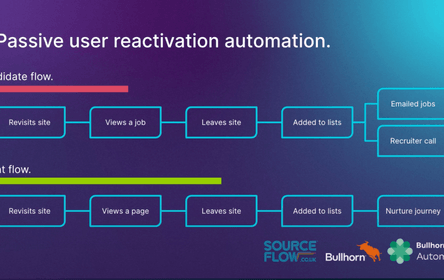
5 Bullhorn Automations To Amplify Your Recruitment Websites
What if we told you that there are several ways that you can leverage your recruitment websites ’ integrations with Bullhorn to drive more revenue into your business It’d be awesome, right?! At SourceFlow we’re often known for our skills in recruitment website design , but we’re much more than a builder of beautiful websites. Our industry-leading recruitment marketing platform has a well-established integration with the Bullhorn ATS / CRM system that is actively used by many of our clients. When we work with our clients that use Bullhorn , we often recommend that they set up these five email journeys in their Bullhorn Automation system. These journeys, triggered by user behaviours on their recruitment websites, will turn your site into a marketing machine. Passive User Reactivation Automation Reactivating passive users is pivotal in recruitment marketing . This automation makes the data in your CRM system work harder and enables your website to work faster. It adds candidates or clients who revisit your website to a list for further engagement through email marketing and consultant calls. Job Alerts Automation Keeping candidates informed about relevant job openings is crucial. This email automation pushes candidates that have recently applied for a role back to a landing page on your website that features several other roles that are relevant to them. This automation enhances candidate engagement and boosts placements. Lead Development Automation Our lead development automation seamlessly adds new leads to your Bullhorn CRM and enrols them in nurturing campaigns to ensure on-going digital lead development. Automating client lead development processes keeps client leads warm before your consultants speak to them and ensures that opportunities don’t get missed. Lead Passing Automation Efficient lead distribution maximises sales opportunities. The automation creates targeted lead lists from conversions on your website and then, based on criteria like job title and sector, notifies relevant consultants as soon as these leads convert. This automation enables consultants to respond promptly to opportunities. Contractor Lock-In Automation Retaining top contractors is essential for every recruitment agency. This automation proactively engages contractors nearing the end of their contracts through personalised email journeys. Timely communication, whether extending contracts or placing in new roles, secures ongoing revenue streams. Check out our CEO Matt giving a detailed explanation of each of these automations in this video. If you would like to find out more about how SourceFlow and Bullhorn work together seamlessly, click here to check out our Bullhorn integration page. It includes an explanation of the integration, Bullhorn-related case studies, and all our Bullhorn-focused video content. SourceFlow do WAY more than industry-leading recruitment website design. We build recruitment websites and marketing tools that amplify ROI and provide transparency with state-of-the-art data insights.

SourceFlow x idibu: Mastering Integrations With Recruitment Websites
Recently SourceFlow’s CRO Darren Curtis sat down with idibu ’s business development lead Mark Hackett to discuss how staffing firms can truly capitalise on the potential of their recruitment websites . In this episode of idibu ’s Integrated Recruiting webinar series, which aired on 28th May 2024, Darren and Mark deep dived into topics around the theme of ‘Mastering Integrations With Recruitment Websites’ . These topics included: How SourceFlow’s recruitment websites and marketing tools work Things to consider when building a recruitment website The benefits of integrating recruitment websites with the rest of your tech stack Why high-quality data is so important for recruitment agencies idibu’s industry leading integration with SourceFlow Analysing job applications & proving marketing ROI You can watch the webinar here or read a summary of the key points that Mark and Darren discussed below: Who are SourceFlow and idibu ? SourceFlow are an industry-leading recruitment marketing platform which includes building high performing recruitment websites and marketing tools. idibu is a job multi-poster and candidate management platform that helps recruitment agencies post job ads across multiple job boards and manage candidate applications efficiently. Building A Recruitment Website: Key Considerations A well-designed recruitment website is more than just a digital storefront. It’s a strategic tool designed to attract candidates, clients, or consultants. Here are some crucial factors to consider when planning and designing your site: Purpose and Goals: Clearly define what you want your website to achieve. Are you looking to attract more candidates, clients, or consultants? Audience-Focused Design: Your website should be tailored to the needs of your target audience, not just showcase your business. Objectives: Determine if your primary aim is to attract candidates or clients and design your site’s features accordingly. The Power of Integrations Integrating your recruitment website with the rest of your tech stack is not a luxuryit's a necessity. Here’s why: Early Planning: Integration should be considered from the start, not as an afterthought. Plan how you will import jobs into the website and extract valuable data from it. Comprehensive Data Handling: Track not just candidate CVs, but also the marketing channels and campaigns that drive traffic and conversions. Proving Marketing ROI: Detailed tracking from traffic sources to conversion metrics is crucial for demonstrating the ROI of your marketing efforts. Efficiency and Control: Good integrations save time and give marketing teams control, allowing them to make quick changes without needing extensive technical support. High-Quality Data: The Lifeblood of Recruitment Agencies High-quality data in your CRM is crucial for the success of your recruitment business. Both recruiters and marketing teams need to maintain this data quality. Here’s how: Data Segregation: Implement methods to separate good data from bad, ensuring only useful information enters the CRM. Comprehensive Analytics: Integrate data from various job boards and social channels for a holistic view of performance. Tracking and Performance Monitoring: Redirect applications through your brand site to better track and understand application sources. SourceFlow and idibu : A Dynamic Partnership The integration between SourceFlow and idibu exemplifies best practices in recruitment website design and integration: Dynamic Flexibility: Quickly create and modify data points or fields without needing intervention. Strong Partnership: Direct communication and collaboration between SourceFlow and idibu ensure quick adaptations and improvements. Customer-Centric Approach: Both companies prioritise the needs and success of their mutual customers, enabling rapid changes and providing significant advantages. Proven Success Clients using the integrated solutions of SourceFlow and idibu have reported substantial benefits, including increased control, responsiveness, and the ability to act quickly without waiting for third-party actions. This integration empowers recruitment agencies to stay competitive and agile in a fast-paced industry. If you like what you’ve seen and you want to find out more about how SourceFlow could help you, click here to book a demo of our platform.

Bullhorn Webinar: Job alerts are dead! What’s next for recruitment marketing?
If you missed the recent webinar episode of ‘Build with Billy’, featuring SourceFlow's CRO Darren Curtis, you can catch-up on it right here. Hosted by Bullhorn , an industry-leading CRM and applicant tracking system, this webinar delves into how recruitment websites can serve as the central hub for recruitment marketing automation, client lead generation, and candidate attraction. SourceFlow: More Than Just Recruitment Website Design SourceFlow stands out in the recruitment marketing landscape as that central hub. Our recruitment marketing platform combines advanced data analytics, AI capabilities, and seamless rectech integrations including CRMs, multi job posters, and marketing technology. We don’t just deliver industry-leading recruitment website design, we prove the tangible value of marketing in the recruitment space. During the webinar, Darren emphasised the importance of tracking source attribution and campaign effectiveness to showcase ROI and value metrics in staffing and recruiting. Check out the webinar video below to learn more 👇 ROI and Analytics in Recruitment Marketing In the webinar, Darren and host Billy Davis discussed the critical role of ROI and value metrics. Seamless integration between your recruitment website and CRM/ATS systems is essential for tracking and optimising performance. By monitoring source attribution, you can determine which channels and campaigns are most effective, ensuring your marketing efforts yield the best returns. Watch the video to find out more. Best Practices in Recruitment Marketing Automation Darren shared five key email automations that recruitment marketers can set-up in their Bullhorn or marketing tool to optimise the impact of their recruitment websites: Passive User Reactivation: Engage candidates who may not be actively seeking jobs but are open to opportunities. Job Alerts 2.0: Move beyond traditional alerts to more personalised, tailored notifications. Lead Nurturing: Develop and maintain relationships with potential candidates through strategic communication. Internal Lead Distribution: Efficiently manage and distribute client leads to the right consultants across your business. Contractor Automation: Automatically reengage your best contractors before they get snapped up by other recruitment firms. Check out this video where SourceFlow’s CEO Matt Comber outlines discusses these automations and shares illustrative examples. Are Job Alert Emails Dead? A particularly ‘passionate’ section of the webinar was the discussion on job alerts. Darren argued: "I don’t think job alerts are dead. However, I think the current way of delivering job alerts is dead." He criticised the "spray and pray" approach, where candidates receive numerous irrelevant job alerts, causing frustration for both candidates and recruiters. This method often results in a flood of unsuitable applications, creating administrative nightmares for recruitment teams. Darren emphasised the need for a more personalised and data-driven approach. He suggested, "Job alerts should be sent out directly from the CRMs where there is a gateway to ensuring that the quality of data is perfect for your audience, and you are then marketing to relevant candidates by job alert." By segmenting candidates based on their job roles and locations, and utilising automation, recruitment agencies can significantly improve the effectiveness of job alerts and enhance candidate experience. Watch the Webinar Now Don’t miss out on these invaluable insights, and much more including points about the future of job boards and AI in recruitment. Watch the webinar recording to learn how to transform your recruitment website into a powerful tool for marketing automation and candidate attraction. If you like what you’ve seen and you want to find out more about how SourceFlow could help you, click here to book a demo of our platform. SourceFlow do WAY more than industry-leading recruitment website design. We build recruitment websites and marketing tools that amplify ROI and provide transparency with state-of-the-art data insights.
SourceFlow Announce Partnership with Konversable to Enhance Their Recruitment Marketing Platform’s Capabilities
SourceFlow, who build industry-leading recruitment websites and marketing tools, are thrilled to announce a strategic partnership with konversable , a pioneering conversational technology provider. This partnership aims to integrate konversable's advanced chat and messaging features into SourceFlow's recruitment websites , creating an unparalleled user experience for both recruiters and candidates. konversable’s product suite includes sophisticated chatbots, live chat, and WhatsApp Business API solutions. These products have been designed to streamline communication and enhance engagement. Agencies that use SourceFlow's recruitment websites with konversable’s products will be head and shoulders above their competitors when it comes to recruitment marketing . Key benefits of the partnership 1. Enhanced candidate engagement with advanced chatbots: Konversable's AI-driven chatbots will provide candidates with immediate, accurate responses, improving their experience and satisfaction. The flow-based chatbot product ensures seamless navigation through the recruitment process, making it easier for candidates to find and apply for suitable positions. 2. Real-time interaction with live chat: Recruitment agencies will benefit from konversable's live chat features, which include customisable timing settings, group setups, and transfer capabilities. This real-time interaction tool allows agencies to quickly address candidate queries and concerns, fostering a more personalised and responsive recruitment process. 3. Comprehensive communication via WhatsApp Business API: The integration of konversable's flexible WhatsApp Business API will enable features such as one-to-one chats, WhatsApp broadcasting, and automated messaging through webhooks - enhancing communication efficiency and reach, and ensuring that recruiters can effectively engage with candidates across their preferred platforms. 4. Interactive multimedia with MediaFlo: SourceFlow recruitment websites can now feature konversable's MediaFlo, which allows embedding of videos into chat widgets. This tool can be used for automated video interviews, providing candidates with an engaging and convenient way to present themselves. It also supports video testimonials and other multimedia interactions, adding a dynamic layer to candidate interactions. 5. Seamless Integrations: Konversable's open API enables integration with various systems, including Bullhorn and Salesforce. This will allow recruitment data to flow smoothly between SourceFlow websites and recruitment agencies' existing systems, ensuring a cohesive and efficient data flow. Exciting Times Ahead Andy Rigmand, Head of Growth and Strategic Partnerships at konversable, said: “Everyone at konversable is excited to be partnering with SourceFlow. We want to make our clients' lives easier and give candidates the best possible experience, and we are confident that we can do exactly that with this partnership.” Matt Comber, CEO of SourceFlow, said: “We believe this collaboration will enhance the range of campaigns users of our recruitment marketing platform will be able to implement. By integrating konversable's cutting-edge conversational technology, we are setting a new standard for user experience in the industry. This partnership not only aligns with our commitment to innovation but also reinforces our dedication to providing recruitment marketers and candidates with the best possible tools to succeed.” If you would like to find out more about how SourceFlow and konversable can work together to deliver more for your recruitment agency, click here to book a demo.
SourceFlow partnership with Recite Me to enhance recruitment websites’ accessibility
SourceFlow are thrilled to announce a new partnership with Recite Me, a leading web accessibility tool provider removing barriers for the 16 million people in the UK with disabilities. This collaboration aims to deliver an inclusive online experience, ensuring that all candidates have equal access to job opportunities and clients have access to core website information. SourceFlow are an industry-leading recruitment marketing platform renowned for creating high-performing recruitment websites for leading agencies in the UK and USA. Our CMS is equipped with advanced lead generation marketing tools, analytics insights, and integrations, enabling recruitment agencies to adopt a data-driven approach for optimising their recruitment marketing strategies. Founded with the mission to deliver exceptional experiences for recruitment marketers, clients, and candidates, SourceFlow continuously innovates our technology and service offerings to achieve this goal. The partnership with Recite Me aligns perfectly with SourceFlow’s commitment to innovation and inclusivity. By integrating Recite Me’s Assistive Toolbar, SourceFlow will empower recruitment agencies to create accessible websites. This tool also supports those with visual impairments and individuals who speak English as a second language. Darren Curtis, CRO and Co-Founder at SourceFlow, said: “Everyone at SourceFlow is delighted to be partnering with Recite Me because we believe we should always strive to break down barriers that prevent candidates from getting the job of their dreams. The recruitment agencies that we work with want to find the VERY BEST candidates for their clients and we believe our partnership with Recite Me will help them to do just that.” Disabled applicants typically make 60% more job applications than non-disabled individuals. The Recite Me Assistive Toolbar offers a range of customisable tools, including screen reading functionality, multiple reading aids, customisable styling options, and an on-demand live translation feature, enhancing the digital experience and making it easier to apply for jobs online. For more information about how the Recite Me toolbar works in conjunction with our recruitment websites, click here to book a demo of the SourceFlow platform and mention that you want to learn more about Recite Me.

Smart recruitment marketing: Why we back digital ads over Rec Expo stands
In the world of recruitment, events like Rec Expo hold undeniable value. They offer a chance to rub shoulders and make connections, drawing in agencies of all shapes and sizes. But, there’s a downside. It can cost thousands of pounds for RecTechs and recruitment marketing companies like SourceFlow to exhibit at Expo. We know because we tried it in 2023. What was this money spent on? For our banners to be visible as attendees walk by Never again. We reckon top-notch marketing isn't just about being visible; it's about hitting the bullseye with your Ideal Customer Profile (ICP). We've got our sights set on a specific crowd we typically attract recruitment agencies with more than 30 consultants who've invested in a dedicated recruitment marketing team or agency. So why the heck did we ditch the glitz of a Rec Expo booth for the digital advert you saw? Surely, there will be SOME ICP prospects attending?! Yes, but we have found the majority of attendees sit outside our ICP. At SourceFlow, we got together to revise our marketing strategy for Rec Expo 2024. We decided that we will attract more new clients by running a Google advertising campaign than by exhibiting at Rec Expo, and for a fraction of the price. This ad cost just 1.5% of the cost of what we spent exhibiting at the Rec Expo in 2023. And guess what?! You’re sitting here now reading this article! By flipping the script and going digital, we're able to zero in on our target audience with sniper-like precision, making sure every quid we spend packs a punch. If you want to be like us, a smart recruitment marketer. Check out what SourceFlow can do for your agency. Our recruitment websites amplify client lead generation, track candidate origin sources effectively, increase marketing ROI, streamline content management, and boost organic SEO. Click here to book a demo of SourceFlow.

What recruitment marketers need to know about third party cookies
First things first What’s a first party cookie? Generally when we think of cookies, we think of standard cookies. These cookies keep you logged in to websites or help personalise experiences. Example: A user visits your recruitment website. As the page loads, some script (code) that you have included behind the scenes on your website runs. To make that script come to life, a ‘cookie’ is placed on the browser of the user that start to track their behaviour. The user applies for a job and logs in, the cookie stores the session and when the user revisits the website they remain logged in. Because the users behaviour (every page they click on) is tracked and we know their name, we might start to recommend content/jobs to them and personalise our messaging. We might also remember jobs they started the application for but never finished, when they return to the job we might prompt them to complete the application. This is all done via first-party cookie tracking and is generally good for user experience as we’re remembering crucial bits of information to improve the users enjoyment levels when using the website So, what’s a third-party cookie?. Third-party cookies are ones which operate on a website (let’s use acme-recruitment.com) but the domain which operates the cookie is entirely different. Example: A user visits your recruitment website. As the page loads, a script is run and throught the planting of a first-party cookie, behaviour is tracked. At the same time, a third party cookie from ads.adnetwork.com also starts tracking the user's behaviour, as the website has allowed this to happen. This third-party cookie stays with the user over the rest of the internet. Other websites on the internet then have adspace available (designed space around the web page, or inline with the text). So when the user visits a news site, such as the Guardian, an ad for acme-recruiting.com appears on the screen for the user. What’s happened here is that that third-party cookie was being placed by an ad network and then tracking that user around the internet, outside of the website they originally visited. This example is referred to as retargeting and is really common. So, what’s the problem? First party cookies, in general have no problems, although we’ll come back to that later. Third-party cookies, however, create a huge amount of mistrust for websites. Users are becoming increasingly concerned about their data and how advertisers & big tech companies are using their data. Third-party cookies can essentially track all user behaviour (they don’t track key clicks, so they aren’t a risk to passwords) online, so all websites visited and the pages within those websites that the user has viewed. This allows advertisers to monetise users without them even knowing about it, effectively selling your ‘profile’ to the highest bidder without you knowing. Tech companies like Apple have also in the past used these types of cookies to share data between the apps you use on your phone. This means that advertisers can target ads at you for a new fitness app because you’ve been hitting the fast food delivery apps too hard. You don’t know this is happening, but it is and it’s big business. It’s this type of malicious and shady dealings that’s seeing tech companies move away from third-party cookie tracking. Google are taking a stand Google have announced that in 2023, they will block third-party cookies from Chrome, the worlds most commonly used web browser. This is significant because Google themselves rely heavily on third-party cookies for their double click network (Google Adwords/Retargetting). As of yet, there’s no official replacement for them, but Google have been clear that they are looking to innovate, rather than circumnavigate the issues. What does it mean for recruitment marketing? If you advertise, third-party cookie data allows you to learn a lot about your websites visitors. You can find out all of the websites they visit (including oyur competitors), jobs they may have viewed on other sites and interests they have. This can also be used for client data also, so it’s clearly valuable information to have on your website visitors. When you have this data, you can create ad retargetting lists to send to your visitors, or other visitors who may have never been to your website, but fit the criteria due to tracking. Example: User visits your website and checks out a project manager job. Later that day, they are on the Guardian website and see an add for your project manager job with ‘still interested in applying for this job’ as the creative content. This advert was made possible by third-party cookies, as the user is now on the Guardian and not on the acme-recruitment.com website. If you don’t do any of this and you want simple tracking, then you might not feel the heat. If you like and collect more information on your users, then you will be impacted heavily. LinkedIn I thought it relevant to include LinkedIn within it’s own section here, and will likely expand on this in the future. LinkedIn use third-party cookies quite aggressively. They use it for ad tracking and behavioural tracking and it’s common to see third party LinkedIn cookie tracking on recruitment websites. This will end come 2023, which leaves a lot of questions around how LinkedIn will allow recruiters to remarket to candidates through their platform. It’s not just candidates visiting your own website that will be hit by the change to cookies, but those that are on LinkedIn and see your content (jobs/profiles/articles etc) on that platform. LinkedIn publish their cookie table publicly, and their advertising cookie section is extensive to say the least! In practice this means less visibility of ads for candidates around the internet and potentially less ‘eyes’ on your brand.
SourceFlow bag award for recruitment marketing excellence
SourceFlow were named winners of the prestigious Innovation Award by The Power Hive for their groundbreaking strides in recruitment marketing in 2023. Although SourceFlow are chiefly known for being specialists at building recruitment websites, this recognition validates the company's commitment to pushing boundaries since their inception in 2022, especially acknowledging their array of product innovations that reshaped the recruitment marketing industry in 2023. Their remarkable progress last year, boasting a phenomenal 335% increase in website launches, speaks volumes about their relentless pursuit of revolutionising recruitment marketing technologies. What set SourceFlow apart and significantly contributed to their win were their game-changing product innovations. These included: Journey Tracking: Revolutionising the understanding of candidate journeys, providing invaluable insights. Content Categories: Simplifying content management, making it more effective and organised. AI Job Advert Writer for Bullhorn Users: Streamlining and enhancing the job advertising process for recruiters that use industry-leading applicant tracking system Bullhorn. Multi Factor Authentication: Ensuring robust security measures for user accounts. AI-Powered Job Search Updates: Leveraging AI to enhance the job search experience for recruiters and candidates. Industry-Leading Integrations: Pioneering integrations that set industry benchmarks. Keith Southern, Director and Co-Founder of The Power Hive - an acclaimed community of recruitment leaders, said: "SourceFlow has completely turned the sector on its head, expanding beyond their dreams and surpassing their own expectations in 2023, with an even more promising 2024 ahead. Their innovative approach has set them apart as a true standout contender. Congratulations to the team!" SourceFlow CEO Matt Comber expressed his gratitude on LinkedIn: "A massive shout-out to The Power Hive and its members for their invaluable votes and support. It truly means the world to us. I want to extend a huge shoutout to our exceptional team whose tireless dedication has been pivotal in shaping our innovative products. In particular, I want to recognise the remarkable contributions of Matthew Whiteley and Ka-Shing Tan, whose unwavering commitment has been instrumental in driving our product innovations forward." Discover how SourceFlow's innovative solutions can propel your recruitment agency forward in 2024 by booking a demo today . Partner with a company that doesn't just adapt to change but drives it, reshaping the landscape of recruitment Marketing.
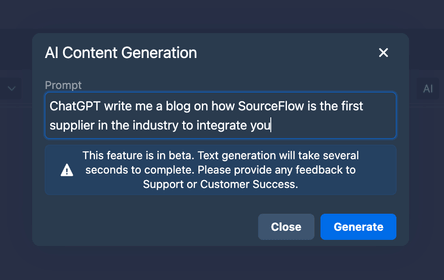
ChatGPT write me a blog on how SourceFlow is the first supplier in the industry to integrate you
Sourceflow is a recruitment marketing tech provider that has been making waves in the industry ever since its inception. They have always believed in providing their clients with the latest and most innovative tech to help them simplify recruitment marketing. Recently, they integrated with ChatGPT, an AI-powered chatbot that has revolutionized the way content is created. The integration of Sourceflow and ChatGPT has made it easier than ever before to write website content. With this integration, users can simply input their topic or subject matter into the chatbot and it will generate high-quality content in a matter of seconds. This means that users no longer have to spend hours researching and writing content themselves, as the chatbot does all the hard work for them. Sourceflow is the first company in their industry to integrate with ChatGPT, which is a testament to their commitment to innovation and providing their users with the best tools available. The integration has been a game-changer for marketers, as it has significantly reduced the time and effort required to create high-quality content. Please reach out if you want to find out more about how SourceFlow can help your recruitment marketing needs.

What is ChatGPT and what does it mean for recruitment marketing?
Wondering what ChatGPT is? Why have over a million people already signed up to test it out? Wondering what it will mean for recruitment marketing? We've got you covered. What is ChatGPT? ChatGPT is a variant of the GPT-3 language model that is specifically designed for conversation. It uses the latest natural language processing techniques to generate responses to user input in a conversational manner. Because ChatGPT is a language model, it can understand and generate a wide range of language, including human-like responses to questions and prompts. It can be used for a variety of applications, such as chatbots, customer service agents, and even as a conversational AI companion. This can help marketing teams save time and improve the quality of their communications with customers. ChatGPT for recruitment marketers There are several potential impacts of ChatGPT for recruitment marketing teams: Increased efficiency: ChatGPT can automate many routine tasks such as answering frequently asked questions and scheduling interviews, freeing up time for recruitment marketers to focus on more strategic tasks. Improved candidate experience: Chatgpt can provide personalised and timely responses to candidates, making the recruitment process more convenient and engaging. Enhanced data analysis: ChatGPT can collect and analyse data on candidate interactions, providing insights into their preferences and behaviour. This can help recruitment marketers optimise their recruitment strategies. Increased candidate engagement: By providing instant responses and personalised content, ChatGPT can improve candidate engagement and increase the chances of successful recruitment. Increased reach: ChatGPT can be used to reach and engage with a wider pool of candidates, including those who may not be actively searching for job opportunities. This can help recruitment marketers target a broader range of potential candidates. Overall, ChatGPT can be a valuable tool for marketing teams, helping them to create personalised and engaging content, improve customer relationships, and increase their efficiency and productivity. Photo by Possessed Photography on Unsplash

A Quick Start Guide to Consumer Grade Job Search Technology
Introduction Finding and utilising the best job search technology around is a difficult process. It takes time and effort to find the right vendor and fit for your business. But with the help of the right technology, it has become easier than ever before to make the experience of matching candidates and jobs simple. There are many job search engines available on the internet that can help your candidates find their dream job. These engines should in theory make a job seekers life easier by providing them with all the information that they need in one place. The truth however, is much different. Inconsistencies in job search, poor user experience & technological limitations often create a frustrating experience that sees potential candidates leaving websites. The following article will provide a quick start guide to consumer grade job search technology and how it can be used to win over more candidates. What do we mean by consumer grade job search technology? Consumer grade job search technology is a type of software that is designed to help people find jobs. It can be used by anyone who is looking for work and to power the website of any agency looking to provide an exceptional experience to its users online. Consumer grade job search technology is one facet of the wider consumer grade recruitment experience , specifically aimed at the candidate experience. A consumer grade job search experience should provide a seamless, almost thoughtless experience for candidates. It should be so easy to use that they don’t need any sort of visual cues or training to use whilst at the same time have the right technical setup to catch any mistakes they make such as typos. Why does my job search need to be consumer grade? Building technology that powers job searching is the most complex part of any recruitment website . Large companies may have their own internal hiring and recruiting teams, whereas smaller companies might use off-the-shelf talent solutions, but both want quality results for candidates and job postings. Trying to match these together may sound simple on the surface, but traditional keyword searching is too simplistic and gets choked up in some situations, such as; hidden or extraneous keywords, also known as keyword stuffing job postings that require five years of experience in a technology that's really only been around for two years and things like typos, acronyms, and overuse of technical jargon Ultimately, these lead to poor experiences and bad candidate fits. What are SourceFlow doing to improve the job search experience? The Cloud Talent Solution job search API is designed to power the job search experience with built-in machine learning algorithms. In short, we send your job listing information over, such as your company information and job details, to the job search API. The API analyses the job data to develop an understanding of the jobs. Once jobs have been indexed by the API, candidates can search against the jobs and get search results by relevance or other sorting preferences. There are four common use cases that typically leverage a solution like this; job boards where the site returns a list of jobs to job seekers career site providers that provide career site services to client companies, Recruitment & Staffing agencies which provide short or long-term employees to clients and applicant tracking systems which are used by companies to track applicants through the hiring process. The job search API is designed to be modified to best fit with your needs, and the API's performance can vary significantly based on how it's configured. Also, it's worth noting that the job search API is not to be confused with the jobs indexing API that facilitates jobs showing up on google.co.uk search. There's a separate indexing API to have job listings show up on searches that people make on google.co.uk that SourceFlow also integrate with. The Difference Between Job Boards and Recruitment websites Job boards are a place where people can post their job openings and potential employees can find and apply for them. They offer a highly monetised service offering which has to appeal to a wide range of different customers. Job boards invest heavily into Search Engine Optimisation (SEO) and Pay Per Click (PPC) advertising, usually far in excess of recruitment agencies and their own websites. Recruitment websites , on the other hand, are a place where agencies can post their vacancies in order to attract potential candidates, clients and consultants into their own business. . The difference between job boards and recruitment websites is that the former is more focused on the employer’s perspective while the latter is more focused on the employee’s perspective. Conclusion There are huge revenue benefits to improving the job search technology on your recruitment agencies website; Find the right candidates faster with specialist acquisition technology Enrich the experience for candidates Streamline and gradually improve your talent acquisition process with machine learning Increase quality hires by using ML to understand the intent of your users in real time. This means your candidates get matched to ideal jobs faster and therefore placed with your clients faster By using ML your job search can automatically make sense of confusing job descriptions and search queries. Keep your websites tech up to date by using cloud technology

The most powerful job search technology in the world?
Google Cloud Talent Solution powers the job search on every SourceFlow website. This powerful tool has a wide range of features to ensure the best possible match when it comes to searching. The key features are listed below: Accurate Keyword Job search Our job search doesn’t just look for the normal keywords that you inputted. It goes one step further and looks for related titles, seniority and industry. If a candidate hasn’t put the full title in the search or made a poor search query such as an error in spelling, this will be recognised by Google and they will try their best to find a match. It will even identify abbreviations and job titles that probably don’t mean much unless you know the particular industry well which might not be the case for someone junior. Our search will also check for the seniority within the role and match accordingly. This means a candidate should not be faced with a role that is too junior or senior for them. The most impressive feature is that we support the search of over 100 languages - a game changer for multilingual sites. For example, if you search for a job title in another language, it will return all the relevant jobs that may be written in English or other languages equalling the same. Please see the list of supported languages here . Search for “enfermera,” the Spanish word for “nurse,” Search for "Bartendar" Search for "Biz Dev" Search for "HR" Location Google recognises real locations, it won’t however recognise locations that are completely made up eg. Remote. SourceFlow however, does have a different solution for this when it comes to searching. In your location box, our search will look for postcodes, zip codes, neighbourhoods and can even be as specific as street addresses. Google also has a feature that allows you to add your desired commute time and preferred mode of transport. This in turn will only return jobs matching these criteria creating a great candidate experience. ** One thing to note is these work best when the search has enough data & jobs to search from. The more jobs you have the more accurate the results!
The Evolution of Recruitment Websites: Embracing Headless CMS
SourceFlow's recruitment websites and marketing tools unlock new levels of growth for recruitment agencies and staffing firms. In this article, SourceFlow CEO Matt Comber talks about why recruitment websites that have a Headless CMS (Content Management System) are optimising sales and marketing outcomes for recruiters. In the realm of recruitment marketing and website design, the landscape is constantly evolving. As CEO of SourceFlow , a leading recruitment website agency, I've witnessed this evolution firsthand over the past decade. One concept that has revolutionised the way we approach website development is the Headless CMS. For those unfamiliar, Headless CMS offers a new paradigm in website creation, providing unparalleled flexibility, usability, speed, reach, future-readiness, and security. Let's delve into why it's transforming the recruitment website industry. Flexibility is key. Unlike traditional CMS platforms with predefined templates, Headless CMS allows for complete customisability. Every aspect of the website, from layout to content architecture, can be tailored to reflect the unique identity of each recruitment agency. Usability is paramount. With Headless CMS, the separation of front and back end empowers agencies to build their content management system. This means rapid adaptation to changing needs, such as effortlessly adding new sections like podcasts to the website. Speed is essential. Slow websites frustrate users and harm SEO rankings. Headless CMS lightens the load, ensuring swift navigation and improved engagement. At SourceFlow, we've prioritised website speed, a factor that sets us apart in the industry. Reach extends beyond desktops. With Headless CMS, content can be easily shared across various devices and social platforms, amplifying the agency's message and reaching a wider audience. Future-readiness is crucial. In an ever-evolving digital landscape, integration with new technologies is seamless with Headless CMS, keeping recruitment websites up-to-date and ahead of the curve. Security is paramount. Headless CMS offers an added layer of security by separating the front and back end, safeguarding sensitive recruitment data from potential threats. At SourceFlow, we've embraced the Headless CMS approach, driven by our commitment to innovation and excellence in recruitment website design . While we're continually improving our platform, we're confident that our approach offers unparalleled benefits to recruitment agencies. If you want to know how the power of Headless CMS can amplify for recruitment marketing and how SourceFlow websites improve marketing ROI for firms that use Bullhorn, book a demo of the SourceFlow platform .

The Future of Job Applications (and the Increasing Chance of AI Taking Over)
Introduction: The Current Situation Currently, job applications are taken (in the most part) via application forms on websites. The forms are either driven from software embedded in the technical solution, such as in proprietary software, or via third party plugins such as in the case of Wordpress. The first thing I want to say here is that there’s nothing wrong with this method. In the same way that there was nothing wrong with going to Blockbuster and buying videos (I miss those days). The issue is that technology is moving quickly and users' patience and expectations, especially the new generation of workforce, are outstripping the ‘fit’ of traditional form methods. What the future holds The future of job applications is not as straightforward as it may seem. Currently, the job application is a form driven process with little flair or room for personalised experiences. With the rise of AI, we can expect to see a lot more automation in the process. This will make it easier for companies to find the best candidates for their jobs and also save them time and money. AI will be able to scan through resumes and cover letters, identify keywords, and then rank them based on how well they match the job description. It will also be able to scan through social media profiles and identify potential candidates that are a good fit for the company’s culture. In the short term, we expect to see conversational applications, where, similar to Typeform, the application process is gamified, rather than in a long form. This gives users instant gratification and means agencies can request more information, without making it feel daunting for job seekers. What the Experts Say About the Future of Job Applications According to *PWC 81% of candidates applying for jobs are happy to share their social media information with agencies and employers as long as their data is protected. Sharing this type of information might improve the job fit for a candidate, meaning better placements for recruiters. The same PWC report also says 77% of candidates wouldn’t apply for a job is they felt privacy wasn’t being protected, so being clear and transparent in how & why you process data. According to a report by **HBS and Accenture, AI recruitment systems are blocking an estimated 27 million people from finding full-time work. Companies using automation, which is often AI-driven, are, without knowing it, rejecting viable candidates, which means these people are "hidden" from recruiters. As many as 75% of employers rely on this technology, according to the report, which shows the potential unknown damage that AI could be causing to the hiring process. What is Artificial Intelligence and How Will it Change the Way We Look at Job Applications? AI has been used in the job application process for a while now. It can be used to scan resumes, identify skills, and even generate interview questions. The AI-powered resume scanning software can scan through thousands of resumes in minutes and find the best candidates for a given position. The good news is that AI should improve the application process for job seekers and agencies by matching people to opportunities at a far faster rate than a human could do, effectively eliminating stages of the hiring process. However, as highlighted in the WEForum report, there are teething issues to be ironed out that may be costing people jobs at present. * https://www.pwc.com/us/en/services/consulting/business-transformation/library/hr-recruiting.html ** https://www.weforum.org/agenda/2021/09/artificial-intelligence-job-recruitment-process/ Photo by Benjamin Davies on Unsplash

The New Wave of Consumer Grade Recruitment: How Companies are Hiring & Retaining Talent through Personalised Online Experiences
Introduction: What is Consumer Grade Recruitment? Consumer grade recruitment is the process of conducting recruitment activities (either niche assignments or mass hiring) that creates a simple, exceptional and consistent experience for all candidates. The process should not not require any special skills or training for the client or candidate but should be consistent every time. What Are Some Examples of Online Personalisation? One of the most popular examples of online personalisation in recruitment is a job search engine. The search engine takes into account your keyword & location search and finds jobs that suit you. The job search can be better refined using filters to personalise often large data sets to return a couple of relevant results. Another example is creating a recruitment website experience that adapts itself based around usage. For example, if a user is viewing jobs in a certain sector, the website will adapt itself to look like it’s a specialist website for the popular sector. The personalisation engine will adapt the website on a per-user basis. An example growing in popularity is chatbots. Chatbots provide a personalised service and give customers what they need without any human interaction. This is a ‘channel-shift’ option where instead of driving users to a human, you drive them to a digital agent to provide a personalised experience. What Are the Benefits of Using a Personalisation Platform? Personalisation is a powerful tool in recruitment. It can help you to attract the right clients, candidates and consultants, and it can also help you to make sure that those groups are happy with the process. The benefits of using personalisation in your recruitment technology are: - It helps you stand out from the crowd of generic recruitment agencies that provide blanket digital recruitment offerings. - It helps you to attract the right candidates, clients and consultants for your company. - It helps you to make sure that your candidates are happy with the process. - It helps you to save time and money on hiring by reducing waste.. - It helps you to increase employee engagement and retention rates by finding the right people. Conclusion: The Future of Consumer Grade Recruitment and how to Benefit from it Today The future of recruitment is consumer grade. It is not just about the technology, but also about how we use it. Consumer grade recruitment technology has been around for a while now and it has been changing the way we recruit people. It has made the process more efficient and cost-effective and yet a lot of businesses still don’t see the importance of it and put their faith in dated practices. The consumer grade recruitment experience is not just about the technology, but also about how we use it Photo by Pierre Chtel-Innocenti on Unsplash

SourceFlow is proud to announce the appointment of Bruce Wilson, Craig Howard and Helen Taylor
Bruce Wilson had joined as ‘Head of Creative’ to lead the SourceFlow team of designers and developers in the pursuit of high quality, high impact websites. With over 15 years experience in the web industry (8 in the recruitment website space) Bruce was the only choice for SourceFlow. Craig Howard has joined as ‘Head of Sales’ to lead the sales efforts for SourceFlow and ensure a healthy customer acquisition pipeline with the best recruitment agencies. A veteran in this market, Craig’s network of amazing contacts along with his relentless pursuit of great customers made him the natural choice. Finally, Helen Taylor has joined as ‘Head of Customer Experience’ to guarantee that every SourceFlow customer has an incredible experience in their lifetime as a SourceFlow customer. With over 6 years of recruitment website project management experience, Helen was looking for the next step in her career and is loving developing the customer service proposition for SourceFlow. SourceFlow CEO Matt Comber commented; “Hiring incredible talent is vital to the success of SourceFlow as we embark on a journey to become The Recruitment Marketing Platform. Bruce, Craig and Helen understand what it takes to deliver incredible customer websites and support customers throughout their customer lifecycle with us. Having such an experienced team so early in our journey shows our commitment to being the first choice for recruitment agencies globally.”

Opinionated frameworks are holding back your marketing growth
Content platforms have been going through a change for a number of years. Traditionally, the concept of a CMS involves a platform where front end (visual design) and back end (content management system) are one in the same. This means that design & user interface, URL structures, content delivery, page building, form styling and all other aspects of the ‘management’ of the website are entirely linked together. Whilst this seems like a reasonable solution, the issues that this has created for website managers has been getting worse and worse. The issue lies in the fact that these CMS systems are what’s referred to as ‘Opinionated’. What is an opinionated web framework? Framework: a basic structure underlying a system, concept, or text. Web frameworks make predefined and structured decisions around the architecture, conventions and overall format of the platform that they support. You can think of a framework as set of clearly defined rules around how a system should behave and be applied. Frameworks are helpful to developers as it speeds up the work that they do as they can re use code that has previously been written and follow the best paths for that platform in terms of decision making. Open source technologies such as Wordpress & Drupal a great examples of this. So many developers use these Opinionated platforms because the speed to build simple websites is high and the codebase is consistent. Where the problems start The issue with these technologies, however, starts to rear its head due to the implicit simplicity of the platforms themselves. Even when two CMS’ are developed in the same language, they can hugely vary in how they are applied due to how well trodden the path is (how many websites have been built on that platform). This is why we refer to these platforms as being ‘Opinionated’. The framework developers & architects build a simple path to make development easier for the mass development market (one of the reasons why Wordpress is so popular). This is great, except for the fact that developers then must follow specific assumptions in the framework. If your needs match the intended purpose of the framework i.e. ‘I would like to set up a blog, Wordpress is blog platform = match’, then the platform matches its intended use. When you begin to move away from the intended application of a framework, they become intentionally difficult to violate. In practice, the problems start to range from a lack of easy extensions in one particular area (for example job search, candidate profiles) etc. When choosing an opinionated framework, you need to think of it more as a business decision, rather than a marketing decision. If you are running a business that wants to grow or take advantage of a constantly evolving set of product tools, then moving away from an opinionated framework is the best way to go. If you are happy staying still (or moving very slowly as a business), then choosing an Opinionated framework is the right choice. The rise of Application Frameworks & Headless CMS’ As more and more companies (and in turn developers) realised that Wordpress et al have limitations in terms of their structure, it became clear that a new approach was required. The solution was to look at more sophisticated frameworks such as React, an unopinionated framework. React is fast, highly customisable, scalable and simple to make changes to making it perfect to compliment business who want purpose built products for their short, medium and long term plans. Facebook turned to React to build their entire front end framework for some of the reasons mentioned above and since then millions of websites have been delivered using the ReactJS framework. Headless CMS’ are relatively new but highly powerful and now used by the biggest organisations in the world. The concept of Headless CMS’ is simple; they aren’t opinionated. The content and User Interface (Design) are decoupled, meaning an incredibly high level of flexibility coupled with high performance (speed/load times). Conclusion Systems such as Wordpress are beginning to be treated as ‘legacy’ due to the evolution of Headless CMS’ built on frameworks like React. If you’ve been on an Open Source CMS, the chances are you’ve struggled with some of the issues detailed in this blog. We’ve worked with thousands of Recruitment Agencies and their Open Source web CMS platforms all struggle from the same issues due to high levels of conformity to rules. Usually the initially build process for the website is straight forward and then additional features and products/tools freeze due to a lack of flexibility. Moving from opinionated CMS’ and technology may be the missing ingredient in your marketing strategy when it comes to creating a hub for your content and jobs.

Why service shouldn’t be an additional cost
Partnerships are everything in the quest for growth I’ve been fortunate enough to have worked on thousands of website projects over the years. One thing that I've learnt over the years is that partnering with your clients rather than acting is a supplier is the number one way to increase growth potential. One of the founding principles of Sourceflow is to provide an exceptional customer experience and the quest to continually improve how our clients feel about working with us. As a result of this we don't charge any additional fees for customer success, for time spent with Customer Success Managers or indeed any other customer success related activities. What this means is that we encourage our clients to work continually with our customer success team to enhance the proposition that we provide and to continually grow together. For some companies the approach of charging for customer success might work and I can see why you would, especially at scale. Larger companies may feel the need to charge for customer success due to the struggle they have with balancing profits, resources and customer demand volume. It's my belief (and experience) however that even at scale, not charging for ‘CS’ is possible (and generally the right thing to do) to encourage customers to work closer and closer with their partner. I'm aware there’s a fine line between service and over-service and I think if you have great relationships with customers fair usage policy (as an unwritten rule) should apply. The name ‘Customer Success’ in itself is focused on the outcome; success. So why charge for this when platform fee’s & service cover the costs and profits of a SaaS business?

ROI - 7 website design trends for 2022
Introduction 2022 brings with it the opportunity to finally establish new design principles based upon the upheaval and step change of the past 20 months. Recruitment websites have largely become formulaic, however, with the increase in competition, shortage of candidates and striving to differentiate, the move to custom design (and away from templates) will be a key trend moving forward, especially for agencies looking to lead the industry. I’ve detailed 7 predictions on the types of design trends we will see in 2022 below but note that these are not exclusive and I’m sure we will start to finally see agencies pushing the bounds of design creativity in the next 12 months. Large typography on clean hero images A trend that became increasingly popular over the last few years was bold, animated or video filled hero images at the top of websites. This trend saw smaller image overlay text and typography that tried to complement the often overbearing imagery or video being used on website. The hero image is the first image (or area, specifically) that a user typically sees when visiting a website. Specifically, hero images are the top area of the homepage of a website and therefore takes up a material amount of the users ‘gaze’ attention, somewhere in the region of 45-50% of the overall scroll time of a homepage. A study revealed that web users only take 50 milliseconds or 0.05 of a second to form an impression of a website, so the content of the hero image section is crucial to engaging and ultimately converting as user. As recruitment businesses struggle to differentiate and engage digitally with candidates and clients, simplifying the hero area and removing clutter will become an effective way to increase the time-to-message with users. Rejection of minimalism At the risk of being counterintuitive to the first point, I expect to see the ‘super clean’ minimalist website phase out in 2022. Everyone wants a clean website. Over the thousands of recruitment websites I personally have been involved in, nobody has ever requested a cluttered, confusing website, full of text, there’s always time though... Minimalism has led to an abundance of uniform, consistent, and frankly bland websites. There’s nothing wrong with being clean, but when the trend is to copy what everyone else is doing, standing out becomes almost impossible. Bold, vibrant colours with great use of DIY imagery could be big in 2022, simply for the fact that it will help to create a memorable website experience for users. I’d consider looking at ‘Memphis Design’ styles from the 1980’s (think Miami Vice) and potentially the Brutalist design movement from the ‘50’s, ‘60’s & ‘70s as a starting point for design inspiration. Location based design focus Since March 2020, we’ve all spent a lot more time at home. As the world is (hopefully) reopening, travel is still a commodity and most of us are still spending a huge amount of our time in the area we live in. I’d expect to see websites focusing on this way of life in 2022. Recruitment brands with a single base in a city should be looking to capitalise on this location expertise by incorporating the heart and soul of where they operate into their designs. If you’re based in Liverpool for example, there’s a raft of design inspiration from the Beatles, the world famous waterfront and the world of sport to take advantage and add into the mix of your website design. Cityscapes might not be everyone's taste, so get creative with different elements. If you’re a national brand with local offices, structure the website to serve up local office pages that speak to the users in those regions. It might be hard to do this on the homepage, so think big (and spherical, websites are three dimensional and so is your marketing) and build a website that drives local content to local people. A word of caution. If you recruit nationally but have a single office, tone down the location focus. You want to give a sense of your brand personality and tone, rather than appear geographically ‘locked’ ScrollyTelling ScrollTelling (a real word that unfortunately I didn’t make up) is becoming more and more popular and I personally haven’t seen it used in recruitment websites yet. Essentially it's the practice of positioning a piece of content using text, imagery, animation effects, video & audio in combination to make it more engaging than simply text or a downloadable document. One of my favourite examples is how the BBC use ScrollyTelling to present complex stories on their website. For example this article about the gender pay gap is beautifully presented, making an article with 15,000 data points easily engageable and visual. In recruitment, I see a lot of reports, white papers, articles, salary surveys etc that are still presented in PDF format, behind download walls. I see this as something that will become more antiquated with the speed in animation enhancements. Imagine a salary survey that you input your data into and are then returned with a specific landing page that as you scroll, presents the data through animation, has video of your team discussing the specific results and perhaps presents jobs you are recruiting for that match the type of job that’s being looked at. Dynamic, personal content experiences Websites are far more than just static objects. I’d expect to see 2022’s website trends deliver a much more one-to-one connected experience for users. Chatbots and conversational tools for example should start to see more traction this year and how they are served up through the website should start to change. Popups in the corner of the screen might not be cutting it for you (or for anyone), but how about taking over part of the screen on a job listing to create a direct communication channel on page between candidate and recruiter? This type of personalised experience will become the backbone of ‘The Metaverse’ that we will see more of this year and will separate value add businesses from the rest of the field. Serving up content also doesn’t need to be static, job listings should be easily attached to relevant blogs or articles on a website and likewise, content from the website should be served up to candidates and clients via email/dashboards. One of the big trends I’d expect to see more of in 2022 is how content can provide a connected experience. For example, WhatsApp hasn’t been capitalised on in recruitment to delivery content, jobs and as a data collection method, despite having 40.23 million users in the UK. This untapped content communication channel can be a game changer for recruiters and their websites. Gender Neutral, Safe Space Design Gender Neutral Design Stereotypes in design are often overlooked. Often oil and gas websites will include entirely male imagery, healthcare websites will be all female and so on. Run an audit of the industry you work in and the website imagery you use to see if you’ve fallen into a bias trap of presuming that all rig workers are men and all nurses are women. Forms fields should focus on using a variety of pronoun options (or remove this all together) and content should avoid he/she and opt for they. Safe Space Design The last couple of years have left people overwhelmed. We’re at the start of a new period of engagement and as a result are starting to see design trends focusing on making users feel safe. This digital design trend is largely mirroring physical office world, where office environments are changing, moving from traditional rows of desks, to collaborative spaces aimed at getting staff back in to the office, reducing stress and making the work environment more comfortable. How? Imagery such as outdoor spaces or homes are a great way of giving the feeling of safety. Psychologically this gives users the feeling of safety both outside and at home. With the change in working from home vs office, showing both styles of design will help to appeal to users. You want your website to feel warm and spacious, so ditch the stock imagery once and for all. Page Speed Focus According to Google, 53% of visitors to a website say they will leave it if it takes longer than three seconds to load, so designing with page load speeds in mind is vital. Image optimisation or off page loading are some technical considerations that can be made to improve your page load speeds but things like font choices (and the number of fonts used) as well as making sure the platform you use doesn’t have too many plugins are also key. The Google Core Web Vitals update was released in August 2021 and had a big focus on the design layout and speed components of your website which will directly impact how well your website will perform on Google. I can see designers working far more closely in 2022 with their front end development teams and platform engineering teams to ensure that whatever is being creatively created is in tune with best practice for speed optimisation. This will lead undoubtedly to design changes and considerations made to image compression such as moving to WebP.

Making new friends at the Recruitment Agency Expo
SourceFlow - ‘The Recruitment Marketing Platform’ - is attending the Recruitment Agency Expo at Olympia London. Described as the ‘The UK’s biggest event for recruitment agency leaders’ the event showcases the best and brightest in technology, marketing, operations, back office and HR solutions for the recruitment industry. SourceFlow’s product vision is to be part of a deeply integrated solution with other tech providers in the recruitment space. Integrations save consultants time and company’s money. SourceFlow will work with marketplace partners to provide world-class integrations that provide fast, secure application data into leading CRMs and allow jobs to be posted directly to websites and job boards. The product roadmap for integration is an exciting one and the Recruitment Agency Expo at Olympia London provides a fantastic opportunity to meet with the partners of the future. SourceFlow Director Alec Middleton commented; We’re excited to attend this first major event to talk to partners and existing customers as we launch the SourceFlow brand into the UK marketplace The event is providing us with a great opportunity to meet with the industry leading companies such as Bullhorn, Broadbean, Idibu, Logic Melon and Odro (amongst others). The Recruitment Technology space is buoyant with innovation. Our product will be part of an integrated solution that provides the leading candidate experience for job seekers using recruiter websites. Events like this provide us with a great opportunity to build partnerships that will form the basis of our integration strategy, as well as helping us better understand our customer requirements and the rec tech landscape. If you want to meet us for a coffee to discuss partnership opportunities, please contact Alec Middleton on 0333 006 7705 . To understand more about SourceFlow visit www.sourceflow.co.uk For more information on the Recruitment Agency Expo at Olympia in London visit https://recruitmentagencyexpo.com/london/

Differentiation - The importance of custom design
Let's start with much used problem statement - “My website doesn't get me any business” The recruitment agency market is a busy place. There are over 50,000 recruitment agencies in the UK, all fighting for the best candidates, clients and consultants. If you’re going to have a chance of standing out, you need to make a statement. Your website is not THE answer to attracting great candidates, clients and consultants. You need a good marketing budget and a great marketing team to get to page 1 of Google. Also 9 times out of 10 people arrive at your website through other referral sources such as job boards, social media and word of mouth. But your website is critical to the conversion process. Once a visitor comes to your site (candidate, client or consultant) they start to judge you very very quickly. In less than half a second, a visitor to your website makes a judgement on whether they’ll stay. It’s an incredibly short amount of time and it’s based almost entirely on the visual impression your website starts to make as it renders on their screen. And it's there - 24/7/365 If you want to create a good impression then you need to look brilliant. “So where do I start?” Building a website is hard. It relies on pulling together information from all areas of your business. The project often has many stakeholders and when it goes live it’s highly visible so you don’t want to mess it up! Above anything else, a great website understands what a visitor wants. In a recruitment website this is often a candidate (to place), a client (to work with) and a consultant (to work for you). If you start by addressing your visitor in a way that is attractive to them then you’re off to a good start. For example; For a client, tell them about; The sectors you’re amazing in The reasons why you’re better The reasons they should trust you For a candidate, tell them about; Your amazing list of active vacancies Your expertise in helping other candidates The reasons they should trust you For a consultant, tell them about Your incredible company culture Perks of working for you The reasons they should trust you “So I know why I'm awesome what next?” You then need to consider how you’re going to present this information. In words? Images? Graphics? Infographics? Video? Audio? Animation? Do a post-it-note exercise to think about how you’re going to arrange the content on your pages. This will start to form the basis of your navigation and offer structure to the important landing pages for your candidates, clients and consultants. “But my content doesn’t fit into this pre-designed template I’ve bought?” SHOCKER! This is where pre-designed, pre-built templates and themes fall down. You’re starting to re-write your content to fill the space. You’re starting to cut out the things you like. You’re having to cut out entire pages because there isn't a template in the theme that you’ve bought. That brand you spent so much time working on looks dreadful on the page. You're trying to find stock images of people that don’t work in your business just because there is a place for a picture. And that great video you produced that shows your company off doesn't even have a place. Your vision for your website is dwindling away. It doesn't feel like you. It feels very same same. “So design templates are bad?” Definitely not. Everything has its place. If you need a quick and dirty website design OR if you don't really care about the conversion process then go for it. A template can look pretty and perform its duty. BUT it definitely will compromise your wow factor, your identity and your vision. With a template; It's not been designed for your customer It’s not been designed to work with your brand Your content might not all have a place It cannot be modified to your exact requirements Your website is the same as someone else's Your biggest differentiator - your people - are not being well represented Your identity is compromised “So what should I do?” Be brave and make a statement. Take some time to do the job properly. Work with a company that cares about you and what makes you unique. Address your audience properly. Answer their questions and build trust. Help them to pick up the phone, fill in the form or apply for that job. Be the brand that stands for something that visitors will engage with and fall in love with. Do everything you can to help your visitors convert. Right now, you have now idea how many opportunities you're missing. SourceFlow only offers custom design for their websites. They’re the experts and they’re here to help. For more information contact us on 0333 006 7705.

Does your job search actually work?
So, you have a job search on your recruitment website. It is an essential part of your web presence, allowing candidates to browse the job positions you are hiring for. It needs to allow users to quickly find job listings that interest them, and this requires a combination of simple to use filters and clear to understand results. Simple to use filters seems like a no-brainer, right? Your job search has an input for keywords, plus some selectable categories the user can choose from. Everything the user would need to start a search. But do these tools you have provided the user actually suit their needs? Are the categories using your phrasing, which may be industry specific? Great for veterans, not so good for those starting out, or interested in a career change. Does the keyword search only match words in the job description exactly? Would 'HR' match 'Human Resources'? If you have a minimum search term length to stop matching on short words such as 'to' or 'as', you now cannot even search for 'HR'. But does your search handle jargon? Acronyms? Numbers? As a software engineer I am all too familiar with searching for the programming language 'C++', only to have the '++' ignored and the results only show jobs for the 'C' language (which are not the same!!). Does 'Finance Director' also match against 'Junior Finance Analyst'? How many results in how many industries does including the word 'manager' cause? Location is another difficult topic. Place names are not unique, and context is very important for choosing the right place. There are over 25 places around the globe called 'London'. It may seem obvious to assume the user means the capital of the UK, but what if that user was in Ontario, Canada? Add on to this lack of uniqueness with colloquial names for places, such as 'West End', and it is very easy for the computer to pick the wrong place. Users may want to search by postal code, but this follows a different pattern in every country. Are you sure your search will continue to work if your business expands overseas? A user is not going to fight your job search. If they can't get the results they want, they will leave and try elsewhere. Configuring search tools is hard - there is a reason why there are only a handful of major search engines. A solution that works for a site with 20 jobs is likely to fail with 10,000 jobs. As industry professionals with years of recruitment website experience, we have experienced all of the above problems. Solutions that resolve an issue for one customer introduce issues for another. A website that has worked perfectly for years suddenly fails to perform when they expand to new industries. Sourceflow uses Google's Cloud Talent platform to power our job search. It handles acronyms and spelling mistakes, seniority levels and industry jargon. Location matching is provided by Google Maps. Every issue listed above is solved by a Sourceflow recruitment website.

ROI - The key to success in recruitment marketing
What is ROI Return on investment (ROI) is used to evaluate the profitability of an advertising channel or revenue generating. ROI is a great way of measuring the value and size of an activity, relative to the cost of it. How is ROI measured? The formula for calculating ROI (for revenue) is: Return / cost expressed as a ratio Example: Candidate placement: 5,000 / Cost of advertising: 350 5,000 / 350 = 14.20 / 1 (or 14.20 for every 1 spent). Attribution modelling Attribution Modelling (AM) and ROI are closely linked. AM involves creating rules that give credit for sales and their conversion paths or touchpoints. For example, you may have a path that shows candidates that apply for jobs on Indeed, hit the website and then apply for a job. This will apply a conversion % to Indeed candidates against the backdrop of all candidate applications. By mapping out all of your conversion sources by channel i.e. job sites, your own website etc you can build a picture of where you get your candidate/consultant applications or indeed your clients from. When you combine your attribution model with revenue data, you get a complete end to end picture of ROI. Why is ROI measurement important in recruitment? Data is everything in recruitment & Recruitment agencies have a lot of it. By measuring ROI correctly, agencies can See which sources provide the greatest return for the money spent See which sources don’t return highly See which sources return negatively (i.e. are losing money) Trial new sources with confidence Generate better candidates that are more likely to place And so on. In essence, ROI, AM and source tracking are essential for agencies focused on spending money smartly and growing efficiently. So why aren’t recruiters tracking ROI? Simply put, the data that agencies collect isn’t currently ‘translated’ into meaningful data. To accurately measure ROI requires aggregating multiple data sources and then applying logic over the top that makes the data readable. Integration, or specifically the lack of integration, between systems is also another key reason why agencies struggle to accurately measure ROI. Multiposters, Job boards, websites, social, CRM & finance packages are examples all systems that need to talk to each other in order to get a full picture of performance. SourceFlow SourceFlow is built to monitor sources from job posting, through websites/multiposters etc back into the CRM. The software then follows through to placement (or not) and then gives a performance overview of the different sources, presented as an ROI. By tracking everything, we can show you (by source) which channels are performing the best for your agency so you can make genuine, non-emotional budgeting decisions.

Using Recruitment Analytics to supercharge your content marketing
Using Recruitment Analytics to supercharge your content marketing How Analytics Can Help You Identify Opportunities for Growth If you’re like most marketers, you probably spend more time thinking about how to get people to buy your product than you do about making sure customers actually want what you sell. But if you’ve ever tried marketing content, you know that it takes a lot of work to create something that helps prospects solve their problems. And while you might get some initial traction with your content, chances are good that it won’t stick around long enough to make any real difference. The problem isn’t just that you don’t have enough ideas; it’s that many of them aren’t worth sharing. That means you need to find ways to identify which ones generate the kind of engagement that mattersand that means using analytics to measure audience behaviour. If you’ve never looked at your data before, these tips should help get you started. What Analytics Tell Us About Our Audience Analytics can show us lots of things about our audiences. Here are three examples: In-depth demographics: Analytic tools give us detailed information about who is reading our content, including age, gender, location, income level, and even interests. By understanding what kinds of people we reach and where they live, we can tailor our messaging to speak directly to them. Keywords: Analytics let us target our messages based on keywords. We can find out which words people use to search for information online, and then use those same terms to promote our own products and services. Behavioural trends: Analytics can tell us whether people are clicking on links, downloading files, completing forms, or filling out surveys. These insights allow us to understand what actions drive interest and sales. Why Content Should Be Measured Before Publishing As soon as you put anything out there, you start losing control over how it performs. But if you don’t measure what happens after you publish, you’ll never learn how well your efforts are working. Websites, blogs, videos, ebooks, social posts, ads, and pretty much everything else on the web are measured and tracked by analytics solutions. When visitors interact with your site, the tracking software captures details like page views, clicks, and conversions (like purchases). By measuring your content performance, you can optimise your campaigns to ensure that each piece of content gets the results you expect. The Importance of Real-Time Measurement Real-time measurement lets you test new ideas without waiting weeks or months to see the results. You can adjust your message immediately to respond to changing conditions. Data-driven content marketing Data-driven content marketing is a collection of strategies and tactics focused on utilising data analytics to create valuable content. As consumer expectations become increasingly higher, brands have to meet these demands with innovative ideas. These ideas should not only be interesting, but they should also add value to their audience. Photo by Stephen Dawson on Unsplash

Your website conversion forms aren't working
In an ideal world, the use of forms on websites would be limited, or in truth, nonexistent. With the growth of chatbots & conversation-based conversion tools, the next few years should start to see a move away from the traditional web form that we’ve all become accustomed to. However, the reality is that forms are still a crucial method in the conversion process of any web business, and as such the optimisation of them is vital to your business’ performance online. According to Wordstream, B2B landing pages convert ar around 2.4% with the top 10% converting at over 11.5%. This triggers the question, what are the best websites doing to create such a large gap? Analysing your problem The first step to solving the problem is to identify where the problem exists. To do this, start to visualise the flow of users on your website and make a note of the conversion points (where the forms ‘live’ in the process). Then, follow on from a completed form to where the enquiry (MQL/SQL/CQL or whatever term works for you) goes and then finally what the conversion rate is. As an example, I’d recommend drawing a funnel of Landing Page > Form > Sales Contact > Conversion. Where possible, give names to the individual landing pages and forms. Micro-level management is fine here as the same form might work better on different landing pages. By baselining the process, you will now start to see where things are going wrong/right. I’d begin by looking at the number of qualified candidates/clients versus those that aren’t of good quality and are being qualified out as a barometer of success. Problem: Users aren’t completing my forms Sometimes, people just don’t like filling in forms. Depending on the job you are hiring for, you need to consider offering other options than just a simple web form in order to capture the application. Consider the length of the form and the information you are asking for also. Do you really need to ask the questions you’re asking, or would a simpler form to capture data, with more complex questions later in the process help to increase conversions? I would consider using chatbots, live chat or easily displaying telephone numbers on job posts. By mixing up the variety of contact methods, you’re likely to increase conversions from candidates/clients you didn’t even know about. Problem: The quality of my applicants/clients isn’t right Unqualified clients and a high volume of candidates you can’t place are the enemies of the CRM system. When your user is ‘in the funnel’ i.e. on your job listing or form completion page (I’ll include the contact us page here too) you need to make sure you’re taking the right steps to qualify in/out to improve the performance the further down the funnel you get. If we have the ideal candidate or client hitting our websites we want them to speak with sales immediately. You’ve probably walked into a car showroom at some point. The first thing you see is the stock of cars, sales messaging, and pricing. This is all seeking to qualify the right buyers. As soon as you show interest, a sales rep walks straight over, introduces themselves, and starts to further qualify you. This is the experience we want to provide digitally. Solutions: By personalising website experiences based on user behaviour, ad tracking, and other personalised messaging, we can deliver higher qualified leads to our sales teams that in turn increase our conversion rates. The goal here is to qualify out as much as you qualify in. The best salespeople do this without thinking about it and your website as an extension of your sales function should be no different. Problem: I can’t get hold of candidates/clients after they fill in forms It’s a well-trodden path that the faster we get back to our prospects, the better chance we have of closing/placing them. Often, systems aren’t correctly hooked up in order to route the right lead to the right person. Ask yourself this; what happens if a client sends a job spec to my agency? Who picks it up? How quickly will we respond? The likelihood is that you have a lag between marketing (generation) and sales (closing) activities in your business, which is normal but entirely preventable. Solutions: To solve the issue, we need to make sure we have a few simple steps in place. Firstly, does the form have an email that goes to a ‘live’ and ‘monitored’ mailbox? If yes, what’s the turnaround time on this, and who (you need to give a name!) will get back to the customer? If you want to get really smart here, bring in automation. When synced with your Sourceflow websites forms/landing pages, Herefish by Bullhorn can automate a response to the customer to trigger an email. This email could contain a link to calendly to book in a call or contain other information that will assist and qualify the sales prospect. There’s a lot of scope for combining website marketing tools with CRM automation so I’d advise mapping your journey first and then working with your technology providers to improve the experience. Conclusion As we can see, forms play a crucial role in the performance of your business. Try implementing some of the steps above, as well as looking at the actual forms themselves to make sure they are fit for purpose. Do they work on mobile/tablet? Do they integrate with your CRM and other systems? If you need help understanding how to get more from your website's performance, get in touch with us and we’d love to talk about how we deliver a high-performance culture as standard.